India Gold Jewellery New Customs Rules 2026

Updated: February 09, 2026
India Gold Jewellery Customs Rules Updated duty-free limit

India updated its customs baggage regulations for gold jewellery effective February 2, 2026, introducing major changes for international travelers. The revised rules remove previous monetary value limits on duty-free gold jewellery and replace them with clear weight-based allowances. Passengers of Indian origin, OCI's, NRIs, and residents returning after staying abroad for more than one year can now bring jewellery based solely on weight. Eligible female travelers may carry up to 40 grams of gold jewellery duty-free, while male and other passengers are allowed up to 20 grams without paying customs duty. These new India gold import rules aim to simplify compliance, reduce confusion, and make customs declarations more transparent for travelers arriving from overseas.

India Duty-Free Allowance 2026

Updated duty-free limits and passenger guidelines effective February 2, 2026.

Overview of the 2026 Rule Changes

Effective February 2, 2026, India revised its customs baggage regulations for gold jewellery carried by passengers arriving from abroad. The revised policy replaces previous monetary value limits with clear weight-based duty-free allowances for eligible travelers.

Key Update: Monetary caps on duty-free gold jewellery have been removed and replaced entirely by weight-based limits.

Duty-Free Gold Jewellery Limits (2026)

  • Female passengers: Up to 40 grams duty-free
  • Male/Other passengers: Up to 20 grams duty-free

These limits apply regardless of the market value of the jewellery carried.

Eligibility Criteria

The duty-free jewellery allowance applies to:

  • Indian residents returning after staying abroad for more than one year
  • Non-Resident Indians (NRIs), OCI Card Holders
  • Tourists of Indian origin who have lived abroad for over one year

Scope of the Jewellery Exemption

  • Applies only to wearable gold jewellery (necklaces, rings, bangles, etc.)
  • Does not apply to gold coins, bars, or biscuits
  • Excess jewellery above limits may be subject to customs duty

General Duty-Free Allowance for Other Goods

The general duty-free allowance for other items such as electronics and gifts has been increased to ₹75,000 per passenger, subject to standard baggage rules.

Declaration Requirements

Passengers carrying gold jewellery beyond the permitted duty-free limits must declare the items at the airport.

  • Use the Red Channel for declaration
  • Failure to declare may result in fines, duty penalties, or confiscation
  • Proper declaration ensures smoother customs clearance

Important Travel Tips

  • Carry purchase receipts or proof of ownership where possible
  • Keep jewellery in personal baggage when feasible
  • Declare honestly if unsure about limits
  • Check airline and customs updates before travel

Frequently Asked Questions

When did the new jewellery rules come into effect?

The revised customs baggage rules became effective February 2, 2026.

Are there still value limits on gold jewellery?

No. Monetary value caps have been removed and replaced entirely by weight-based limits.

Do the rules apply to tourists of Indian origin?

Yes, provided they have lived abroad for more than one year.

Are gold coins or bars included in the allowance?

No. The duty-free exemption applies only to wearable jewellery, not coins, bars, or biscuits.

What happens if I carry more than the allowed weight?

You must declare excess jewellery through the Red Channel and may be required to pay customs duty.

Related

Import Guidelines for Gold & Valuables

How much gold can you bring to India

Traveling to India with Precious Stones

Where Should I Pack My Jewelry When Flying?

Import of Gold and Silver When Traveling to India

Disclaimer: Customs regulations may be updated periodically. Travelers should confirm current rules with official Indian customs authorities before travel.

India Duty-Free Allowance 2026: Full Duty-Free Guide

Updated: February 05, 2026
Indian Duty-Free Limit Update: Everything Changing in 2026 INR 75000

On a recent trip back to India after years abroad, I stood at the airport wondering whether the electronics and gifts in my suitcase would trigger customs duty. Like many travelers, I had heard rumors about new rules but wasn’t sure what had changed. The good news is that India has officially increased the duty-free allowance for international travelers, making shopping abroad a little easier and less stressful when returning home.

In the Union Budget 2026, India increased the duty-free allowance to ₹75,000 for Indian residents, NRIs, OCI cardholders, and foreigners holding valid non-tourist visas.

India has updated its baggage rules for international travelers in 2026, increasing the duty-free allowance for goods brought into the country. The new limit gives travelers more flexibility when returning from overseas trips, especially those carrying gifts, electronics, and personal purchases. Indian Govt Press Release

What Is the New Duty-Free Limit in India for 2026

Under the updated Baggage Rules effective February 2026, the duty-free allowance for most international travelers arriving in India by air or sea has been increased to ₹ 75,000 per person. This marks a significant jump from the previous ₹ 50,000 limit that had remained unchanged for nearly a decade.

This allowance applies to the total value of goods brought into India, including electronics, gifts, and shopping purchases. Personal used items such as clothing, phones, and laptops already in use are generally exempt from duty.

Whom Do India’s New Baggage Rules 2026 Apply To?

The updated Baggage Rules 2026, including the new ₹75,000 duty-free limit and stricter customs guidelines, apply to all passengers arriving in India via international flights and sea routes.

  • Indian residents
  • Tourists of Indian origin, NRIs, and OCI cardholders
  • Foreigners with a valid visa (other than tourist visa)
  • Tourists of foreign origin
  • Crew members

India Customs Duty-Free Rules for International Travelers (2026 Update)

The new customs rules aim to simplify travel and encourage tourism and overseas shopping. Key highlights include:

  • Indian residents and tourists of Indian origin can bring goods worth up to Rs 75,000 duty-free
  • Foreign tourists visiting India have a lower duty-free allowance
  • Allowance applies per passenger, not per family
  • Applicable only when arriving by air or sea
  • Separate limits apply to alcohol and tobacco

If the total value of goods exceeds the allowed limit, customs duty will apply on the excess amount as per Indian customs regulations.

New Baggage Rules India 2026: Duty-Free Limit Increased

The 2026 update is the first major revision to India’s baggage rules in almost ten years. The government introduced the new limit to reflect inflation, rising travel costs, and increased international travel.

Other important changes include:

  • Revised guidelines for jewelry allowances based on weight
  • Simplified declaration procedures at airports
  • Clearer rules for electronics such as laptops and tablets
  • Improved transparency in customs assessments

Travelers are encouraged to keep purchase receipts and declare high-value items if unsure about duty applicability.

India Airport Duty-Free Allowance: Latest Changes & Limits

The increased allowance makes duty-free shopping more attractive for international travelers. Whether buying luxury items, gadgets, or gifts, passengers now have more room within the duty-free threshold.

Key points to remember:

  • ₹75,000 allowance per traveler arriving by air or sea
  • No pooling of allowance between passengers
  • Used personal items usually exempt
  • Declare items if unsure to avoid penalties

For frequent travelers and overseas Indians, the new limit offers greater convenience and fewer surprises at customs counters.

Frequently Asked Questions

When did the new duty-free allowance start in India?

The new INR 75,000 duty-free allowance came into effect in February 2026 under updated baggage rules for international travelers.

What was the previous duty-free limit in India?

Before 2026, the duty-free allowance for most travelers was ₹50,000, a limit that had been in place since 2016.

Does the ₹ 75,000 limit apply to each person?

Yes, the duty-free allowance applies per individual traveler and cannot be combined with another passenger’s allowance.

Does the allowance apply when arriving by land?

The standard ₹ 75,000 duty-free allowance generally applies only to passengers arriving by air or sea. Land border rules may differ.

Do I need to declare items under ₹ 75,000?

If your total goods are within the duty-free limit and for personal use, declaration is usually not required. However, declaring high-value items can help avoid confusion.

Can we bring sealed Phones to India?

Updated: February 02, 2026

Bringing Sealed Phones to India: Latest Rules, Duties & Travel Tips (2026)

Traveling to India with sealed electronics such as iPhones, Android phones, or iPads is common in 2026, but many travelers are still unsure about Indian customs rules. Whether you are bringing a new phone for personal use or as a gift, knowing the latest duty-free limits and customs duties can help you avoid delays, penalties, or unexpected charges at the airport. This updated guide explains current Indian customs regulations for sealed phones, tablets, and other electronics when arriving from the USA or any international destination.

India Duty-Free Allowance 2026

Can You Bring Sealed Phones to India?

Yes, travelers can bring sealed phones to India in their baggage. However, all new items — including sealed phones — are counted toward your total duty-free allowance. If the total value of new items exceeds the permitted allowance, customs duty must be paid on the excess amount.

Carrying multiple sealed phones may also raise questions from customs officers, especially if it appears you are importing them for resale. Always be ready to declare high-value electronics and show receipts if requested.

Can I Bring a Sealed iPhone to India?

Yes. You can bring a sealed iPhone to India for personal use or as a gift. There is no rule banning sealed phones, but the value of the device will be included in your duty-free baggage allowance. If your total new items exceed the allowed limit, duty will apply on the excess value.

Travelers typically face no issues bringing one phone within their allowance. Bringing several sealed iPhones may result in duty charges and additional questioning.

Can I Carry a Sealed iPad from the USA to India?

Yes, sealed tablets like iPads can be carried into India. The same customs rules apply as with smartphones. The value of the iPad will be added to your duty-free allowance calculation, and any amount exceeding the limit will be taxed.

Do You Have to Pay Customs Duty on Phones?

You only need to pay customs duty if the value of new items you are carrying — including sealed phones — exceeds your duty-free allowance. Used personal electronics already in use are generally not counted.

If duty applies, it is usually charged on the value exceeding the allowance and must be paid at the airport before exiting customs.

Current Duty-Free Allowance for India (2026)

As of 2026, the Indian customs duty-free allowance for most international travelers arriving from countries like the USA is:

  • ₹75,000 per adult passenger (staying abroad more than 3 days)
  • No separate allowance for minors for high-value electronics

This allowance covers all new items combined — phones, laptops, watches, gifts, and other electronics. If the total value exceeds ₹75,000, customs duty applies only to the excess amount.

How Many Sealed Phones Can You Carry?

There is no fixed official limit on the number of phones you can carry. However:

  • One phone in personal use is normally not questioned
  • Additional sealed phones count toward your duty-free allowance
  • Multiple boxed phones may be treated as commercial quantity

If carrying several devices, declare them and be prepared to pay duty if required.

Buying a Phone Abroad to Bring to India

Buying phones in the USA and bringing them to India can be cheaper, but keep these points in mind:

  • Customs duty: Payable if total new items exceed allowance
  • Warranty: Some US models may not have full warranty coverage in India
  • Network compatibility: Ensure support for Indian 4G/5G bands
  • Receipts: Always carry purchase invoices

Customs Duty Rate on Phones (2026)

If you exceed your duty-free allowance, Indian customs typically charges a flat baggage duty of about 38.5% on the excess value. This includes basic customs duty and applicable taxes.

Example:

  • Allowance: ₹50,000
  • Phone value: ₹90,000
  • Excess: ₹40,000
  • Duty (~38.5%): about ₹15,400

Can Phones Go in Checked Luggage?

Phones and devices with lithium batteries should always be packed in carry-on luggage. Most airlines prohibit lithium battery devices in checked baggage due to safety regulations. Keeping them in your cabin bag also reduces risk of theft or damage.

Smart Travel Tips

  • Keep all electronics in hand luggage
  • Carry purchase receipts or invoices
  • Declare high-value items honestly
  • Avoid carrying multiple boxed phones
  • Turn on at least one phone for personal use

Frequently Asked Questions

Can I bring a sealed phone to India?

Yes. Sealed phones are allowed, but their value counts toward your duty-free allowance. Duty applies if you exceed the limit.

How many phones can I carry to India?

You can carry multiple phones, but only items within your ₹50,000 duty-free allowance are tax-free. Extra value may attract duty.

Do I need to declare a new phone at Indian customs?

Yes, if the total value of new items exceeds the allowance or if carrying multiple sealed phones. Declaration helps avoid penalties.

What is the customs duty on phones in India?

Duty on excess baggage value is usually about 38.5% of the amount exceeding the duty-free allowance.

Is one personal phone allowed without duty?

A used personal phone in use is generally not charged. New boxed phones are counted toward your duty-free allowance.

India Duty-Free Allowance Guide: Liquor, Gold, & More

Updated: February 01, 2026
Duty-Free Allowance Limits 2026, Customs and Rules in India

Traveling to India comes with specific duty-free allowances for goods such as alcohol, tobacco, gold, electronics, and gifts. Exceeding these limits can result in customs duties, penalties, or confiscation. This guide provides updated 2026 rules to help travelers avoid surprises at Indian Customs.

India Duty-Free Allowance 2026

Basics of Duty-Free Allowance

India’s duty-free allowances, regulated by the Indian Customs Department, permit travelers to bring certain goods without import duty, provided limits are respected. These allowances apply to both residents and non-residents.

Alcoholic Beverages

Travelers aged 19 or older may bring up to 2 liters of alcohol duty-free (spirits, wine, or a combination). Exceeding this incurs a customs duty of approximately 150% on spirits and 100% on beer, plus a 10% surcharge.

Tobacco Products

Duty-free limits per person:

  • 100 cigarettes
  • 25 cigars
  • 125 grams of loose tobacco

Exceeding these limits is subject to customs duty.

Electronics and Appliances

Travelers may bring one laptop duty-free. Other electronics, such as cameras or tablets, are included in the general allowance; excess value is subject to duty.

Gold and Silver

Duty-free limits for jewelry:

  • Men: 20 grams (₹50,000 value)
  • Women: 40 grams (₹100,000 value)

Exceeding this incurs a 36.05% duty plus taxes.

Currency

Indian currency: up to ₹25,000 per traveler. Foreign currency: amounts above USD 5,000 in cash or USD 10,000 including traveler's cheques must be declared.

Miscellaneous Goods

Other goods (souvenirs, gifts) are duty-free up to ₹50,000 per traveler (₹15,000 from Nepal, Bhutan, Myanmar, or China). Excess attracts a 35% duty plus taxes.

Customs Duty Limits

Total duty-free allowance for personal goods: ₹50,000 (₹15,000 for travelers from specific countries). Exceeding this limit incurs a 35% basic duty plus IGST and cess.

Calculating Customs Duty

  • Excess alcohol: ~150% duty
  • Excess gold: 36.05% duty + IGST
  • Other goods: 35% duty + IGST

Practical Tips for Duty-Free

  • Declare Excess Items: Always declare goods exceeding duty-free limits.
  • Avoid Prohibited Items: Narcotics, explosives, and counterfeit goods are strictly banned.
  • Keep Receipts: Retain receipts for high-value items.
  • Plan Gifts: Ensure gifts stay within duty-free limits.

Frequently Asked Questions

How much liquor can I bring to India duty-free?

Up to 2 liters of alcoholic beverages (spirits or wine) per person. Excess incurs ~150% duty.

What items are exempt from import duty in India?

Exempt items include 2 liters of alcohol, 100 cigarettes or 125g tobacco, one laptop, and gold up to 20g (men) or 40g (women).

How much gold can I carry to India without custom duty?

Men: 20g (₹50,000 value), Women: 40g (₹100,000 value). Excess duty: 36.05% + taxes.

What is the limit of customs duty in India?

Duty-free limit: ₹50,000 (₹15,000 from specific countries). Excess goods: 35% duty + IGST and cess.

How much duty-free can you take to India?

Goods worth ₹50,000 (or ₹15,000 from Nepal, Bhutan, Myanmar, China), plus allowances for alcohol, tobacco, and gold.

How much customs duty to pay in India?

Duty varies: 150% for excess alcohol, 36.05% for gold, 35% for other goods, plus IGST and cess.

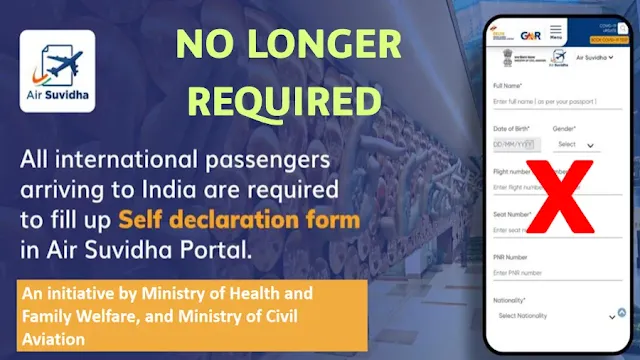
Is Air Suvidha Form Required for India Travel in 2026?

Updated: January 01, 2026

Is Air Suvidha Self-Declaration Form Required for India Travel?

Air Suvidha was once one of the most important forms for international passengers flying to India during the COVID-19 travel period. Travelers had to submit health, travel, contact, and testing details online before arrival. That created a lot of confusion, especially for passengers checking airline emails, airport advisories, visa pages, and health updates before departure.


The current answer is simple: the Air Suvidha self-declaration form is not required for international arrivals to India. India discontinued the general Air Suvidha requirement from November 22, 2022, and the temporary requirement for select high-risk countries was later lifted in February 2023.


However, travelers still need to prepare other documents before entering India, including a valid passport, visa or e-Visa where required, boarding pass, and customs declaration if carrying dutiable or restricted goods. This guide explains what Air Suvidha was, whether it is mandatory now, which forms may still apply, and how to prepare for a smooth India arrival.

Table of Contents

Never Do ❌ Use Instead ✅
Pay unofficial websites claiming Air Suvidha is mandatory Check official airport, airline, MoHFW, and Government of India pages
Assume old 2020–2022 COVID forms still apply Verify current India arrival rules before each trip
Arrive without a valid visa or e-Visa Confirm visa eligibility and approval before departure
Ignore customs rules because Air Suvidha is discontinued Declare dutiable goods, restricted items, gold, currency, and high-value goods when required
Rely only on screenshots from old travel blogs Use current airline advisories and official government sources
Wait until boarding to check entry requirements Review passport, visa, customs, health, and airline rules before airport arrival

Air Suvidha Quick Answer

No, the Air Suvidha self-declaration form is not currently required for travelers entering India. International passengers no longer need to submit the Air Suvidha health declaration before boarding or arrival under the general India arrival process.

Quick answer: Air Suvidha is not mandatory for India travel now. You still need the correct visa or e-Visa, passport, airline documents, and customs declaration if you carry dutiable or restricted goods.

Travel rules can change during health emergencies, so it is still smart to check your airline and official Indian government sources close to your departure date. Avoid unofficial paid websites that make Air Suvidha look like a required travel authorization when it is not currently needed.

What Is the Air Suvidha Form?

The Air Suvidha Self-Declaration Form was a digital health declaration introduced during the COVID-19 pandemic. It was used to collect passenger health, travel, contact, and testing information before entry into India.

The form was connected to public health monitoring, contact tracing, and arrival screening. It helped authorities identify passengers with symptoms, recent travel history, vaccination information, or RT-PCR test details during the pandemic period.

Details Previously Collected on Air Suvidha

  • Passenger name, age, nationality, passport number, and contact details
  • Flight number, PNR, seat number, arrival date, and airport of entry
  • Country of departure and recent travel history
  • Address in India, including state, district, and pin code
  • COVID-19 symptoms, vaccination status, or RT-PCR test information
  • Passport upload or supporting health document upload when required

Historical information about the form may still appear on old pages, archived advisories, airline emails, and travel blogs. For current travel planning, always use the latest advisory rather than old COVID-era instructions.

Is the Air Suvidha Form Still Required?

No. Air Suvidha is not required for international arrivals to India under the current general entry process. India discontinued the general pre-arrival Air Suvidha requirement and pre-arrival RT-PCR upload requirement for international passengers from November 22, 2022.

India briefly reintroduced Air Suvidha-style requirements for passengers arriving from select high-risk countries in early 2023, but that temporary requirement was later withdrawn. As of the current India travel process, passengers do not need to fill Air Suvidha before arriving in India.

Important: Some old Air Suvidha websites and third-party pages may still appear online. Do not pay for an Air Suvidha form unless an official government or airport advisory clearly reinstates the requirement.

Do You Need RT-PCR or Vaccination Uploads?

For routine international arrivals, India does not currently require passengers to upload RT-PCR reports or vaccination certificates through Air Suvidha. Airlines or transit countries may have their own requirements in unusual situations, so check your full route if you are connecting through another country.

Who Needed Air Suvidha Before?

During the pandemic, Air Suvidha applied to many international passengers arriving in India. Requirements changed over time based on COVID-19 conditions, vaccination status, travel origin, and health advisories.

Travel Period Air Suvidha Status What Travelers Needed
COVID-19 peak travel period Required for many international arrivals Online health declaration and travel details
Vaccination and testing transition period Rules varied by country and traveler category Vaccination proof, RT-PCR test, or declaration depending on rules
From November 22, 2022 General requirement discontinued No routine Air Suvidha form for all international arrivals
Early 2023 high-risk country period Briefly required for select origins Temporary health declaration and testing rules for specific countries
Current general process Not mandatory Passport, visa, airline documents, and customs declaration if applicable

Why the Confusion Still Exists

Confusion remains because old Air Suvidha pages, airline notices, YouTube tutorials, and travel agency posts are still online. Some travelers also remember being asked for the form in 2021 or 2022, so they assume the requirement still applies.

Other Forms Needed to Enter India

Even though Air Suvidha is no longer mandatory, India travel still involves important documentation. What you need depends on nationality, visa status, baggage, customs items, and travel purpose.

  1. Passport: Carry a valid passport with enough validity for your trip.
  2. Visa or e-Visa: Confirm your visa approval before departure unless you are exempt.
  3. Boarding pass: Keep a digital and backup copy when possible.
  4. Customs declaration: Complete it if you carry dutiable goods, restricted goods, excess currency, gold, or high-value items.
  5. Health documents: Carry medical documents only if needed for medicines, devices, insurance, or airline support.

If you travel with a mobile boarding pass, review Travelling With a Mobile Boarding Pass in India for airport tips.

India Customs Declaration Form

A customs declaration form may still be required if you are bringing goods that must be declared. Air Suvidha was a health form, while the customs declaration is about goods, currency, gold, electronics, alcohol, tobacco, restricted items, and duty-free allowances.

When a Customs Declaration May Be Needed

  • You carry goods above the duty-free allowance.
  • You bring gold, silver, jewelry, or precious stones beyond permitted limits.
  • You bring multiple phones, sealed electronics, laptops, or high-value goods.
  • You carry alcohol or tobacco above allowed limits.
  • You carry restricted or controlled items.
  • You carry foreign currency above declaration thresholds.
  • You are unsure whether your baggage qualifies for the green channel.

Customs warning: Do not confuse “Air Suvidha not required” with “no forms ever required.” Customs declaration rules still apply when you carry dutiable, restricted, or high-value goods.

For customs details, see Indian Customs Declaration Form, What Should Be Declared at Indian Customs?, and the Central Board of Indirect Taxes and Customs.

Visa and Travel Documents for India

Most foreign travelers need a valid visa or e-Visa to enter India. Indian citizens do not need a visa to return to India, but foreign passport holders, OCI cardholders, tourists, business travelers, students, and medical visitors should check their specific entry rules before travel.

Documents to Check Before Departure

  • Passport validity and blank pages
  • Indian visa, e-Visa, OCI card, or entry permission
  • Return or onward ticket if required by airline or visa category
  • Hotel address or local contact details in India
  • Travel insurance, especially for medical or trip disruption needs
  • Customs paperwork for high-value or restricted goods

Travel tip: Save digital copies of your passport, visa, ticket, hotel address, and emergency contacts. Keep printed copies too, especially for senior travelers, families, and first-time visitors.

Use the official Indian Visa Online portal for visa and e-Visa information. For health advisories, check the Ministry of Health and Family Welfare.

Tips for Smooth India Arrival

A smooth arrival in India depends on having the right documents ready and knowing which airport channel or counter to use. Most travelers no longer need health forms, but immigration and customs checks still matter.

Smart Arrival Moves

  • Check airline entry advisories before travel
  • Carry a valid visa or e-Visa approval
  • Keep passport and boarding pass accessible
  • Declare goods when required
  • Keep invoices for expensive electronics or jewelry
  • Carry medicine prescriptions if traveling with controlled medicines
  • Use official portals instead of paid imitation sites

Mistakes to Avoid

  • Paying for an unnecessary Air Suvidha form
  • Using outdated COVID-era travel checklists
  • Forgetting customs declaration rules
  • Carrying excess gold or electronics without documents
  • Arriving with visa issues
  • Ignoring transit-country requirements
  • Assuming every airline follows the same document checks

When to Contact Your Airline

Contact your airline if you are unsure about India entry rules, transit country requirements, health documents, special assistance, pet travel, medicines, or baggage restrictions. Airlines such as Air India and Emirates publish travel advisories and may verify documents before boarding.

These related guides can help you plan customs, baggage, gold, electronics, alcohol, and declaration requirements before you fly to India:

Frequently Asked Questions FAQ’s

Is Air Suvidha form mandatory for India travel?

No, the Air Suvidha form is not mandatory for international arrivals to India under the current general entry process. Travelers should still check airline and official government advisories before departure because rules can change during health emergencies.

Is a self-declaration form mandatory for India arrival?

No health self-declaration form such as Air Suvidha is currently required for routine international arrivals to India. A customs declaration may still be required if you carry dutiable, restricted, or high-value goods.

What forms do I need to fill before entering India?

Most travelers need a valid passport and visa or e-Visa where applicable. You may need a customs declaration form if you bring goods above your duty-free allowance, restricted items, gold, excess currency, or high-value goods.

What was the Air Suvidha self-declaration form?

Air Suvidha was an online health and travel declaration used during the COVID-19 period. It collected passenger details, travel history, arrival information, health status, and vaccination or RT-PCR information when required.

Is a customs declaration form required when entering India?

Yes, a customs declaration form may be required if you carry dutiable goods, restricted items, gold, electronics beyond allowed limits, excess alcohol, excess currency, or other items that must be declared under Indian customs rules.

How do I fill the Air Suvidha form now?

You do not need to fill the Air Suvidha form now because it is not currently mandatory for routine India arrivals. Be cautious with unofficial websites that still ask travelers to pay for Air Suvidha submission.

Do I need an RT-PCR test to travel to India?

Routine international arrivals to India do not currently need to upload an RT-PCR test through Air Suvidha. However, check airline, transit-country, and official health advisories close to travel because health rules can change.

Where should I check the latest India entry rules?

Check your airline, the Indian Visa Online portal, the Ministry of Health and Family Welfare, CBIC customs guidance, and official airport advisories before travel. Avoid relying only on old COVID-era blogs or screenshots.

HNML Meal on Flights: Is a Hindu Meal Vegetarian?

HNML Meal on Flights: Is a Hindu Meal Vegetarian? Many passengers choose HNML thinking “Hindu Meal” means vegetarian Indian food, then g...