Can You Carry Silver Utensils on India Flights?

Updated: July 02, 2026

Can You Carry Silver Utensils on India Flights? Cabin and Checked Bag Rules

Silver spoons, bowls, plates, cups, and pooja items can usually be easier to carry than sharp silver knives or large heavy serving sets. The real issue is not the silver itself, but whether the item has a blade, sharp point, unusual weight, high value, or customs implications.


For domestic flights, airport security and cabin-bag limits matter most. For international travel, valuable silverware, jewellery, silver bars, gifts, and multiple similar items can also raise declaration and duty questions.

Table of Contents

Quick Answer: Can You Carry Silver Utensils on a Flight?

Non-sharp silver utensils such as spoons, small bowls, cups, plates, and decorative items may be accepted in cabin baggage if they fit airline size and weight limits and clear security screening. Silver knives, sharp serving tools, heavy trays, large sets, and silver bars need more caution.

Silver Item Cabin Baggage Checked Baggage Main Concern
Silver spoon Often easier Usually possible Security inspection and safe packing
Small silver bowl, cup or plate May be possible Usually possible Weight, size and fragility
Silver fork May depend on shape and security discretion Usually possible Pointed tines or sharp edges
Silver knife or carving set Do not pack May be possible if securely packed Sharp-object rules
Silver pooja idol May be possible May be possible Value, fragility and customs proof
Silver bar or bullion Do not assume acceptance Do not assume acceptance Customs declaration, value and import rules

Cabin Bag vs Checked Bag for Silver Items

Cabin baggage can be safer for a small valuable silver item because you keep it with you, but security has the final decision. Checked baggage can be better for sharp, oversized, or heavy items, but it carries a higher risk of loss, damage, and rough handling.

Best Choice When It Makes Sense Risk to Watch
Cabin baggage Small non-sharp silver utensils, jewellery, fragile idols, sentimental items Security refusal, weight and cabin-space limits
Checked baggage Sharp silverware only where the airline accepts it, plus larger trays and heavy sets, items unsuitable for the cabin Loss, damage, scratches and weak airline liability limits
Neither without advance checking Silver bars, coins, bullion, commercial quantities, antiques Customs, declaration, duty and legal restrictions

Important: a valuable item is not automatically best in cabin baggage. A sharp silver knife may be valuable, but security rules can still require it to travel in checked baggage or prevent carriage altogether.

Silver Spoons, Bowls, Cups and Plates

Small non-sharp silver spoons, bowls, cups, plates, and similar household items are generally less complicated than sharp silverware. They may still be inspected because metal objects can look dense on an X-ray scan.

Keep the items together in a padded pouch or rigid box. Do not scatter loose spoons, bowls, and small utensils through different pockets of a bag. A neat package makes inspection easier and reduces the chance of scratching or loss.

Items that may be easier to carry

  • Small silver spoons
  • Baby-feeding silver bowls and cups
  • Small pooja plates or thalis
  • Silver tumblers and katoris
  • Decorative non-sharp silver items
  • Compact silver gift sets

Large, unusually heavy, pointed, or ornate items can receive closer scrutiny. The security officer at the checkpoint makes the final decision.

Silver Knives, Forks and Sharp Items

Material does not matter as much as shape. A silver knife is still a knife, and a sharp serving tool can still be treated as a prohibited cabin item.

IndiGo lists knives, scissors, Swiss Army knives, and other sharp instruments as prohibited in cabin baggage. Air India also advises passengers not to carry prohibited sharp items such as pocketknives and pointed scissors in cabin bags.

Do not pack silver knives, carving sets, sharp forks, or pointed serving tools in hand luggage. Put them in checked baggage only after checking the airline’s current policy and wrapping the item so it cannot injure a baggage handler or cut through the bag.

Items that need extra caution

  • Silver table knives
  • Carving knives
  • Sharp cheese knives
  • Pointed skewers or serving picks
  • Decorative daggers or ceremonial blades
  • Large forks with sharp tines
  • Sharp-edged silver tools or cutters

Silver Pooja Items and Religious Articles

Silver idols, diyas, pooja thalis, bells, bowls, and other religious articles may be easier to carry when they are small, non-sharp, and securely packed. Security may inspect them because of their metal density, especially if an item is solid or unusually shaped.

For a fragile silver idol or diya, cabin baggage may be safer than checked baggage where permitted. Wrap each item separately and keep it accessible for inspection. Do not carry oil, ghee, camphor, dry coconut, or sharp ceremonial items without checking the separate rules for those materials.

See Pooja Items on India Flights: What’s Allowed and How to Pack and Can You Carry Murti on Flights? Hindu Idol Cabin Bag vs Checked Bag Rules.

Large Silver Sets, Trays and Teapots

Large silver trays, tea sets, serving bowls, wedding gifts, and decorative pieces can be difficult to carry in the cabin even if they are not sharp. Their size, weight, shape, and ability to fit under a seat or in an overhead bin all matter.

Airlines can require a bulky item to be checked, and a heavy silver set can push your bag over the cabin-baggage limit. Before travel, measure the packed box and compare it with your airline’s current baggage allowance.

Check these points before carrying a large silver item

  • Cabin-baggage weight limit.
  • Cabin-baggage dimensions.
  • Whether the item has sharp, protruding, or detachable parts.
  • Whether the package can fit safely under the seat or overhead bin.
  • Whether the item is too valuable or fragile for checked baggage.
  • Whether the airline recommends special baggage handling.
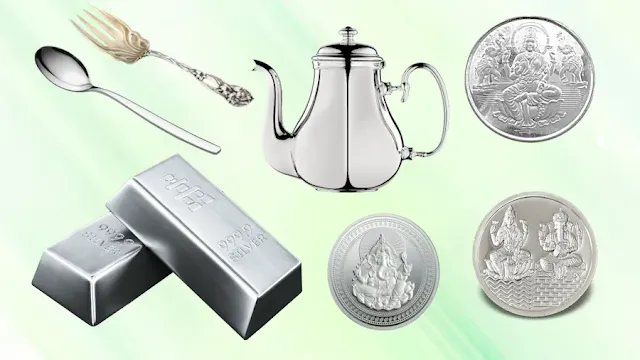
Silver utensils packed in carry-on luggage

Wedding gift tip: for a large silver set, consider carrying only the most valuable or fragile piece in cabin baggage where permitted and shipping or checking the rest in insured protective packaging.

Silver Jewellery and Valuable Silverware

Silver jewellery, heirloom utensils, antique silverware, engraved gifts, and collectible pieces need more care than ordinary household silver. Their value can matter to Customs, while their sentimental value can make checked-baggage loss especially painful.

Where security rules allow, small jewellery and non-sharp valuables are often safer in cabin baggage. Keep receipts, valuation documents, photographs, and prior customs paperwork separate from the item itself.

For valuable goods taken out of India and brought back later, an export certificate may help establish prior ownership. Read India Customs Export Certificates: Traveler Guide for Valuables.

Silver Bars, Coins and Bullion

Silver bars, coins, bullion, ingots, and investment-grade silver are different from ordinary utensils. They can raise customs, declaration, duty, value, and import questions even when packed safely.

India’s Baggage Rules exclude gold or silver in any form other than ornaments from the general free allowance. That does not mean every silver item is prohibited, but it means silver bars and bullion should not be treated like ordinary personal household goods.

Do not travel internationally with silver bars or bullion without checking current customs rules first. Carry invoices, purity details, weight information, valuation proof, and any required declaration documents. Use the Red Channel or ask Customs when you are unsure.

For related guidance, see How Much Gold Can You Bring to India? Duty-Free Limits, NRI Rules and Customs Guide and Can I Take Gold Biscuit to India? Customs Rules, Duty and Limits.

Domestic vs International Flight Rules

Route Type Main Question What Matters Most
Domestic India flight Can the item pass security and meet baggage limits? Sharp edges, weight, size, packing, airline rules
International departure from India Can the item leave India and travel safely? Security, airline acceptance, export and documentation issues
International arrival in India Must the silver be declared or assessed for duty? Value, quantity, form, purpose, ownership and current Customs rules
Transit airport Will another country inspect the item? Transit screening and local customs rules if baggage is collected

Domestic flights mainly involve security screening and airline baggage rules. International flights add Customs questions. A silver bowl that is simple on a Delhi-to-Mumbai flight may require invoices or declaration review when brought from abroad.

Customs Declaration and Duty Questions

There is no universal rule that every silver spoon, bowl, plate, or idol must be declared. Customs treatment depends on the item’s value, quantity, form, route, purpose, and whether it appears to be a personal effect, gift, commercial good, or precious-metal import.

A single used household silver item may be easier to explain than a boxed set of new matching pieces or several silver bars. The safest move for any high-value or uncertain item is to carry documents and ask Customs rather than trying to guess.

Bring these documents where relevant

  • Original purchase invoice.
  • Jeweller or valuer certificate.
  • Photos showing prior ownership.
  • Insurance documents for high-value pieces.
  • Customs Export Certificate for items previously taken out of India.
  • Duty receipt for previously declared imported items.
  • Gift documentation where the item is a wedding or family gift.

See India Customs Red Channel vs Green Channel, What Should Be Declared at Indian Customs?, and Indian Customs Declaration Form.

How to Pack Silver Items Safely

  1. Wrap every utensil separately in soft cloth, anti-tarnish fabric, or bubble wrap.
  2. Use a rigid box for bowls, cups, idols, trays, or delicate serving pieces.
  3. Keep sharp items sheathed or fully covered before placing them in checked baggage.
  4. Do not place heavy silver pieces against suitcase edges, zips, or thin fabric.
  5. Use cabin baggage for small permitted fragile valuables where practical.
  6. Use checked baggage only for items unsuitable for cabin carriage.
  7. Take photographs before travel, especially for antiques, engraved gifts, and heirlooms.
  8. Keep invoices and valuation papers in a separate document pouch.
  9. Do not rely on a “fragile” sticker alone to protect a checked bag.
  10. Check airline liability limits before placing expensive silverware in checked baggage.

Mistakes to Avoid

  • Packing silver knives or sharp serving tools in cabin baggage.
  • Assuming a silver item is accepted because it is a religious gift or family heirloom.
  • Putting a large silver tray in a cabin bag without checking dimensions and weight.
  • Travelling internationally with silver bars, coins, or bullion without paperwork.
  • Using the Green Channel when you are unsure whether a high-value item is dutiable.
  • Leaving invoices and valuation papers inside checked baggage.
  • Packing silver utensils loose where they can scratch, dent, or disappear.
  • Assuming one airport’s security decision will apply at every airport.
  • Carrying multiple boxed silver sets without considering commercial-import questions.
  • Putting valuable silverware in checked baggage without considering loss and liability limits.

Bottom Line

Small non-sharp silver utensils may be easier to carry in cabin baggage, while silver knives, pointed tools, oversized items, and heavy sets are better handled as checked baggage only when the airline accepts them.

For international travel, treat high-value silverware, jewellery, bars, coins, and multiple new items as a Customs question as well as a baggage question. Carry proof of ownership, ask when unsure, and do not rely on old advice about precious-metal allowances.

Frequently Asked Questions

Can I carry silver spoons in hand baggage?

Small silver spoons may be accepted in hand baggage if they clear security screening and fit within cabin-baggage rules. Pack them together in a protective pouch for easier inspection.

Can I carry silver forks in cabin baggage?

It depends on the fork shape and security officer’s decision. A fork with sharp or aggressive tines may receive more scrutiny, so checked baggage can be safer for unusual serving forks.

Are silver knives allowed in hand luggage?

No. A silver knife is still a sharp object and should not be packed in cabin baggage. Check your airline’s rules before placing it in checked baggage.

Can I carry a silver pooja idol on a flight?

A small non-sharp silver idol may be possible in cabin or checked baggage, but it can be inspected at security. Valuable items should be packed carefully and supported by proof of ownership where relevant.

Can I carry silver utensils on an international flight?

Often yes, but international travel adds Customs and declaration questions. Valuable silverware, multiple new sets, silver bars, and items bought abroad may need documentation or declaration.

Do I need to declare silver utensils at Indian Customs?

Not every utensil requires declaration, but value, quantity, purpose, and the form of silver matter. Ask Customs or use the Red Channel when you are unsure about a high-value or dutiable item.

Can I carry silver bars in cabin baggage?

Do not assume silver bars can be carried like ordinary utensils. They can trigger Customs, declaration, and duty questions, so check current official rules and carry full documentation before travel.

Is cabin baggage safer for valuable silverware?

For a small non-sharp valuable item that security allows, cabin baggage can reduce the risk of checked-baggage loss or damage. Sharp, oversized, or heavy pieces may still need checked baggage or another transport option.

Duty-Free Alcohol to India: 2-Litre Limit and Rules

Updated: July 02, 2026

Duty-Free Alcohol to India: 2-Litre Limit and Rules

India allows eligible adult passengers to bring alcohol, but the duty-free limit is small: 2 litres of alcoholic liquor or wine. Anything above that limit should be declared, and Customs may charge duty or take action if you try to pass through Green Channel with excess bottles.


The biggest mistake is mixing up four different rules: Indian Customs duty-free allowance, airline checked-baggage limits, airport security liquid rules, and state alcohol laws. A bottle can clear one rule and still cause trouble during a domestic connection or at a dry-state destination.

Quick Answer: Alcohol Limit for India

You can generally bring up to 2 litres of alcoholic liquor or wine duty-free into India as an eligible adult passenger. Alcohol above 2 litres should be declared. Airline baggage rules may allow more alcohol in checked baggage, but that extra quantity is not duty-free.

Rule Area Main Limit What It Means
India duty-free alcohol allowance 2 litres Main Customs allowance for alcoholic liquor or wine
Alcohol in checked baggage Usually up to 5 litres for 24% to 70% ABV Airline safety limit, not a duty-free allowance
Alcohol above 70% ABV Not permitted in passenger baggage High-proof alcohol should not be packed
Duty-free cabin alcohol Allowed only under liquid and STEB rules Keep it sealed with receipt until Customs clearance
Dry-state destination State law applies Customs clearance does not override local alcohol restrictions

India Duty-Free Alcohol Limit

India’s baggage rules allow alcoholic liquor or wine up to 2 litres within the passenger’s duty-free treatment. Alcoholic liquor or wine in excess of 2 litres is specifically treated as a restricted or dutiable baggage item.

The 2-litre limit is a quantity rule. It is not a bottle-count rule and it is not a separate allowance for whisky, wine, beer, rum, vodka, gin, or brandy.

Examples within 2 litres

  • Two 1-litre bottles of whisky.
  • One 1-litre bottle of rum and one 1-litre bottle of wine.
  • Four 500ml bottles of wine or beer.
  • One 1.75-litre bottle plus one 250ml bottle.
  • Any mix of alcohol totaling 2 litres or less.

Per passenger, not one family pool: the alcohol allowance applies to each eligible adult passenger. Do not assume one person can carry the entire family’s combined allowance in one bag without questions.

What Counts Toward the 2-Litre Limit?

All alcoholic liquor or wine counts toward the 2-litre allowance. Customs is interested in the total volume of alcoholic beverages, not only the number of bottles or whether you bought them from a duty-free shop.

Drink Type Counts Toward 2 Litres? Note
Whisky, rum, vodka, gin, brandy Yes Commonly bought as 700ml, 750ml or 1-litre bottles
Wine Yes 750ml bottles add up quickly
Beer Yes Usually not worth carrying in excess because of weight and volume
Liqueurs Yes Still alcoholic beverages
Duty-free airport purchases Yes Duty-free shop purchase does not increase the India allowance

Duty-free does not mean unlimited. Bottles bought at an airport duty-free shop still count toward India’s 2-litre alcohol allowance.

Can You Bring Three 700ml Bottles?

Three 700ml bottles equal 2.1 litres. That is only 100ml over the duty-free limit, but it is still over the limit.

You may carry the bottles if airline and destination rules allow it, but the excess quantity should be declared to Customs. Customs may charge duty on the excess or assess the goods according to the applicable baggage rules.

Simplest choice: if you want a low-friction arrival, stay at or below 2 litres. Two 700ml bottles plus one 500ml bottle is 1.9 litres. Three 700ml bottles is 2.1 litres and should be declared.

Alcohol in Checked Baggage

Airline safety rules are different from Customs duty-free rules. Many airlines allow alcoholic beverages in checked baggage if they are in retail packaging, packed to prevent leakage, and do not exceed 70% alcohol by volume.

For alcohol above 24% and up to 70% ABV, the common airline limit is up to 5 litres per passenger in checked baggage. Alcohol at 24% ABV or below may not be subject to that same 5-litre dangerous-goods quantity limit, but Customs and destination rules still matter.

Alcohol Strength Checked Baggage Treatment Customs Reminder
24% ABV or below Often not subject to the 5-litre airline dangerous-goods cap Still counts toward India’s 2-litre duty-free alcohol limit
More than 24% up to 70% ABV Usually limited to 5 litres per passenger in checked baggage Only 2 litres are duty-free
More than 70% ABV Not permitted in passenger baggage Do not pack it
Homemade or unlabelled alcohol Risky and hard to verify May create security, Customs and state-law problems

Best checked-bag rule: use sealed retail bottles, keep the ABV visible on the label, pack them well, and keep the receipt available for Customs.

Duty-Free Alcohol in Cabin Baggage and STEB Bags

Alcohol over 100ml is not normally allowed through standard cabin-baggage liquid screening. Duty-free alcohol purchased after security may be carried in the cabin when it is sealed in a Security Tamper-Evident Bag, often called a STEB bag, with the receipt kept inside or attached.

Keep the STEB bag sealed until you clear Customs in India. If the bag is opened, damaged, or missing the receipt, transfer security can question or reject it.

STEB bag checklist

  • Buy from an authorised airport duty-free shop after security.
  • Make sure the bottle is sealed in a STEB bag.
  • Keep the receipt visible or inside the sealed bag.
  • Do not open the bag during transit.
  • Check connecting-airport rules before buying.
  • Keep the bottle within India’s 2-litre duty-free allowance if you want to avoid duty.

Domestic Connection After Arriving in India

A domestic connection is where many travellers lose duty-free bottles. After you arrive in India, clear immigration, collect baggage, and pass Customs, your next flight may be treated as a domestic flight. Large liquids in cabin baggage can become a problem again at domestic security.

Domestic connection warning: after clearing Customs in India, place duty-free alcohol into checked baggage before your domestic flight. Do not assume a sealed duty-free bag will be accepted through every domestic security checkpoint.

This is especially important if your route is something like Dubai to Delhi to Kochi, London to Mumbai to Goa, or Singapore to Bengaluru to another Indian city. Leave enough connection time to repack and re-check your bag.

Read Duty Free Alcohol on Connecting Flights: Carry-On, India Rules and Checked Bags and Duty-Free Sealed Bag Opened During Transit: Will Airport Security Confiscate It?.

Customs Duty on Alcohol Above 2 Litres

Alcohol above the 2-litre allowance should be declared. Customs may assess duty based on the type of alcohol, declared or assessed value, quantity, current notification, and applicable baggage rules.

Do not rely on old flat-rate claims or fixed online formulas for excess alcohol. Customs duty on alcoholic beverages can be high and can change. Premium whisky, vintage wine, and expensive bottles should have clear invoices because value assessment matters.

If You Carry What May Happen Best Action
2 litres or less Normally within duty-free alcohol allowance Keep receipts and answer questions if asked
Just over 2 litres Excess should be declared Use Red Channel if required
Large quantity Duty, seizure, penalty or state-law issues may arise Do not carry commercial-looking quantities
Rare or expensive bottles Value may be assessed carefully Carry invoice and payment proof

How to Declare Alcohol at Indian Customs

Use the Red Channel if you exceed the duty-free limit or are unsure. Voluntary declaration is much safer than being stopped after choosing Green Channel.

  1. Keep bottles, passport, boarding pass, baggage tags, and receipts ready.
  2. Use the electronic Customs declaration process or ATITHI where available.
  3. Declare the alcohol quantity and value honestly.
  4. Show bottles and receipts if Customs asks.
  5. Allow Customs to assess whether duty is payable.
  6. Pay the assessed duty through the available airport payment process.
  7. Keep the Customs receipt for your records.

Declaration tip: if you are carrying excess alcohol, do not split bottles between random bags or ask another passenger to carry them. Keep your own bottles, receipts and declaration together.

Dry State Restrictions in India

Indian Customs rules are national entry rules. Alcohol possession, transport and consumption inside India can also be controlled by state law. A bottle that clears Customs in Mumbai or Delhi can still create trouble if your final destination has prohibition or permit rules.

Gujarat and Bihar are the most common dry-state examples travellers ask about. Other places may have restrictions, local permit systems or changing rules.

Dry state warning: do not carry alcohol to Gujarat, Bihar or any restricted destination unless you have confirmed the current local law and permit requirements. Customs clearance does not cancel state prohibition law.

Check local rules carefully for

  • Gujarat.
  • Bihar.
  • Nagaland.
  • Mizoram.
  • Lakshadweep.
  • Any place with permit-based alcohol rules.

Before flying to Gujarat, read Can You Bring Alcohol to Gujarat on an International Flight? and Caught with Alcohol in Gujarat? Dry State Rules, Permits and Penalties.

How to Pack Alcohol Safely

Alcohol bottles are heavy, breakable, and messy when they leak. If you pack bottles in checked baggage, protect each one separately.

  1. Use original sealed retail bottles.
  2. Wrap each bottle with bubble wrap, a towel, jeans, or padded sleeves.
  3. Place each wrapped bottle inside a leak-proof plastic bag.
  4. Pack bottles in the centre of the suitcase.
  5. Keep bottles away from wheels, corners and hard objects.
  6. Surround bottles with soft clothing on all sides.
  7. Keep receipts in cabin baggage, not inside the checked suitcase.
  8. Do not pack alcohol above 70% ABV.

Safe packing formula: sealed bottle, padded wrap, leak-proof bag, centre of suitcase, soft clothes around it.

Common Mistakes to Avoid

  • Thinking duty-free alcohol means unlimited alcohol.
  • Forgetting that the India duty-free allowance is 2 litres.
  • Carrying three 700ml bottles and assuming it is “close enough.”
  • Assuming the checked-baggage 5-litre airline limit is also a Customs duty-free limit.
  • Taking duty-free bottles through an Indian domestic connection in cabin baggage.
  • Opening the STEB bag before Customs or transfer security.
  • Packing alcohol above 70% ABV.
  • Using unlabelled bottles or homemade alcohol.
  • Ignoring dry-state or permit rules at the final destination.
  • Using Green Channel with excess alcohol.
  • Keeping receipts inside checked baggage instead of cabin baggage.
  • Trying to pool the whole family’s allowance into one passenger’s bag.

Bottom Line

For the easiest arrival in India, keep alcohol at or below 2 litres per eligible adult passenger, keep bottles sealed, carry receipts, and declare anything above the allowance.

The airline checked-baggage limit and the Customs duty-free limit are not the same. You may be able to pack up to 5 litres of 24% to 70% ABV alcohol in checked baggage, but only 2 litres are duty-free. Domestic connections and dry-state destinations need extra planning.

Frequently Asked Questions

How much alcohol can I bring duty-free to India?

Eligible adult passengers can generally bring up to 2 litres of alcoholic liquor or wine duty-free into India.

Does the 2-litre limit include wine and beer?

Yes. Alcoholic liquor or wine counts toward the same 2-litre allowance. Treat spirits, wine, beer and liqueurs as part of the total alcohol quantity.

Can I bring three 700ml bottles to India?

Three 700ml bottles equal 2.1 litres, which is over the 2-litre duty-free limit. Declare the excess and be prepared for Customs assessment.

Can I pack alcohol in checked baggage to India?

Yes, if the airline allows it and the bottles meet safety rules. Alcohol above 24% and up to 70% ABV is usually limited to 5 litres per passenger in checked baggage.

Is the checked-baggage 5-litre alcohol limit duty-free?

No. The 5-litre limit is an airline dangerous-goods or baggage limit. India’s duty-free Customs allowance for alcohol is generally 2 litres.

Can I carry duty-free alcohol in cabin baggage?

Duty-free alcohol bought after security may be allowed in cabin baggage when sealed in a STEB bag with receipt. Keep it sealed and check transfer rules.

What should I do with duty-free alcohol before an Indian domestic connection?

After clearing Customs in India, place the bottles in checked baggage before the domestic flight. Large liquids may not pass domestic cabin-baggage security.

Can I bring alcohol to Gujarat or Bihar?

Do not carry alcohol to dry states such as Gujarat or Bihar unless you have confirmed the current local law and permit requirements.

What happens if I do not declare excess alcohol?

Customs may seize the alcohol, charge duty, impose penalties or take further action depending on the quantity, value and circumstances.

Can You Carry a Pressure Cooker on a Flight? India Rules

Updated: July 02, 2026

Can You Carry a Pressure Cooker on a Flight? Cabin and Checked Bag Rules

A pressure cooker, including a small 2 litre pressure cooker, may be allowed on a flight when it is completely empty, clean, dry, and free of fuel or gas canisters. Checked baggage is usually the more practical choice because a cooker is bulky, heavy, and likely to receive extra screening in a cabin bag.


The cooker itself is usually less of a problem than its size, loose parts, sharp accessories, electrical components, and any item that looks like it could contain fuel, residue, liquid, or pressure.

Table of Contents

Quick Answer: Can You Carry a Pressure Cooker on a Flight?

Yes, a pressure cooker may be accepted on a flight when it is empty, clean, dry, and properly packed. Checked baggage is usually the safer option. Cabin baggage may be possible for a small cooker that fits airline limits, but expect closer inspection because of the cooker’s dense metal body and unusual shape.

Can I Take a 2 Litre Pressure Cooker on a Flight?

A 2 litre pressure cooker may be easier to carry than a large family-size cooker because it takes up less space and usually weighs less. But airlines do not normally publish a separate rule saying that 2 litre cookers are automatically allowed.

The decision is usually based on whether the cooker is empty, clean, dry, safely packed, within your baggage weight and size allowance, and accepted by airport security. A 2 litre cooker can still be inspected because it is a dense metal item with a lid, valve, whistle, and hollow interior.

Best answer: A 2 litre pressure cooker is usually more practical in checked baggage. It may fit in cabin baggage, but checked baggage reduces the chance of a delay at security and avoids using much of your cabin-bag weight allowance.

Cooker Size Cabin Baggage Checked Baggage Best Advice
1 to 2 litre cooker May fit, but can be inspected Usually practical Keep it empty, clean and packed securely
3 to 5 litre cooker Possible only if bag limits allow Usually better Checked baggage is normally easier
Large family-size cooker Usually impractical Best option if airline accepts it Protect handles, lid and loose parts

For example, IndiGo limits standard cabin baggage to one piece up to 7 kg and maximum dimensions of 55 x 35 x 25 cm. A 2 litre cooker may physically fit, but its weight plus the rest of your cabin bag can still exceed the allowance.

Hawkins and Prestige Pressure Cooker Sizes

Many travellers asking about a 2 litre cooker are carrying common Indian brands such as Hawkins or Prestige. Airline rules do not change because of the brand. A Hawkins cooker and a Prestige cooker are judged the same way: size, weight, cleanliness, packing, loose parts, and security inspection matter more than the logo.

Both brands sell small cookers that are easier to pack than large family-size models. A 2 litre Hawkins or Prestige pressure cooker may be practical for checked baggage, but it can still take up a large part of a 7 kg cabin-bag allowance if you try to carry it onboard.

Common Cooker Size Typical Use Flight Packing Advice
1.5 litre One person or small meals Smallest option, but still keep it empty and clean
2 litre Small household or 1 to 3 people Usually easier in checked baggage than cabin baggage
3 litre Regular cooking for a small family Checked baggage is normally more practical
3.5 to 5 litre Medium family cooking Usually too bulky for a sensible cabin-bag setup
6 litre and larger Large family, bulk cooking or gatherings Use checked baggage only if airline baggage limits allow

Brand examples: Hawkins sells common household sizes such as 1.5 litre, 2 litre, 3 litre, 4 litre and 5 litre models, while Prestige sells small 1.5 litre and 2 litre cookers as well as larger family sizes. Exact capacities vary by product line, material, and model.

A 2 litre Hawkins Classic cooker is marketed for roughly 2 to 3 people, while Prestige describes its 2 litre cooker as suitable for compact meals and smaller households. That household guidance is useful for shoppers, but airline staff care about packed weight and dimensions rather than how many people the cooker serves.

Pressure Cooker Item Cabin Baggage Checked Baggage Main Concern
Small empty stovetop pressure cooker May be possible but can be inspected Usually more practical Weight, size and security screening
Large pressure cooker Usually impractical Usually better Cabin-bag size and weight limits
Cooker whistle or regulator May be possible Usually possible Loose metal part and inspection
Rubber gasket Usually low risk Usually possible Keep it clean and dry
Electric pressure cooker May be possible if within limits Usually more practical Size, weight, cord and battery status
Gas cylinder or fuel cartridge No No Flammable gas and dangerous-goods rules

Pressure Cooker in Cabin Baggage

A small pressure cooker may fit in cabin baggage, but that does not guarantee it will be accepted. Security staff may want to inspect the cooker because the metal body, lid, handle, and internal space can look unclear on an X-ray scan.

Air India and IndiGo both apply cabin-baggage size and weight limits. A cooker that fits physically may still push your cabin bag over the permitted weight, especially when combined with electronics, clothes, or other heavy items.

Do not carry a used cooker with food residue, oil, water, spices, or a strong smell. A clean empty cooker is much easier to inspect than one that appears recently used.

Cabin baggage may be more realistic when

  • The cooker is small and empty.
  • It fits inside your permitted cabin bag.
  • It does not make the bag exceed airline weight limits.
  • The whistle, gasket and loose parts are packed neatly.
  • The cooker has no fuel, burner, gas cartridge or liquid inside.
  • You allow extra time for possible screening.

Pressure Cooker in Checked Baggage

Checked baggage is usually the simplest option for a pressure cooker. It avoids cabin-space problems and reduces the chance that a large metal item delays you at the security checkpoint.

The cooker should be empty, clean, dry, and protected from dents. Wrap the body and lid separately where possible. Do not place loose parts inside the cooker where they can rattle or damage the surface during baggage handling.

Best checked-bag method: remove the whistle and gasket, wrap the lid and cooker body separately, protect the handle, place the cooker in the middle of the suitcase, and surround it with soft clothing or bubble wrap.

Cooker Whistle, Gasket and Loose Parts

The whistle, pressure regulator, gasket, separator plate, steamer insert, and other loose cooker parts are usually not the main issue. The problem comes when the parts are dirty, loose, sharp, heavy, or difficult for security to identify.

Part Best Packing Method Reason
Cooker whistle or pressure regulator Wrap separately in cloth or a small pouch Prevents loss, scratching and loose metal movement
Rubber gasket Clean, dry and placed in a zip pouch Prevents odour, grease and damage
Separator plate or steamer insert Wrap with the cooker or place flat in the suitcase Prevents bending and rattling
Handle screws or spare parts Small sealed pouch with a label Stops loose parts from scattering
Cooker lid Wrap separately from the body Protects the lock, valve and handle

Do not leave the whistle fitted loosely on the lid. Remove it and pack it separately so it cannot bend, break, or create a confusing X-ray image.

Electric Pressure Cookers and Instant Pots

Electric pressure cookers, multicookers, slow cookers, rice cookers, and Instant Pot-style appliances can be more complicated because they are larger, heavier, and contain electrical components.

An electric cooker without a lithium battery is generally a baggage-size and screening question rather than a battery-dangerous-goods question. Check the appliance carefully before travel. If it contains a removable lithium battery, power bank, rechargeable battery pack, or similar battery component, separate battery rules may apply.

Before flying with an electric cooker

  • Clean and dry the inner pot and lid completely.
  • Remove any food, water, oil, rice, spices or residue.
  • Wrap the power cord so it cannot snag or damage the appliance.
  • Protect the digital display, buttons and handle.
  • Check your airline’s checked-baggage weight and size rules.
  • Check whether the appliance contains any battery or battery-powered component.
  • Use the original box where practical, especially for expensive cookers.

Electric cooker note: do not assume every electric cooker is the same. A basic plug-in appliance is different from a device with built-in batteries, detachable batteries, self-heating fuel packs, or a damaged power unit.

Gas Stoves, Fuel and Gas Canisters

A pressure cooker is not a gas canister, but many travellers pack it with camping stoves, burners, LPG adapters, fuel cartridges, or cooking fuel. Those items follow different rules.

Air India lists cooking fuels and flammable liquid fuel as prohibited. IndiGo states that unused gas stoves may be allowed when the container is empty and there is no lighter, but gas cylinders and fuel cartridges should not be packed without checking the airline’s exact current policy.

Never pack an LPG cylinder, butane canister, fuel cartridge, lighter fluid, petrol, kerosene, or other flammable cooking fuel with a pressure cooker. These can be prohibited in both cabin and checked baggage.

Why Airport Security May Inspect a Cooker

A pressure cooker often appears dense and hollow on an X-ray image. Security staff may need to see that the cooker is empty and does not contain liquid, food, batteries, tools, or restricted materials.

Inspection is not an accusation. It is normal for a large metal household item to receive a closer look, especially in cabin baggage.

What security may check

  • Whether the cooker is empty.
  • Whether there is liquid, food, oil or residue inside.
  • Whether loose parts are concealed inside the pot.
  • Whether the cooker contains a fuel-related item.
  • Whether sharp tools, knives or blades are packed with it.
  • Whether the item meets cabin-baggage size and weight restrictions.

How to Pack a Pressure Cooker Safely

  1. Wash the cooker thoroughly before travel.
  2. Dry the pot, lid, gasket, whistle and every inner surface completely.
  3. Remove the whistle, gasket and loose accessories.
  4. Wrap the cooker body in bubble wrap, towels or thick clothing.
  5. Wrap the lid separately to protect the locking mechanism.
  6. Place small parts in a labelled pouch instead of leaving them loose.
  7. Use the cooker interior for soft items only after checking that nothing can move or damage it.
  8. Place the cooker in the centre of a sturdy suitcase.
  9. Keep knives, cutters, gas cartridges and sharp tools out of cabin baggage.
  10. Do not exceed the airline’s baggage allowance because cookers are heavy.

Domestic vs International Flights

For domestic India flights, the main issues are security screening, size, weight, and whether the cooker is clean and empty. International flights can add airline differences, transit-airport screening, and destination-country electrical standards.

Travel Type Main Concern Best Approach
Domestic India flight Security inspection and baggage weight Use checked baggage for a full-size cooker
International flight from India Airline acceptance and transit screening Confirm with the operating airline before travel
Moving abroad Weight, size and appliance compatibility Check voltage, plug type and excess-baggage cost
Connecting flight Different airline and airport rules Follow the strictest baggage rule on the itinerary

An electric cooker may be accepted as baggage but still be unsuitable for use after arrival because of voltage, plug type, warranty restrictions, or local electrical standards.

Common Mistakes to Avoid

  • Taking a dirty cooker with food or oil residue.
  • Leaving water inside the cooker after washing it.
  • Putting gas cartridges or fuel canisters inside the cooker.
  • Leaving the whistle and loose accessories unsecured.
  • Putting a large cooker in cabin baggage without checking weight limits.
  • Packing sharp knives or cutters inside the cooker for cabin travel.
  • Using weak packing that allows the lid to dent or the handle to break.
  • Assuming an electric cooker has no battery without checking the model.
  • Forgetting that a connecting airline may have different baggage rules.
  • Using a cooker as a container for liquids, spices, pickles or food items.

Bottom Line

A pressure cooker may be accepted on a flight, but checked baggage is usually the safest and simplest option. Keep it completely empty, clean, dry, and properly wrapped. Remove the whistle and gasket, protect the lid, and never pack fuel, gas cylinders, or flammable cooking items with it.

For a small cooker in cabin baggage, expect screening and make sure your bag stays within the airline’s weight and size limit. For electric cookers, check the model for batteries and protect the power cord and display.

Frequently Asked Questions

Can I carry a pressure cooker in cabin baggage?

A small empty cooker may be possible in cabin baggage if it fits airline size and weight limits, but it can receive extra security screening. Checked baggage is usually more practical.

Can I put a pressure cooker in checked baggage?

Yes, checked baggage is usually the better option. Pack the cooker clean, dry, empty, and padded so the lid, handle, whistle and gasket are protected.

Can I carry the pressure cooker whistle on a flight?

The whistle or regulator may be carried as a loose cooker part, but wrap it separately in a pouch so it does not get lost, bend, or create confusion during screening.

Can I carry the cooker gasket in hand luggage?

A clean dry rubber gasket is generally a low-risk item. Keep it in a small pouch with the cooker parts rather than loose in the bag.

Can I carry an electric pressure cooker or Instant Pot on a flight?

It may be possible, but its large size and weight usually make checked baggage more practical. Check whether the appliance contains a lithium battery or detachable battery component before travel.

Can I carry a gas cylinder with a pressure cooker?

No. LPG cylinders, butane cans, fuel cartridges, lighter fluid, petrol, kerosene and similar flammable cooking fuel should not be packed with a cooker.

Will airport security inspect my pressure cooker?

It may be inspected because its metal body and hollow interior can look unclear on X-ray screening. Keep it empty, clean and easy to open if asked.

Can I put food, spices or pickles inside the cooker for travel?

Do not use a pressure cooker as a container for food, liquids, pickles or spices when flying. Those items may have their own baggage restrictions and can create leakage or inspection problems.

Can I take a 2 litre pressure cooker on a flight?

A 2 litre pressure cooker may be carried when it is empty, clean, dry, and within airline baggage limits. Checked baggage is usually the easier choice, while cabin baggage can lead to extra screening because of the cooker’s metal body and hollow interior.

Can You Wear a Gold Chain Through Indian Customs?

Updated: July 02, 2026

Can You Wear a Gold Chain Through Indian Customs? Rules Explained

You can wear a gold chain while flying to India, but wearing it does not automatically make it duty-free or exempt from customs questions. Customs may consider the weight, value, ownership history, purpose of travel, time spent abroad, and whether the jewellery is within your eligible allowance.


The safest approach is simple: know whether the jewellery is your old personal item or a new purchase, carry proof where available, and declare anything dutiable or above the relevant allowance through the Red Channel.

Table of Contents

Quick Answer: Can You Wear a Gold Chain Through Indian Customs?

Yes, you can wear a gold chain through Indian Customs, but customs rules still apply. Jewellery worn on the body can still be examined, assessed, declared, or charged duty if it is new, imported from abroad, exceeds your eligible allowance, or appears to be more than personal jewellery for normal use.

For eligible Indian residents or tourists of Indian origin who have lived abroad for more than one year, the current special duty-free jewellery allowance is up to 40 grams for a female passenger and up to 20 grams for a passenger other than a female passenger.

That allowance applies to jewellery in bona fide baggage. It does not automatically cover all gold worn on the body, all new jewellery, commercial quantities, gold bars, gold coins, or jewellery that customs treats as dutiable.

Why Wearing Gold Does Not Change Customs Rules

There is no separate customs exemption simply because gold jewellery is being worn instead of packed in hand baggage or checked baggage.

A gold chain, bracelet, ring, necklace, earrings, or bangle may still be examined by Customs. Officers may ask whether it was purchased abroad, whether it was originally taken from India, whether it is for personal use, and whether it falls within a duty-free allowance.

Do not assume worn jewellery is invisible to Customs. Wearing a chain under clothing, splitting jewellery among family members, or placing it in personal pockets does not remove declaration obligations where duty is payable.

Duty-Free Gold Jewellery Allowance

India’s Baggage Rules provide a special duty-free jewellery allowance for certain passengers returning after living abroad for more than one year.

Eligible Passenger Duty-Free Jewellery Allowance Important Condition
Female passenger Up to 40 grams Must qualify under the special jewellery allowance
Passenger other than a female passenger Up to 20 grams Must qualify under the special jewellery allowance

The allowance is based on weight. It is separate from the general baggage allowance for ordinary goods and cannot simply be pooled with another traveller’s allowance.

Important: the special allowance is not available merely because a person has a foreign address or arrives on an international flight. The passenger must meet the residence-abroad condition stated in the Baggage Rules.

Who Can Use the Special Jewellery Allowance?

The special duty-free jewellery allowance is available to a resident or tourist of Indian origin residing abroad for more than one year and returning to India.

Customs may examine travel history, passport records, immigration stamps, overseas residence, and the purpose of travel where needed. A short trip abroad does not create a fresh jewellery allowance.

Passengers should not assume eligibility when

  • They have lived abroad for less than one year.
  • They are arriving after a short holiday or temporary visit overseas.
  • They are carrying gold for another person.
  • They are carrying jewellery in quantities that look commercial.
  • They are bringing coins, bars, biscuits, or bullion instead of jewellery.
  • They cannot explain the source, ownership, or intended use of the gold.

Personal Jewellery Taken From India and Brought Back

Jewellery that you already owned in India and took abroad for personal use is different from jewellery newly bought abroad. However, proving that distinction can be difficult when the item is high value or unusually heavy.

Passengers carrying expensive jewellery out of India are advised to declare it before departure and obtain an Export Certificate from Customs. This can make re-import easier because the jewellery has already been recorded as an item taken out from India.

Keep invoices, valuation certificates, photographs, hallmark details, and any prior customs export certificate. These documents do not guarantee a particular outcome, but they can help establish that the jewellery was not newly imported.

Best proof for old personal jewellery

  • Customs Export Certificate obtained before departure.
  • Original purchase invoice or jeweller valuation certificate.
  • Clear dated photographs showing the jewellery in your possession before travel.
  • Hallmark, serial number, or identifying features where available.
  • Insurance documents listing the jewellery.
  • Repair or cleaning records from a jeweller.

For high-value jewellery: obtain an Export Certificate before leaving India rather than trying to prove ownership only after returning. This is especially useful for wedding jewellery, heirlooms, diamond sets, and heavy gold pieces.

Gold Jewellery Bought Abroad

Gold jewellery bought outside India is an import when you bring it into India. It may be duty-free only to the extent that it falls within an eligible special allowance. Jewellery beyond that allowance can be dutiable.

Do not assume a foreign invoice, credit-card statement, or personal-use explanation removes duty. Those documents may help Customs assess value and ownership, but they do not automatically create an exemption.

Keep these documents for jewellery bought abroad

  • Purchase invoice with description, weight, purity, and value.
  • Payment proof, such as a card statement or bank record.
  • Jeweller certificate or appraisal document.
  • Travel documents showing duration of stay abroad.
  • Customs declaration records if you declared the item before arrival.

When You Must Declare Gold at Indian Customs

You should declare gold jewellery if it is dutiable, exceeds your eligible duty-free allowance, is beyond ordinary personal-use jewellery, or falls into a category that requires customs assessment.

The current Customs Declaration Form specifically asks whether the passenger is carrying jewellery beyond daily necessities of life or beyond the prescribed special jewellery allowance for an eligible passenger.

Passengers carrying dutiable or prohibited goods should use the Red Channel. Passengers who use the Green Channel while carrying dutiable goods can face penalties, confiscation, and further action under customs law.

When in doubt, declare. A Red Channel declaration is the safer choice when carrying heavy jewellery, newly purchased gold, coins, bars, bullion, multiple jewellery sets, or gold that may exceed an allowance.

How to Declare Gold at the Airport

Passengers carrying dutiable gold or jewellery should complete the customs declaration and proceed through the Red Channel after arrival.

India Customs also allows electronic declaration of dutiable items through the ATITHI mobile application or related customs systems before arrival. Electronic declaration can help, but passengers may still need to present the goods and documents to Customs for verification.

Basic declaration process

  1. Keep the jewellery accessible but secure before arrival.
  2. Complete the customs declaration accurately.
  3. Select the Red Channel when carrying dutiable or declarable gold.
  4. Tell the Customs officer the weight, type, source, and ownership of the jewellery.
  5. Provide invoices, valuation documents, or export certificates where available.
  6. Pay assessed duty where required and retain the official receipt.
  7. Keep declaration and payment records for future travel.

Gold Coins, Bars and Biscuits

Gold coins, bars, biscuits, and bullion are not treated the same way as personal gold jewellery. They do not qualify for the special jewellery allowance.

Eligible passengers of Indian origin or holders of a valid Indian passport may be allowed to bring specified gold, including ornaments, subject to conditions such as minimum overseas stay, payment in convertible foreign currency, quantity limits, declaration, and applicable duty.

Customs guidance states that eligible passengers may bring up to one kilogram of gold, subject to the prescribed conditions. This is not a duty-free allowance. It is a regulated import facility with duty and declaration requirements.

Gold bar warning: do not carry gold bars, coins, biscuits, or bullion through the Green Channel. These items require declaration and can trigger serious consequences if concealed or misdeclared.

Carrying Gold for a Wedding or Family Function

Travelling to India for a wedding, engagement, religious ceremony, or family event does not create an automatic special gold exemption.

Customs may consider whether jewellery is genuinely for personal use, whether it was already owned, whether it was purchased abroad, whether it appears commercial, and whether the passenger has documents supporting the explanation.

A wedding invitation, return ticket, family details, photographs, valuation certificate, and proof of prior ownership may help explain the circumstances. But they do not guarantee duty-free clearance if the jewellery is newly imported or exceeds the applicable allowance.

Helpful documents for wedding jewellery

  • Wedding or event invitation.
  • Return ticket and travel itinerary.
  • Jewellery invoices or valuation certificates.
  • Photographs showing prior ownership or personal use.
  • Customs Export Certificate if the jewellery was taken out of India earlier.
  • Written declaration if the jewellery is dutiable or above the allowance.

How Customs May Check Gold Jewellery

Customs officers can ask questions, inspect baggage, examine jewellery, review declarations, compare travel history, and assess whether goods are being properly declared.

Gold jewellery can be identified through physical examination, invoices, valuation documents, hallmark details, passenger statements, baggage screening, intelligence inputs, or other risk-based checks. Customs does not need to prove that every item was newly bought before asking for clarification.

The issue is usually not whether a chain can pass through airport security. The issue is whether the item is properly declared and whether duty applies at the Indian arrival customs point.

Documents That Can Help

Documents do not replace declaration where declaration is required, but they can reduce confusion and support your explanation.

  • Passport and travel history.
  • Invoice showing purchase date, value, purity, and weight.
  • Jeweller valuation certificate.
  • Insurance certificate for high-value jewellery.
  • Customs Export Certificate for jewellery taken out of India.
  • Photographs showing prior ownership.
  • Payment proof for foreign purchase.
  • Wedding invitation or family-event documentation where relevant.
  • Duty payment receipt for previously declared gold.

What Happens If You Do Not Declare Gold?

Failure to declare dutiable or prohibited goods can lead to detention, seizure, confiscation, penalties, and possible prosecution depending on the facts.

Using the Green Channel is treated as a declaration that you are not carrying dutiable or prohibited goods. If Customs finds undeclared dutiable gold, the explanation that it was “only personal jewellery” may not be enough.

Do not take a chance with undeclared gold. The short-term attempt to avoid duty can become much more expensive if Customs decides the jewellery was concealed, misdeclared, or brought through the wrong channel.

Mistakes to Avoid

  • Assuming worn gold jewellery is automatically exempt.
  • Using a family member’s allowance for jewellery you own.
  • Trying to split one person’s gold among several travellers without genuine ownership.
  • Carrying heavy wedding jewellery without invoices, valuations, or photographs.
  • Buying gold abroad and assuming the invoice removes customs duty.
  • Confusing gold jewellery with gold coins, bars, biscuits, or bullion.
  • Going through the Green Channel while carrying dutiable gold.
  • Relying on old social-media advice about customs allowances.
  • Assuming a previous customs experience guarantees the same result next time.
  • Leaving India with valuable jewellery without obtaining an Export Certificate.

Bottom Line

You can wear a gold chain when arriving in India, but customs rules still apply. Worn jewellery may be examined and may need to be declared if it is newly imported, dutiable, above the applicable allowance, or beyond normal personal-use jewellery.

For valuable jewellery taken out of India, obtain an Export Certificate before departure. For jewellery bought abroad or above an allowance, use the Red Channel, declare accurately, and keep proof of ownership and purchase.

Frequently Asked Questions

Can I wear a gold chain through Indian Customs?

Yes, but wearing it does not automatically make it duty-free. Customs may still examine the chain and ask whether it was bought abroad, taken from India, or above your eligible jewellery allowance.

How much gold jewellery can I bring to India duty-free?

Eligible passengers residing abroad for more than one year may receive a special jewellery allowance of up to 40 grams for a female passenger and up to 20 grams for a passenger other than a female passenger.

Do I have to declare my personal gold jewellery at Indian Customs?

You should declare jewellery that is dutiable, exceeds the special allowance, is beyond normal personal use, or was newly purchased abroad. When unsure, use the Red Channel and ask Customs for assessment.

Can I wear gold jewellery from the USA to India?

Yes, but jewellery bought in the USA is imported when you bring it to India. Duty and declaration may apply depending on your eligibility, weight, value, ownership, and customs assessment.

Can I bring gold coins or bars into India?

Eligible passengers may be permitted to bring specified gold coins or bars subject to conditions, duty payment, declaration, and quantity limits. Gold bars and coins are not covered by the special jewellery allowance.

What happens if I do not declare gold at Indian Customs?

Undeclared dutiable gold can be detained, seized, confiscated, or lead to penalties and possible prosecution depending on the circumstances.

Can I carry gold jewellery for a wedding in India?

You can carry it, but a wedding does not create an automatic duty exemption. Carry invoices, valuations, proof of ownership, travel documents, and declare dutiable jewellery through the Red Channel.

How can I prove that gold jewellery was already mine before travelling?

An Export Certificate from Customs is the strongest practical proof. Invoices, valuations, photographs, insurance records, and hallmark details can also support your claim of prior ownership.

TV Customs Duty in India: 35% Rate and Rules

Updated: July 02, 2026

TV Customs Duty in India: 35% Rate and Rules

A TV is no longer a simple duty-free travel purchase. Under India’s Baggage Rules, 2026, televisions are excluded from the normal ₹75,000 passenger baggage allowance, so a TV brought from abroad may be assessed for Customs duty even when it is for personal use.


The old 38.5% figure is outdated. The current general baggage duty rate is 35% of the assessable value, subject to Customs assessment. A TV may still make sense for an eligible person shifting residence to India, but it is usually a poor deal for a short trip or ordinary visit.

Quick Answer: Customs Duty on TVs in India

A television carried into India is outside the normal passenger duty-free allowance. The general baggage duty rate is currently 35% of the assessable value. Declare the TV, use the Red Channel or electronic declaration process, and keep the original invoice available.

Situation What Usually Applies Best Action
New TV bought abroad Not covered by general baggage allowance Declare and pay duty if assessed
Used personal TV Still needs Customs assessment Carry proof of ownership and age
TV under Transfer of Residence May be included within eligible household-goods concession Check eligibility and value limits before travel
TV in normal passenger baggage Duty rate generally 35% of assessable value Use electronic declaration or Red Channel
TV shipped separately Different import and clearance process may apply Check freight, Customs and insurance costs first

Current TV Customs Duty Rate

For passenger baggage beyond the applicable free allowance, the current general baggage duty rate is 35% ad valorem. The Social Welfare Surcharge and IGST are generally shown as nil for this baggage category.

A television is specifically listed as an excluded item under the Baggage Rules, 2026. That means it does not become duty-free merely because the total value of your other purchases is below the general passenger allowance.

Duty Component Current General Baggage Treatment
Basic Customs Duty 35% of assessable value
Social Welfare Surcharge Nil for general baggage duty treatment
IGST Nil for general baggage duty treatment
Final duty payable Depends on Customs assessment and the applicable baggage category

Do not use the old 38.5% rate. That figure was based on the earlier baggage-duty structure. The current general baggage rate is 35%, but Customs can still determine the assessable value of the television.

Why a TV Is Not Covered by the Baggage Allowance

India’s Baggage Rules, 2026 allow many eligible passengers a general duty-free allowance of up to ₹75,000 for articles carried in bona fide accompanied baggage. A television is listed in Annexure I, which means it is excluded from that general allowance.

This applies to televisions regardless of screen size. A 32-inch, 43-inch, 55-inch, 65-inch, LED, LCD, OLED, QLED, or smart TV is still a television for Customs purposes.

Do not try to split the TV value between family members. Passenger baggage allowances cannot be pooled, and a television remains excluded from the normal allowance even when several family members travel together.

How Customs May Value Your TV

Customs duty is charged on the assessable value, not automatically on the price you remember paying abroad. Your invoice is important, but Customs may review the model, condition, age, declared value, and available market information before finalising assessment.

Carry these documents

  • Original purchase invoice.
  • Credit-card statement or payment confirmation if available.
  • Warranty card showing model and serial number.
  • Original box label or product specification sheet.
  • Photos showing the TV was already used, where relevant.
  • Proof of ownership for a used TV.

A clear invoice gives Customs a starting point. It does not guarantee that the declared price will be accepted without review.

New TV vs Used TV

A used TV is not automatically duty-free. Customs may consider that the item is used and may assess it accordingly, but there is no automatic fixed depreciation formula that every traveller can claim at the airport.

Bring realistic proof of ownership and age. A used TV without receipts, model details, or evidence of prior use can still be assessed at a value Customs considers appropriate.

TV Type What Customs May Consider Best Supporting Proof
New sealed TV Invoice, current model value and packaging Original bill and payment proof
Used TV Age, condition, model and prior ownership Old invoice, warranty card, serial number and photos
Older discontinued model Comparable value and condition Model details and proof of age
Damaged or non-working TV Whether it is genuinely for repair or personal use Repair documents and clear explanation

Transfer of Residence Rules for TVs

Transfer of Residence can change the result for people who are genuinely shifting their residence to India after meeting the required overseas-stay conditions. Under the Baggage Rules, 2026, television is listed among household articles that may be included in the Transfer of Residence concession, generally limited to one unit.

The value limit depends on how long the eligible passenger stayed abroad and whether the other conditions are met. The highest current concession tier is up to ₹7.5 lakh for eligible persons returning after a minimum stay abroad of two years, subject to the rules and conditions.

Stay Abroad Before Transfer Maximum Aggregate Household-Article Value TV Position
3 months to 12 months Up to ₹1.5 lakh One TV may be included within the overall limit
Minimum 1 year in preceding 2 years Up to ₹3 lakh One TV may be included within the overall limit
Minimum 2 years abroad Up to ₹7.5 lakh One TV may be included within the overall limit

Transfer of Residence is not a casual-travel exemption. It has stay requirements, previous-use conditions, value limits, and restrictions on how often the concession can be used. Confirm eligibility before shipping household goods or bringing a TV.

Read India Transfer of Residence Customs Rules and Returning NRI Checklist: Baggage Rules, Gold and Customs Guide.

How to Declare a TV at the Airport

A television is a dutiable item. Do not use the Green Channel and hope it is ignored. Declare the TV electronically or at the Red Channel and keep all documents ready for inspection.

  1. Keep the TV invoice, passport, boarding pass, and baggage tags ready.
  2. Complete the electronic baggage declaration before arrival or on arrival.
  3. Proceed to the Red Channel if the TV is dutiable.
  4. Show the TV, invoice, and supporting documents to Customs.
  5. Allow Customs to determine the assessable value.
  6. Pay the duty assessed through the available airport payment process.
  7. Keep the receipt and assessment documents for your records.

Pack documents in your cabin bag, not inside the TV box. Customs may ask for them before or while the TV package is inspected.

Electronic Customs Declaration and ATITHI

India’s new Customs Baggage Declaration and Processing system allows passengers carrying dutiable or prohibited goods to file an electronic declaration before entering the Green Channel. The declaration can generally be filed on arrival or up to three days before arrival.

The ATITHI mobile app remains useful for advance baggage, item, and currency declarations. It can reduce paperwork, but it does not remove the need for Customs assessment or payment where duty applies.

Use the official ATITHI Customs portal or the official ATITHI app. Do not submit passport or Customs details through unofficial websites.

Airline Rules for Carrying a TV

Customs clearance is only one part of the problem. Your airline must also accept the TV as checked baggage or oversized baggage. Airlines can impose limits based on dimensions, weight, route, aircraft, packaging, and whether the TV is inside its original box.

Check with the operating airline before buying

  • Maximum linear dimensions for checked baggage.
  • Maximum weight per piece.
  • Oversized-baggage fees.
  • Whether televisions are accepted as checked baggage.
  • Whether the original carton is required.
  • Whether the route requires cargo shipment for large TVs.
  • Whether damage liability is limited for fragile electronics.

Do not rely on a generic “55-inch limit.” Airlines use different size and weight limits, and a television that one airline accepts may need cargo handling on another route.

Can You Bring a TV From the USA to India?

You can bring a TV from the United States to India if the airline accepts it and Customs clears it, but check compatibility before buying.

India uses 230V electricity at 50Hz. Many current televisions are dual-voltage and show an input range such as 100–240V, 50/60Hz on the rear label or power adapter. A TV that supports only 120V may need a suitable transformer, which can add cost and risk.

Before buying a US TV, check

  • Input-voltage label: ideally 100–240V, 50/60Hz.
  • Plug type and whether a simple plug adapter is enough.
  • Warranty validity in India.
  • Availability of local service and spare parts.
  • Smart-TV region settings and supported streaming apps.
  • HDMI, Wi-Fi, Bluetooth, and tuner compatibility for your use.
  • Total customs and airline costs compared with Indian retail price.

Is Bringing a TV to India Worth It?

For most short-term travellers, buying locally is simpler. Add the TV price, possible 35% Customs duty, airline oversized-baggage charges, packaging materials, damage risk, warranty limitations, and voltage or service issues before deciding.

Situation Usually a Good Idea? Why
Short trip with a new TV Usually no Duty and airline costs can erase the overseas price advantage
Used TV for a long-term move Possibly Transfer of Residence concession may help if eligible
Rare model unavailable in India Possibly Only after confirming warranty, compatibility and freight costs
Large 65-inch or larger TV Usually no Airline acceptance and damage risk become major problems
TV already owned and dual-voltage Depends Compare declaration, duty and relocation costs with local replacement cost

Mistakes to Avoid

  • Using the old 38.5% Customs-duty figure.
  • Assuming a TV is covered by the ₹75,000 baggage allowance.
  • Trying to combine family allowances for one television.
  • Using the Green Channel with a dutiable TV.
  • Throwing away the original invoice or warranty card.
  • Assuming a used TV is automatically free of duty.
  • Claiming Transfer of Residence without meeting the stay conditions.
  • Buying a TV before confirming airline size and weight limits.
  • Assuming all US TVs work on Indian voltage.
  • Putting the invoice, passport, or declaration documents inside checked baggage.
  • Assuming overseas warranty coverage will work in India.

Bottom Line

A television is excluded from India’s normal ₹75,000 passenger baggage allowance. For ordinary passenger baggage, the current general duty rate is 35% of the assessable value, not the old 38.5% figure.

Declare the TV, keep the invoice ready, confirm airline acceptance before buying, and compare the all-in import cost with the Indian retail price. A TV can make sense under a genuine Transfer of Residence move, but it is rarely a bargain for a regular trip.

Frequently Asked Questions

What is the Customs Duty on a TV brought to India?

The current general baggage duty rate is 35% of the assessable value. A television is excluded from the normal passenger baggage allowance and should be declared to Customs.

Is the old 38.5% TV Customs Duty rate still correct?

No. The old 38.5% figure is outdated. The current general baggage duty rate is 35%, subject to Customs assessment.

Can I bring a TV to India without paying duty?

Usually no for ordinary passenger travel because television is excluded from the general duty-free allowance. An eligible person shifting residence to India may be able to include one TV within the Transfer of Residence concession.

Does TV size change the Customs Duty?

No. A 32-inch, 43-inch, 55-inch, or 65-inch television is still treated as a television for baggage-rule purposes. The value and Customs assessment matter more than screen size.

Do I have to declare a used TV at Indian Customs?

Yes. A used TV is not automatically duty-free. Carry ownership and age proof so Customs can assess it appropriately.

Can I use my ₹75,000 duty-free allowance for a television?

No. Television is listed as an excluded item under the Baggage Rules, 2026, so it does not fall within the normal passenger allowance.

Can I carry a 55-inch TV on an international flight to India?

Possibly, but airline rules vary. Check the operating airline’s maximum dimensions, weight, oversized-baggage policy, packaging requirements, and liability rules before buying the TV.

Can I bring a TV from the USA to India?

Yes, if the airline accepts it and Customs clears it. Check the power-input label, warranty, app compatibility, airline cost, and Customs duty before deciding.

Should I use the ATITHI app for a TV declaration?

It can help you make an advance Customs declaration for dutiable goods. You must still present the TV and documents for Customs assessment on arrival.

Can You Carry a Car Seat on Indian Flights

Can You Carry a Car Seat on Indian Flights? Yes, you can usually carry a child car seat when flying in India, but how you carry it depe...