Transporting Refrigerated Medication on India Flights: Complete Travel Guide

How to keep refrigerated medicine cold while traveling?

Traveling with refrigerated medication on India flights can feel overwhelming—but with the right strategy, it’s completely manageable. Whether you're carrying insulin, eye drops, or biologics, maintaining the correct temperature is essential for safety and effectiveness.

India’s diverse climate and long travel times make preparation crucial. This guide simplifies everything—from packing and airline rules to smart travel tips—so you can focus on your journey with confidence.

Key Travel Rules

Never Use Use Instead
Checked luggage for critical meds Carry-on bag for full control
Loose packaging Original labeled containers
No documentation Prescription & doctor’s note
No cooling plan Insulated cooler with gel packs

Important: Aircraft cabins do not provide refrigeration, so your cooling setup is essential.

Choose the Right Packaging

Use a high-quality insulated cooler bag or travel case designed for medications. These should maintain a temperature range of 2–8°C using gel or ice packs.

  • Use medical-grade insulated pouches
  • Choose leak-proof gel packs
  • Keep medication in original packaging

Ice Packs on Flights

Ice packs are allowed on India flights when used for medical purposes. Ensure they are frozen solid during security screening and inform airport staff in advance.

Tip: Carry extra gel packs for long-haul or delayed flights.

How to Pack Refrigerated Medicine

  1. Place medication in original labeled containers
  2. Wrap inside a waterproof pouch
  3. Store inside insulated cooler
  4. Add frozen gel packs around (not directly touching)
  5. Keep in carry-on luggage

Plan Ahead for Air Travel

Choose direct flights when possible and inform your airline in advance if you’re carrying refrigerated medication or special equipment.

Carry-On vs Checked Bags

Carry-On Benefits

  • Better temperature control
  • Easy access during flight
  • Reduced risk of damage

Checked Bag Risks

  • Extreme temperatures
  • Possible delays or loss
  • Limited monitoring

Temperature Monitoring

Use a portable thermometer to ensure your medication stays within the 2–8°C range throughout your journey.

Emergency Preparedness

Carry backup medication, extra cooling packs, and research pharmacies at your destination in case of delays.

Warning: Temperature fluctuations can reduce medication effectiveness—always monitor conditions closely.

Medications That Need Refrigeration

  • Insulin and injectable biologics
  • Vaccines
  • Certain eye and ear drops
  • Specialty medications and biologics

FAQs

Can you fly with refrigerated medication?

Yes, you can fly with refrigerated medication. Keep it in your carry-on inside an insulated cooler with gel packs and inform airport security.

How to take fridge medication on a plane?

Use a medical cooler with frozen gel packs, keep medications in original packaging, and carry a prescription or doctor’s note.

Can we carry medicines in flight in India?

Yes, both prescription and over-the-counter medicines are allowed in carry-on luggage on India flights.

How do I pack OTC medication for a flight?

Keep OTC medicines in original packaging, place them in a clear bag, and pack them in your carry-on for easy access.

Can I carry OTC medicines on international flights?

Yes, OTC medicines are allowed internationally, but it's best to carry them in labeled packaging and check destination rules.

Do I need to declare my prescriptions at customs?

In most cases, yes. Declare prescription medications, especially controlled substances, and carry supporting documentation.

Can I put refrigerated medication in checked luggage?

It is not recommended due to temperature fluctuations. Always carry it in your cabin bag.

Related Resources:

Bringing Medicines from India

Do airport x-rays affect medications

Transporting Refrigerated Medication on India Flights

Travelling with Medicines to India

External Resources:
Air India: Medical Needs Clearance

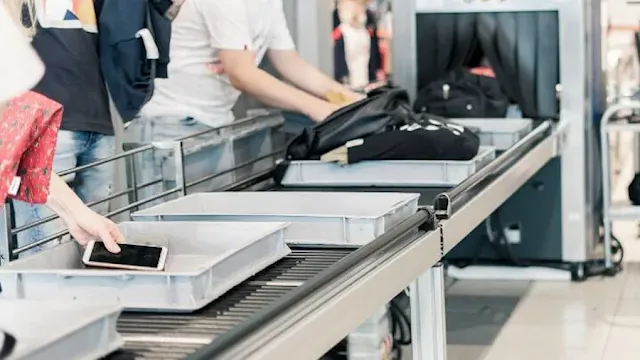
Airport Security in India 2026: 10 Items You Must Remove to Avoid Delays

What Do You Have to Remove at Airport Security in India Airport Security Check

Last year, while rushing to catch a flight from Mumbai to Bangalore, I got held up at security because I forgot to remove my laptop. The line grew longer, stress kicked in, and I nearly missed boarding. That moment made one thing clear—knowing exactly what to remove at airport security in India can save you time, stress, and even your flight.

This updated 2026 guide breaks down everything you need to know so you can move through security quickly and confidently.

Security Rules You Must Follow in 2026

Never Do Do Instead
Keep electronics inside your bag Place them in a separate tray
Carry liquids loosely Use a 1-liter transparent bag
Wear heavy metal accessories Keep accessories minimal
Pack power banks in checked baggage Carry them in cabin luggage only

Important: Only one cabin bag (up to 7kg) is allowed. Make sure all your essentials fit within this limit to avoid last-minute issues.

10 Items You Must Remove or Separate in 2026

1. Laptops and large electronics

2. Power banks and portable chargers

3. Liquids, aerosols, and gels

4. Jackets and outerwear

5. Belts and metal accessories

6. Shoes (when requested)

7. Smartwatches and fitness trackers

8. Coins and pocket items

9. Vapes and e-cigarettes

10. Spare lithium batteries

Electronics and Devices

Large Electronics

Laptops, tablets, and gaming consoles must be placed in a separate tray. Security scanners in 2026 are stricter, especially for devices with large batteries.

Power Banks

Power banks are only allowed in carry-on baggage and must be shown separately. Ensure they are below the 100Wh limit.

Quick Tip: Keep all electronics in one easy-to-access compartment to speed things up.

Clothing and Accessories

Jackets and Coats

Remove all outerwear and place it in the tray before scanning.

Belts and Jewelry

Bulky belts and metal accessories can trigger alarms. It’s best to remove them beforehand.

Liquids, Aerosols, and Gels

Follow the international 3-1-1 rule:

Each container must be 100ml or less and placed inside a single 1-liter transparent resealable bag.

This includes shampoo, sanitizer, perfume, toothpaste, and similar items.

Metallic Items

Empty your pockets completely before screening.

Place coins, keys, and small metal items inside your bag instead of leaving them loose in trays.

Pro Tips for Faster Security Clearance

Do This

  • Arrive at least 3 hours early
  • Wear slip-on shoes
  • Keep documents ready
  • Organize your carry-on smartly

Avoid This

  • Overpacking cabin baggage
  • Carrying restricted items
  • Ignoring staff instructions
  • Wearing excessive metal

Frequently Asked Questions

What items must be removed at airport security in India?

You must remove electronics, liquids, belts, jackets, and metallic items for separate screening.

Can I carry power banks in checked baggage?

No, power banks are only allowed in carry-on luggage and must be presented during screening.

Do I need to remove shoes at Indian airports?

Not always, but you may be asked to remove them if they trigger alarms during screening.

What is the liquid rule in India airports?

Liquids must be in containers of 100ml or less and placed in a single transparent 1-liter bag.

How early should I arrive at the airport in 2026?

It is recommended to arrive at least 3 hours before departure due to enhanced security checks.

Are smartwatches allowed during screening?

Yes, but they must be removed and placed in the tray with other electronics.

Do You Need Vaccinations to Travel to India? Complete Guide (2026)

Vaccines Needed for Travel to India

Planning a trip to India is an exciting adventure filled with vibrant culture, diverse landscapes, and unforgettable experiences. But before you pack your bags, there’s one crucial step you shouldn’t overlook—vaccinations.

While India does not require most vaccines for entry, several are strongly recommended to keep you safe. From food and water risks to mosquito-borne illnesses, preparing ahead ensures your journey stays focused on exploration, not health concerns.

This guide walks you through required vaccines, recommended shots, and practical health advice so you can travel confidently.

Required & Recommended Vaccinations

Highly Recommended for All Travelers

  • Hepatitis A – Spread through contaminated food and water.
  • Typhoid – Essential for travelers visiting smaller cities or rural areas.
  • Routine Vaccines – MMR, Tdap, polio, varicella, and flu.

Recommended Based on Travel Plans

  • Hepatitis B – For extended stays or possible medical procedures.
  • Japanese Encephalitis – For rural travel or long-term visits.
  • Rabies – For outdoor travelers or animal exposure.
  • Cholera – For areas with poor sanitation.

Mandatory Requirement

  • Yellow Fever – Required only if arriving from a risk country.

Quick Insight: Most travelers only need Hepatitis A, Typhoid, and routine vaccines—but your itinerary can change everything.

Vaccination Rules Overview

Never Assume Use Instead
No vaccines are needed Follow recommended vaccines for safety
Urban areas are risk-free Stay protected regardless of destination
Last-minute vaccination is enough Plan 4–8 weeks before travel

Pre-Travel Health Planning

  • Visit a travel clinic at least 6–8 weeks before departure
  • Discuss your itinerary in detail
  • Plan for boosters or multi-dose vaccines

Other Health Considerations

Stay Protected

  • Use mosquito repellent
  • Drink bottled water
  • Eat freshly cooked food

Avoid Risks

  • Tap water and ice
  • Raw or street food
  • Animal contact

Key Risks to Watch

  • Malaria and dengue (mosquito-borne)
  • Traveler’s diarrhea
  • Food and water contamination

Smart Travel Tips

  1. Book your vaccines early
  2. Pack a travel health kit
  3. Carry vaccination records
  4. Use travel insurance

Pro Tip: Even if you’re traveling short-term, Hepatitis A and Typhoid vaccines are highly recommended.

Disclaimer: Always consult a healthcare professional for personalized medical advice based on your health and itinerary.

FAQs

What vaccinations are mandatory for travel to India?

Only Yellow Fever is mandatory if you are traveling from a country where the disease is present.

Can I travel to India without vaccinations?

Yes, but it is strongly recommended to get key vaccines like Hepatitis A and Typhoid for your safety.

Which vaccines are most important?

Hepatitis A, Typhoid, and routine vaccines are the most essential for all travelers.

How early should I get vaccinated?

Ideally 4–8 weeks before travel to ensure full protection.

Is malaria a concern in India?

Yes, in some regions. Consult your doctor about preventive medication.

Do I need rabies vaccination?

It is recommended if you plan outdoor activities or may come into contact with animals.

Are vaccines required for short trips?

Yes, even short trips carry risk, especially for food and water-borne diseases.

Related Resources:

Do airport x-rays affect medications

Transporting Refrigerated Medication on India Flights

Travelling with Medicines to India

Overcoming Air Sickness on Indian Domestic Flights

External Resources:

Passport Health: India Travel Advice

WebMD: Vaccines for Travel to India

PMC: Health Risks in India

Passengers flying into India have to declare over Rs 25,000

How much Indian Rupees is allowed in an international flight to India?

If you're flying into India, understanding currency declaration rules is essential to avoid penalties or delays at customs. Whether you're carrying Indian Rupees, US Dollars, or other foreign currency, there are strict thresholds you must follow. This complete guide simplifies the latest 2026 rules so you can travel confidently and stay compliant.

This article covers INR limits, foreign currency rules, declaration procedures, and practical tips to ensure a smooth arrival experience.

Overview of Currency Rules

India’s customs regulations require passengers to declare certain amounts of currency when entering the country. These rules are enforced to prevent illegal money movement and ensure transparency.

Key Rule: Always declare currency above permitted limits to avoid confiscation or penalties.

Currency Rules Table

Category Limit Declaration Required?
Indian Currency (INR) Above ₹25,000 Yes
Foreign Currency (Cash) Above USD 5,000 Yes
Foreign Currency (Total) Above USD 10,000 Yes
Foreign Tourists Duty-Free ₹25,000 No (within limit)
Indian Residents Duty-Free ₹75,000 No (within limit)

Indian Rupees Limit

Who Needs to Declare?

Indian residents and people of Indian origin must declare INR exceeding ₹25,000 upon arrival.

Foreign nationals are not allowed to bring Indian currency into India.

Example Scenario

If you are carrying ₹30,000 in cash, you must declare it at the Red Channel.

Foreign Currency Rules

There is no restriction on how much foreign currency you can bring, but declaration is mandatory beyond limits.

  • Above USD 5,000 (cash only) → Declaration required
  • Above USD 10,000 (total including instruments) → Declaration required

Common Questions

Allowed:

  • Carrying $3,000 USD without declaration
  • Multiple currencies within limits

Requires Declaration:

  • $6,000 USD cash
  • $50,000 total currency

How to Declare Currency

  1. Proceed to Red Channel at arrival airport
  2. Fill Currency Declaration Form
  3. Provide passport and travel details
  4. Submit details of currency amount
  5. Allow verification if required

Download Customs Declaration Form

Duty-Free Allowances

  • Indian Residents / PIO: ₹75,000
  • Foreign Tourists: ₹25,000

Plan your purchases carefully to stay within duty-free limits and avoid extra charges.

Prohibited & Restricted Items

  • Firearms and weapons
  • Drugs and narcotics
  • Wildlife products
  • Counterfeit goods

Failure to declare restricted items can lead to severe penalties or confiscation.

Smart Travel Tips

  • Keep currency organized for inspection
  • Carry proof of source for large funds
  • Use official CBIC portals for updates
  • Always choose Red Channel if unsure

Frequently Asked Questions

How much Indian currency can I carry to India?

You can carry up to ₹25,000 without declaration. Anything above must be declared.

Can I carry $50,000 cash to India?

Yes, but you must declare it since it exceeds USD 10,000.

Do I need to declare $3,000 USD?

No, amounts below USD 5,000 in cash do not require declaration.

What happens if I don’t declare money?

Undeclared currency can be confiscated and penalties may apply.

Can foreigners bring Indian Rupees?

No, foreign nationals are not allowed to import Indian currency.

Where do I declare currency at the airport?

Go to the Red Channel and submit a Currency Declaration Form.

What is the duty-free allowance in India?

₹75,000 for residents and ₹25,000 for foreign tourists.

Is there a limit on foreign currency?

No limit, but declaration is required above USD 10,000.

Can You Bring Contact Solution on a Flight? Rules for Carry-On & Checked Bags

Carrying Contact Lens Solution on India Domestic Flight?

Planning to fly with contact lenses? Good news—you can absolutely bring contact solution on a plane. But like most liquids, there are a few important rules you need to follow to avoid delays at airport security.

This complete guide breaks down exactly what’s allowed, what to avoid, and how to pack smart so you can travel comfortably without any last-minute surprises.

Flight Rules for Contact Solution

Never Do Use Instead
Carry large bottles in carry-on without declaring Use travel-size bottles (100ml or less)
Pack liquids loosely in bags Use a clear zip-top plastic bag
Ignore medical liquid declaration rules Inform security if carrying larger quantities
Risk leaks in your luggage Seal bottles in plastic bags

Key Insight: Contact lens solution is considered a medically necessary liquid, which means you can carry more than the standard limit—but you must declare it at security.

Carry-On vs Checked Baggage

Carry-On Rules

You can bring contact solution in your carry-on if it follows the 3-1-1 rule. That means containers must be 100 ml (3.4 oz) or smaller and fit inside one clear, resealable bag.

Larger Bottles

If you need a larger bottle, you can still carry it, but you must declare it to security officers. It may go through additional screening.

Warning: Some peroxide-based solutions may trigger alarms during screening, especially those with red caps.

Checked Baggage

There are no strict size limits in checked luggage, making it the best option for longer trips.

Is Saline Solution Allowed?

Yes, saline solution is allowed in carry-on luggage under the same rules as contact solution.

For convenience and faster screening, keep saline solution in travel-size bottles and store them in your liquids bag.

Can You Use Travel Bottles?

Yes, transferring solution into travel-sized bottles is a smart move for flying.

Always use clean, leak-proof bottles and label them properly to avoid confusion during security checks.

Flying with Contact Lenses

Carry-On Essentials

You can carry contact lenses easily in your carry-on. They are not restricted like liquids when stored in a lens case.

Extra Safety

It’s always a good idea to carry extra lenses and a backup pair of glasses in case of irritation or loss.

1. Pack lenses in a secure case

2. Keep solution accessible

3. Carry backup glasses

4. Bring rewetting drops

Smart Packing Tips for Contact Lens Users

Best Practices

  • Use travel-size bottles
  • Pack liquids in a clear bag
  • Carry backup glasses
  • Keep items easily accessible

Avoid These Mistakes

  • Overpacking liquids
  • Ignoring leak protection
  • Forgetting to declare large bottles
  • Using unclean containers

Frequently Asked Questions

Can you bring contact solution on a plane?

Yes, contact solution is allowed in both carry-on and checked baggage, following liquid rules and security guidelines.

How big of a bottle can I bring?

You can bring bottles up to 100 ml in carry-on. Larger bottles must be declared or packed in checked luggage.

Will airport security take my contact solution?

No, as long as it meets liquid rules or is declared properly, your contact solution will not be taken.

Is contact lens solution considered a medical liquid?

Yes, it is classified as medically necessary, which allows some flexibility beyond standard liquid limits.

Can I carry saline solution in my carry-on?

Yes, saline solution is allowed under the same liquid restrictions as contact solution.

Should I pack contact solution in checked baggage?

For long trips, it is easier to pack larger bottles in checked luggage to avoid restrictions.

From iPhones to Gold: What You Can (and Can’t) Bring Into India Without Paying Tax (2026 Guide)

New India customs rules explained: What you can bring home without paying duty Big relief for travellers to India: New baggage rules e...