Can You Bring Ozempic Needles on a Plane? Airport Security Rules & Travel Tips 2026

Updated: April 20, 2026
Quick Facts: Ozempic on Flights in India (2026)
  • Allowed in cabin baggage? Yes — exempt from 100ml rule (BCAS)
  • Checked baggage? Never — refrigeration risk
  • Doctor's letter: Strongly recommended; required for international
  • Storage (unopened): 2–8°C refrigerated
  • Storage (in-use pen): Up to 25°C, max 56 days after first use
  • Needles in cabin bag: Yes — capped and in original packaging
  • At security: Declare proactively; may be X-rayed separately
  • Authority: BCAS (India), consistent with TSA/EASA internationally

Is Ozempic Allowed on Flights in India?

Yes. Ozempic (semaglutide) injectable pens, pen needles, and vials are permitted in cabin baggage on all Indian domestic and international flights. The Bureau of Civil Aviation Security (BCAS) classifies injectable prescription medications as medically necessary items, exempt from the standard 100ml liquids restriction.

Key Point: Ozempic is used for Type 2 diabetes and weight management (obesity treatment). Both indications qualify as medically necessary under BCAS guidelines. Whether you use Ozempic for diabetes or for weight loss, the same travel rules apply — your medication is allowed in cabin baggage.

Does Ozempic Follow the 100ml Liquids Rule?

No. Ozempic injectable solution is exempt from the 100ml cabin liquid rule on Indian flights. You do not need to: put it in the 1-litre transparent bag, limit your pen to 100ml or less, buy special travel-size packaging, or carry a doctor's letter to pass through Indian domestic security (though one is strongly recommended).

This exemption applies to:

  1. Ozempic pre-filled injection pens (0.25mg, 0.5mg, 1mg, 2mg)
  2. Ozempic pen needles (NovoFine or compatible)
  3. Insulin and other injectable medications
  4. Other liquid prescription medications required for your condition

How to Pack Ozempic for a Flight

  1. Keep in original manufacturer packaging with the pharmacy label showing your name, prescription number, and medication name. This is your primary proof that the medication is prescribed to you.
  2. Carry your prescription or doctor's letter separately in your travel documents folder. Even if not required domestically, this is essential for international travel.
  3. Pack in an insulated medication case to maintain temperature. Unopened Ozempic pens must be stored at 2–8°C. In-use pens (after the first injection) can be at room temperature up to 25°C for up to 56 days.
  4. Place in cabin baggage — never checked. The cargo hold can reach temperatures well below 0°C, which can permanently destroy Ozempic. A frozen pen is no longer effective even after thawing.
  5. Keep pen needles capped and in their original box. Do not place loose uncapped needles in your bag.
Never Pack Ozempic in Checked Baggage. Cargo hold temperatures can reach −20°C or below. Frozen Ozempic is permanently damaged — it cannot be recovered by thawing. Always keep your Ozempic in cabin baggage regardless of how full it is.

Keeping Ozempic Cold on a Flight

Pen StatusStorage TemperatureDurationTravel Solution
Unopened (sealed) pen2–8°C (refrigerated)Until expiry dateInsulated medical case / FRIO cooler
In-use pen (after 1st injection)Room temp up to 25°CMax 56 daysNo refrigeration needed for short flights
In-use pen (warm climate)Must stay below 25°CMax 56 days from first useKeep away from direct sunlight and heat
FRIO Cooling Cases: FRIO evaporative cooling wallets are the most popular travel solution for Ozempic. They work by evaporation — no ice, no batteries, no refrigeration needed. Soak in cold water for 5–15 minutes, and they keep medication cool for 45+ hours. Available on Amazon India for ₹1,500–2,500. They pass through airport security without any issues.

For flights under 5 hours: if your Ozempic pen is already in use (after the first injection), it can remain at room temperature and requires no special cooling for the flight duration.

For very long international flights (8+ hours): ask the cabin crew to refrigerate your sealed backup pen supply in the galley refrigerator. Most airlines will accommodate this request when you explain it is prescription medication.

Pen Needles in Cabin Baggage

Ozempic pen needles (NovoFine 4mm, 6mm, or equivalent) are permitted in cabin baggage on Indian flights:

ItemCabin BaggageNotes
Ozempic pen with needle attached✅ PermittedCap the needle before travel
Spare pen needles (box)✅ PermittedKeep in original packaging
Used needles for disposal✅ Permitted (capped)Use sharps container; dispose at destination
Sharps disposal container✅ PermittedKeep sealed during flight
Sharps Disposal: Do not leave used Ozempic needles in the seat pocket or aircraft lavatory waste bin. Ask the cabin crew for a sharps disposal bag — most airlines including Air India and IndiGo have these available on request. Carry a small hard case for used needles if you plan to inject during the flight.

Going Through Security with Ozempic

  1. Inform the CISF officer proactively before placing bags on the X-ray belt: "I am carrying prescription injectable medication — Ozempic — in my cabin bag."
  2. Remove the medication case from your bag and place in a separate tray for X-ray screening if requested by the officer.
  3. Be prepared for a swab test. Medication containers — particularly insulated cases — may be swab-tested for explosive residue. This is routine and takes 30–60 seconds.
  4. Show your prescription or doctor's letter if asked. For domestic flights, a medication label with your name is usually sufficient. For international, always have a signed doctor's letter.
  5. Do not worry about X-ray exposure to the medication. The X-ray doses used in airport security scanners are far too low to damage Ozempic's chemical structure.
Ladies Security Lane: Female passengers should use the dedicated ladies security lane at Indian airports. Female CISF officers handle all screening, providing a more comfortable environment for carrying injectable medication.

Doctor's Letter — Do You Need One?

SituationDoctor's Letter Required?
Indian domestic flightNot mandatory — prescription label sufficient
International flight from IndiaStrongly recommended; required by some countries
Travelling to Middle East / AsiaRequired — semaglutide rules vary by country
Travelling to UK / EU / USARecommended; typically accepted without issue
Customs in country of arrivalRequired for any quantity above personal use
Semaglutide Legal Status Varies. Ozempic (semaglutide) is a controlled or regulated medication in some countries. Before travelling internationally with Ozempic, verify the legal status in your destination country. Some Gulf states and Asian countries have restrictions on importing injectable medications without prior authorisation.
Standard Doctor's Letter Content: Ask your doctor to include: your full name, diagnosis (Type 2 diabetes / obesity), medication name (semaglutide 0.5mg/1mg/2mg, brand: Ozempic), dosage frequency (weekly injection), quantity being carried, and statement that medication must be kept accessible in cabin baggage. Have it signed and on letterhead.

Using Ozempic on the Plane

Ozempic is a once-weekly injection, so most passengers will not need to inject during the flight. However, if your injection day falls on a travel day:

  1. Inform cabin crew when boarding that you may need to administer a prescription injection during the flight
  2. Use the aircraft lavatory for privacy — the most practical option for injections on board
  3. Administer at the recommended site (abdomen, thigh, or upper arm) — all work in a seated or standing position in the lavatory
  4. Cap the needle immediately after use and place in a sharps container or hard case
  5. Ask cabin crew for a sharps disposal bag for used needles — do not place in the regular waste bin

International Flights — Country-Specific Rules

RegionOzempic RulesNotes
India (BCAS)Fully allowed; 100ml exempt; prescription labelDoctor's letter recommended
USA (TSA)Fully allowed; 3-1-1 exempt; prescription labelFDA-approved medication
UK (CAA)Allowed with doctor's letterGP/consultant letter recommended
EU / SchengenGenerally allowed with prescriptionDoctor's letter in English or local language
UAE / GulfCheck current rules before travelSome Gulf states regulate semaglutide
Australia (TGA)Allowed with valid prescriptionAPVMA/TGA approved for import with prescription

Ozempic Travel Checklist

Pack in Cabin Baggage
  • Ozempic pen(s) in original packaging
  • Pen needles (NovoFine) in original box
  • FRIO or insulated medication case
  • Prescription copy / doctor's letter
  • Small sharps disposal container
  • Alcohol swabs for injection site
Never in Checked Baggage
  • Ozempic pens (freeze damage risk)
  • All injectable medications
  • Insulin and biologics
  • Any temperature-sensitive medication

Pro Tips: Travelling with Ozempic on Indian Flights

  • Carry twice your needed supply. If your trip is 4 weeks (4 injections), carry 8 weeks' worth. Ozempic supply disruptions occur in India and internationally. A lost pen or customs complication can leave you without medication for weeks if you don't have backup.
  • Keep one pen in your carry-on and backup in a travel companion's carry-on. If one bag is gate-checked or delayed, your medication remains accessible. Never put your only supply in a single bag.
  • Use a FRIO wallet for the flight and switch to hotel refrigerator at destination. FRIO wallets are great for the journey but not for long-term storage (more than 48 hours). At your hotel, refrigerate unopened pens between 2–8°C as soon as you arrive.
  • Photograph your prescription and medication before travel. A photo on your phone of the prescription, medication box, and batch number provides documentation for any customs issue, insurance claim, or emergency replacement.
  • Research Ozempic availability at your destination before travel. If you lose your medication, can you get a replacement? Ozempic is available at major Indian pharmacies in metros, but may not be stocked in smaller towns. Know the generic name (semaglutide) and dosage to ask at any pharmacy.
  • Do not adjust your injection schedule unless advised by your doctor. If a long-haul flight shifts your weekly injection day, consult your doctor before travel about the appropriate approach. For Ozempic (weekly injection), a 1–2 day shift is generally manageable — but always check with your healthcare provider first.
  • Declare at customs if you are bringing more than personal use quantities internationally. A 3-month supply of Ozempic (12 pens) is a personal use quantity. If you are carrying significantly more, declare at customs and carry your prescription to demonstrate legitimate personal use.
  • Check if Ozempic requires import approval in your destination country. Some countries require advance import authorisation for biological injectable medications including semaglutide. Check with the destination country's embassy or health ministry website before travelling with Ozempic.

Related Articles

Official External Resources

Frequently Asked Questions

Can you bring Ozempic needles on a plane?

Yes. Ozempic pens and needles are permitted in cabin baggage on Indian flights. They are exempt from the 100ml rule as medically necessary items. Declare at security, carry in original packaging with prescription label.

Does Ozempic need to go in the 100ml liquids bag on flights?

No. Ozempic injectable solution is exempt from the 100ml rule on Indian flights. It does not need to be in the 1-litre transparent bag. Carry in original packaging with prescription.

How should I pack Ozempic for a flight?

Keep in original packaging with prescription label. Store in insulated FRIO wallet or medication case. Pack in cabin baggage ONLY — never checked baggage. Unopened pens need 2–8°C; in-use pens up to 25°C for max 56 days.

Do I need a doctor's letter to carry Ozempic on a plane?

Not mandatory for Indian domestic flights (prescription label sufficient). Strongly recommended for international travel. Required by some countries. Ask your doctor for a signed letter on letterhead before any international trip.

Can I carry Ozempic pen needles in cabin baggage?

Yes. Capped pen needles in original packaging are permitted in cabin baggage. Carry a sharps container for used needles. Ask cabin crew for sharps disposal bags on board.

Will security X-ray my Ozempic medication?

Yes — standard X-ray screening. The dose is too low to affect the medication. May be swab-tested for explosives residue. Declare proactively for the smoothest process.

Can I use my Ozempic pen on an airplane?

Yes. Inform cabin crew when boarding. Use the lavatory for privacy. Cap needle immediately after use. Ask crew for sharps disposal bag — do not place used needles in the regular waste bin.

How do I keep Ozempic cold on a long flight?

Use a FRIO evaporative cooling wallet (45+ hour cooling, no ice needed). For in-use pens (after first injection), room temperature up to 25°C is fine for max 56 days. For sealed backup pens on very long flights, ask cabin crew to refrigerate in the galley.

©2010–2026 Indiabaggagerules.com — All rights reserved.
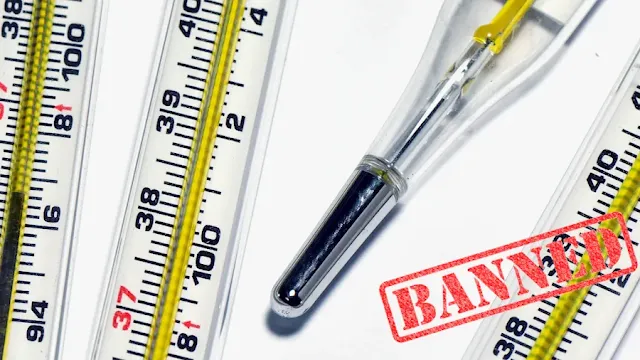
Mercury Thermometers on Indian Flights: Restrictions & Safe Alternatives 2026

Updated: April 19, 2026
Mercury-Filled Thermometer
Quick Facts: Mercury Thermometers on Indian Flights 2026
  • Cabin baggage: ❌ Mercury thermometers BANNED — all Indian domestic & international flights
  • Checked baggage: ⚠️ ONE mercury thermometer only, in protective case
  • Why banned: Mercury vapour is toxic; mercury dissolves aluminium aircraft structures
  • Digital thermometers: ✅ Fully allowed — cabin AND checked baggage
  • Infrared thermometers: ✅ Fully allowed — no restrictions
  • Mercury barometers/manometers: ❌ Prohibited — cargo shipment only
  • Best action: Replace mercury thermometer with digital before any flight
  • Authority: BCAS, IATA Dangerous Goods Regulations (DGR), DGCA

Why Mercury Thermometers Are Banned on Planes

Mercury thermometers are one of the few household items that pose a genuinely catastrophic risk on aircraft. The ban is not bureaucratic caution — it reflects real aviation safety history:

  1. Mercury vapour toxicity: Even a few drops of mercury in a sealed aircraft cabin can produce vapour concentrations that cause neurological symptoms in passengers and crew — headache, confusion, tremors. At higher concentrations, incapacitation is possible
  2. Aluminium amalgamation: Mercury reacts with aluminium metal to form an amalgam (alloy), weakening the metal. Aircraft frames, fuselage panels, and structural components are primarily aluminium. A mercury spill can cause invisible corrosion that compromises structural integrity over time
  3. Impossible to clean: Once mercury penetrates riveted joints, corrugated panels, or wiring channels in an aircraft, complete decontamination is often impossible. Aircraft have been written off as total losses after mercury spills
This Is Why the Ban Is Absolute. Unlike most restricted items where small quantities are permitted with caveats, mercury thermometers in cabin baggage have zero tolerance. Even a single thermometer is prohibited. The potential consequences of breakage are too severe.

Cabin Baggage Rules — Mercury Thermometers

Mercury thermometers are completely prohibited in cabin baggage on all Indian flights. This applies to: clinical/fever thermometers, laboratory thermometers, candy/cooking thermometers, and any other thermometer containing mercury. There are no exceptions, no quantity thresholds, and no medical exemptions for mercury thermometers in cabin baggage.
Thermometer TypeCabin BaggageNotes
Mercury glass thermometer (clinical)❌ PROHIBITEDNo exceptions — not even one
Mercury glass thermometer (laboratory)❌ PROHIBITEDMust be shipped as dangerous goods
Mercury-in-glass cooking thermometer❌ PROHIBITEDAny mercury device is banned
Digital oral/rectal thermometer✅ AllowedNo restrictions
Infrared ear thermometer✅ AllowedNo restrictions
Infrared forehead thermometer✅ AllowedNo restrictions
Alcohol-based glass thermometer (non-mercury)✅ AllowedCheck: red/blue liquid = alcohol, silver = mercury
How to tell if your thermometer contains mercury: Mercury thermometers have a silver-coloured liquid. Alcohol thermometers have red or blue coloured liquid and are safe to travel with. Digital thermometers have a screen display. When in doubt, buy a new digital thermometer before travel.

Checked Baggage Rules — Mercury Thermometers

IATA DGR Special Provision A3: One personal mercury clinical thermometer per passenger may be carried in checked baggage when packed in a protective case. This is the only exception to the complete mercury prohibition — one unit, checked baggage only, in a case that prevents breakage if the bag is dropped or compressed during baggage handling.
  1. Use a rigid protective case (the original packaging or a purpose-made thermometer case)
  2. Wrap the thermometer in bubble wrap inside the case for additional protection
  3. Place in the center of your checked bag surrounded by soft clothing
  4. Limit to one mercury thermometer per passenger — no more
  5. Consider: is the risk worth it? A digital thermometer costs ₹200–500 and eliminates all risk

Safe Alternatives to Mercury Thermometers for Travel

Alternative TypeCabin BagChecked BagAccuracyCost (India)
Digital oral thermometer✅ Yes✅ Yes±0.1°C₹200–500
Digital rectal thermometer (infants)✅ Yes✅ Yes±0.1°C₹300–600
Infrared ear thermometer✅ Yes✅ Yes±0.2°C₹800–2,000
Infrared forehead thermometer✅ Yes✅ Yes±0.2°C₹500–1,500
Alcohol glass thermometer✅ Yes✅ Yes±0.1°C₹100–300
Digital thermometers are better for travel in every way. They are faster (10–30 seconds vs 2–3 minutes for mercury), unbreakable, more readable, and produce no toxic hazard if dropped. The slightly higher cost (₹200–500) is negligible compared to the risk and hassle of travelling with a mercury thermometer.

What Happens If Mercury Spills on a Plane

The consequences of a mercury spill on a passenger aircraft are severe and immediate:

  1. Emergency landing or diversion: If mercury is detected mid-flight, the aircraft will divert to the nearest airport — potentially in another country with full emergency response
  2. Passenger evacuation: All passengers evacuated; medical assessment for vapour exposure
  3. Aircraft grounded: The aircraft is immediately taken out of service
  4. Decontamination: Specialist hazmat teams required; process takes 3–14 days minimum
  5. Cost: Decontamination costs commonly exceed USD 100,000–500,000; aircraft may be written off
  6. Passenger liability: The passenger responsible for the mercury can be held liable for all costs under the Carriage by Air Act and applicable civil law

Other Mercury Devices — Barometers & Manometers

Mercury barometers, manometers, and scientific instruments containing mercury are completely prohibited on all passenger flights — cabin and checked baggage alike. These devices typically contain much larger quantities of mercury than a clinical thermometer (100–600ml vs 1–3ml) and cannot be safely carried even in checked baggage. They must be shipped as IATA Class 8 dangerous goods cargo with proper documentation.

Mercury vs Digital — Quick Reference

FactorMercury ThermometerDigital Thermometer
Cabin baggage❌ BANNED✅ Allowed
Checked baggage⚠️ One only, in case✅ Allowed, no limit
Reading time2–3 minutes10–30 seconds
BreakabilityHigh — glass tubeLow — solid device
Hazard if brokenToxic mercury releaseNone
Cost₹50–150₹200–2,000
Accuracy±0.1°C (if intact)±0.1–0.2°C

Pro Tips: Thermometers and Mercury on Indian Flights

  • Replace your mercury thermometer before any flight — period. A digital thermometer costs ₹200–500 at any pharmacy, is faster, more durable, and eliminates all risk of confiscation, liability, and potential emergency. There is no compelling reason to travel with a mercury thermometer when digital alternatives are universally available.
  • Don't try to hide a mercury thermometer in your cabin bag. Airport X-ray operators are specifically trained to identify mercury thermometers — the dense silver column is clearly visible on the X-ray monitor. Attempting to conceal it will result in confiscation, a formal security warning, and potential questioning by CISF officers.
  • If you must carry a mercury thermometer, check it — don't cabin bag it. The one-thermometer-in-checked-baggage exception exists for a reason. Pack it in the original rigid case, double it in bubble wrap, put it in the center of your checked suitcase, and hope baggage handlers treat your bag gently.
  • Infrared thermometers are the best travel thermometer. Infrared forehead and ear thermometers are accurate within ±0.2°C, take 1–2 seconds to read, require no patient contact (ideal when travelling with children or caring for sick family members), and have zero aviation restrictions. They are worth the ₹500–2,000 investment for frequent travellers.
  • Know what's in your thermometer before you pack. Silver liquid = mercury (BANNED in cabin). Red or blue liquid = alcohol (ALLOWED). No liquid visible = digital (ALLOWED). If unsure, don't pack it — buy a new digital thermometer instead.
  • If you accidentally pack a mercury thermometer and security catches it, cooperate fully. The thermometer will be confiscated. You will likely receive a formal warning. Cooperate calmly, don't argue, and accept the confiscation. The alternative — attempting to proceed with it — carries far more serious consequences.
  • Scientific and laboratory mercury instruments require specialist shipping. If you need to transport laboratory mercury thermometers, manometers, or barometers professionally, they must be shipped as IATA dangerous goods Class 8 cargo through a certified dangerous goods shipper — not as passenger baggage under any circumstances.
  • Check your first aid kit before packing. Many household first aid kits still contain mercury thermometers purchased years ago. Check your kit before every international trip — an old mercury thermometer forgotten at the bottom of a toiletry bag is a common cause of security delays for travellers who genuinely don't know it's there.

Related Articles

Official External Resources

Frequently Asked Questions

Are mercury-filled thermometers banned on Indian flights?

Yes — mercury thermometers are completely banned from cabin baggage on all Indian domestic and international flights. One mercury clinical thermometer may be carried in checked baggage in a protective case. Digital and infrared thermometers are fully permitted in both cabin and checked baggage.

Why are mercury thermometers not allowed on planes?

Mercury vapour is toxic at low concentrations; liquid mercury dissolves aluminium aircraft structures through amalgamation causing structural damage; and mercury is nearly impossible to fully remove from an aircraft once spilled. These risks make mercury one of the most strictly controlled substances in aviation.

Can I carry a digital thermometer on an Indian flight?

Yes. Digital thermometers are fully permitted in both cabin and checked baggage on all Indian flights with no restrictions. They contain no mercury, pose no hazard, and are faster and more durable than mercury thermometers. Replace any mercury thermometer with a digital one before travel.

Can I carry a medical thermometer in my cabin bag on Indian flights?

Digital and infrared thermometers: yes, fully permitted in cabin baggage. Mercury glass thermometers: prohibited from cabin baggage with no exceptions. Use a digital or infrared thermometer for travel — they are more convenient, faster, and fully airline compliant.

Is a fever thermometer allowed in checked baggage on Indian flights?

One mercury clinical thermometer in a sturdy protective case is permitted in checked baggage per IATA DGR Special Provision A3. Digital and infrared thermometers have no restrictions in checked baggage. The limit is one mercury thermometer per passenger — not multiple.

What happens if mercury spills on a plane?

The aircraft is immediately grounded; passengers are evacuated; hazmat decontamination begins (3–14 days minimum); costs commonly exceed USD 100,000–500,000; and the responsible passenger may face civil liability for all costs. Mercury spills have written off entire aircraft in aviation history.

What are safe alternatives to mercury thermometers for travel?

Digital oral thermometer (₹200–500), infrared ear thermometer (₹800–2,000), infrared forehead thermometer (₹500–1,500), and alcohol-in-glass thermometers (red/blue liquid, not mercury). All are fully permitted in cabin and checked baggage on all Indian and international flights.

Are barometers and mercury manometers allowed on flights?

No. Mercury barometers and manometers are prohibited from all passenger aircraft — both cabin and checked baggage. They must be shipped as IATA Class 8 dangerous goods cargo with proper documentation. Aneroid and digital barometers are permitted with no restrictions.

©2010–2026 Indiabaggagerules.com — All rights reserved.

India Customs Website Guide 2026 – CBIC Rules, Duty-Free Limits & Import Regulations

Updated: April 19, 2026

Indian Customs Website

Planning your arrival in India? Whether you're landing in Delhi, Mumbai, or Chennai, understanding customs regulations can make your journey smooth and stress-free. This guide breaks down everything—from duty-free allowances to prohibited items—so you can confidently navigate Indian customs. We’ll also highlight official resources, tools, and insider tips to help you stay compliant and avoid unexpected charges.

From baggage limits to currency declarations, this page is your go-to resource for the latest Indian customs updates. Keep checking back for new insights and updates!

Central Board of Indirect Taxes and Customs (CBIC)

The CBIC is India’s main authority for customs regulations. It manages duty assessments, baggage rules, and trade compliance. Travelers and importers can access official guidelines directly on the CBIC website or explore detailed compliance requirements through ICEGATE Compliance Portal.

Quick Insight: The ICEGATE portal is highly recommended for checking exact duty rates and item-specific import rules before traveling.

Passenger Rules & Allowances

Green vs Red Channel

ChannelWhen to Use
Green ChannelNo dutiable or restricted goods
Red ChannelCarrying dutiable, restricted, or prohibited items

Duty-Free Allowance

  • General allowance: Up to ₹50,000 for eligible returning residents
  • Applies after minimum 3-day stay abroad
  • Personal items are usually exempt

Jewellery Limits

  • Men: Up to ₹20,000 duty-free
  • Women: Up to ₹50,000 duty-free
  • Condition: Stay abroad over 1 year

Currency Declaration

  • Cash above USD 5,000 must be declared
  • Total (including instruments): USD 10,000+

Failure to declare excess currency can result in penalties or confiscation.

Prohibited & Restricted Items

Allowed with Restrictions:

  • Electronics within limits
  • Declared foreign currency
  • Personal goods

Strictly Prohibited:

  • Narcotics and drugs
  • Wildlife products and ivory
  • Counterfeit goods
  • Illegal weapons
  • Pornographic materials

Import Regulations

Most imports fall under the Open General License (OGL), but certain goods require approvals.

  1. Prepare invoice and packing list
  2. Provide bill of lading
  3. Submit GATT declaration
  4. Check duties via ICEGATE portal

Key Customs Resources

Download the “Indian Customs – Guide to Travellers” mobile app for real-time duty calculators and support.

Customs Commissionerates

India operates multiple regional customs offices handling airports and ports.

Frequently Asked Questions

What is the duty-free allowance in India?

Returning residents can typically bring goods worth up to ₹50,000 duty-free after a minimum 3-day stay abroad.

Do I need to declare electronics?

Yes, high-value electronics exceeding allowed limits must be declared at the Red Channel.

What happens if I don’t declare items?

You may face penalties, confiscation, or fines depending on the violation.

Can I bring gold into India?

Yes, within specified duty-free limits depending on gender and duration of stay abroad.

Where can I check exact duty rates?

Use the ICEGATE Compliance Information Portal for precise calculations.

Is foreign currency allowed?

Yes, but amounts exceeding USD 5,000 (cash) must be declared.

Are food items allowed?

Some packaged food is allowed, but restrictions apply depending on category.

What is the customs mobile app?

The Indian Customs app provides rules, duty calculators, and contact support.

Must-Know Rules to Bring Food & Snacks to India Without Hassle 2026

Updated: April 19, 2026
Packaged Chocolates for Travel
Quick Facts: Bringing Food & Snacks to India (2026)
  • Packaged chocolate & sweets: ✅ Allowed — within ₹75,000 duty-free limit
  • Fresh fruit & vegetables: ⚠️ Restricted — plant quarantine rules apply
  • Fresh meat & dairy: ⚠️ Restricted — animal quarantine permits needed
  • Canned/processed meat: ✅ Generally allowed in sealed packaging
  • Packaged spices & masalas: ✅ Allowed — personal quantities
  • Processed/vacuum cheese: ✅ Generally allowed in sealed packaging
  • Declaration required: For fresh produce, meat, dairy, or bulk quantities
  • Authority: CBIC, Plant Quarantine (PQRS), Animal Quarantine (AQCS)

General Rules for Bringing Food to India

India's food import rules are governed by two main frameworks: the Central Board of Indirect Taxes & Customs (CBIC) for duty purposes, and the Ministry of Agriculture's Plant Quarantine and Animal Quarantine services for biosecurity. The key distinction is:

Commercial Packaging = Generally OK | Fresh/Raw = Restricted. Commercially packaged, processed, and hermetically sealed food items are treated as manufactured goods and are generally permitted within your ₹75,000 duty-free allowance. Fresh, raw, or unprocessed food of plant or animal origin faces biosecurity restrictions and may require import permits or be confiscated.
The ₹75,000 General Duty-Free Allowance (Feb 2026): All food items you bring to India (chocolate, snacks, spices, etc.) count toward your general ₹75,000 duty-free goods allowance. For personal quantities of snacks and food, you are unlikely to hit this limit. Very large bulk quantities of food may attract duty above ₹75,000.

Chocolate & Confectionery

Commercially packaged chocolate is one of the most successfully imported personal food items to India. Toblerone, Lindt, Cadbury UK/US, Ferrero Rocher, KitKat, Haribo — all regularly come through Indian customs without issue. Key requirements: commercially packaged (not homemade), sealed original packaging, personal quantities (a few boxes/bars rather than suitcases full).
ItemAllowed?Notes
Commercially packaged chocolate bars/boxes✅ YesOriginal sealed packaging; personal quantity
Candy, gummies, jelly sweets✅ YesCommercially sealed; within ₹75,000 limit
Biscuits and cookies (packaged)✅ YesFactory sealed; personal use quantity
Homemade chocolates/sweets⚠️ May be questionedNo official packaging; customs discretion
Chocolate liqueurs/spirits⚠️ Check alcohol rulesCounts toward 2-litre alcohol allowance if above 0.5% ABV

Fresh Fruit & Vegetables

Fresh fruit and vegetables are subject to strict plant quarantine restrictions. India's Plant Quarantine and Regulatory Services (PQRS) operates under the Ministry of Agriculture to prevent the introduction of plant pests and diseases. Most fresh produce from abroad requires an import permit and phytosanitary certificate — documents tourists and personal travelers cannot easily obtain. In practice, fresh fruit and vegetables brought without permits are confiscated at Indian customs.
ItemStatusNotes
Fresh fruit (apples, oranges etc.)❌ Generally confiscatedPlant quarantine restrictions; no tourist permits
Fresh vegetables❌ Generally confiscatedSame plant quarantine rules
Dried fruit (raisins, dates, apricots)✅ Generally allowedCommercially packaged; processed/dried
Canned fruit✅ AllowedCommercially processed and sealed
Fruit-based snacks/bars✅ AllowedCommercially processed
Seeds for planting❌ RestrictedImport permits required

Meat & Poultry Products

ItemStatusNotes
Fresh/chilled/frozen meat❌ RestrictedImport permit + health certificate required
Canned meat (spam, corned beef)✅ Generally allowedCommercially sealed; personal use quantity
Beef jerky (commercially packaged)✅ Generally allowedProcessed, commercially sealed
Canned fish/seafood✅ AllowedCommercially sealed tins
Salami/cured meats (vacuum sealed)⚠️ VariableSome allowed; declare at customs
Pork products (to states with restrictions)⚠️ Check state rulesSome states have pork restrictions
Note on Beef Products: While India's customs rules do not absolutely prohibit commercially packaged beef (e.g., canned corned beef), the cultural and legal sensitivity around beef in many Indian states makes this a high-risk item to bring. Customs officers have discretion, and some states have state-level restrictions on beef. Exercise caution.

Cheese & Dairy Products

ItemStatusNotes
Commercially packaged hard cheese (vacuum sealed)✅ Generally allowedParmesan, gouda, cheddar in factory packaging
Processed cheese (individually wrapped slices)✅ AllowedCommercially processed and sealed
Fresh soft cheese (brie, camembert)⚠️ May be restrictedDeclare; may require dairy import documentation
Unpasteurized cheese❌ RestrictedDairy import rules apply
Infant formula / baby milk powder✅ Allowed (100ml exemption)Medically exempt; reasonable personal quantity
Commercially sealed butter✅ Generally allowedFactory sealed packaging

Spices, Herbs & Masalas

Spices and masalas are among the safest food items to bring to India. Commercially packaged spices from Indian grocery stores abroad (MDH, Everest, Shan, Badshah) regularly travel back to India without issue. They are processed and sealed, pose no biosecurity risk, and are within the ₹75,000 personal allowance at typical personal quantities.
ItemStatus
Commercially packaged whole spices✅ Allowed
Commercially packaged ground spice mixes✅ Allowed
Saffron (small personal quantity)✅ Allowed — keep receipt
Fresh herbs (basil, coriander)❌ Plant quarantine restrictions
Dried herbs in sealed packaging✅ Generally allowed

Packaged Snacks & Processed Food

Food TypeStatusNotes
Chips / crisps (commercially sealed)✅ AllowedAny brand in original sealed packaging
Cereals and granola bars✅ AllowedFactory packaging; personal quantity
Peanut butter (sealed jar)✅ AllowedCounts toward ₹75,000 limit
Instant noodles / packaged meals✅ AllowedCommercially processed; sealed
Protein powder / supplements✅ Generally allowedPersonal use quantity; sealed original container
Energy drinks (sealed cans)✅ AllowedCommercially sealed; counts toward limit
Olive oil, condiments (sealed)✅ AllowedFactory sealed; within 100ml rule for cabin bag liquids

Baby Food & Infant Formula

Baby food, infant formula, and breast milk are fully permitted in cabin baggage on Indian flights under BCAS 100ml exemption for medically necessary items. For customs purposes, baby food in personal quantities is duty-free and does not need declaration. Large commercial quantities of baby formula may attract attention.

See full guide: Carrying Baby Formula on Flights: Parent's Guide for India 2026.

Declaring Food at Indian Customs

  1. Fresh fruit, vegetables, meat, dairy, eggs: Always declare at Red Channel. Present documentation if you have it. Without permits, these will typically be confiscated — but declaring voluntarily avoids penalties.
  2. Commercially packaged food over ₹75,000 total value (unlikely): Declare and pay duty on excess.
  3. Any food you are uncertain about: Use Red Channel. Declaration avoids the risk of goods being treated as smuggled.
  4. Personal quantities of packaged snacks: Green Channel is fine — no need to declare.

Food Items — Quick Reference Table

Food ItemBring to India?Declare?
Packaged chocolate✅ YesNo (within limit)
Fresh fruit❌ RestrictedYes (if carrying)
Dried fruit✅ YesNo
Fresh meat❌ RestrictedYes
Canned meat✅ Generally yesNo (personal)
Packaged cheese✅ Generally yesNo (personal)
Fresh dairy⚠️ RestrictedYes
Packaged spices✅ YesNo
Chips/crisps✅ YesNo
Baby formula✅ Yes (exempt)No
Fresh herbs❌ RestrictedYes
Protein powder✅ Generally yesNo (personal)

Pro Tips: Bringing Food & Snacks to India

  • Stick to commercially packaged, sealed items. Factory-sealed packaging is the single best predictor of whether food will pass through Indian customs without issue. Homemade food, fresh produce, and unmarked packages face the most scrutiny.
  • Leave fresh fruit at the departure airport. Several major airports outside India have amnesty bins before the final security checkpoint specifically for fresh produce. Use them rather than risking confiscation in India.
  • Chocolate is always a safe bet. Commercially packaged chocolate from any reputable brand clears Indian customs routinely. It's the most popular personal food item brought to India from abroad.
  • Carry purchase receipts for valuable food items. Customs officers use Indian market value to assess duty on food above the ₹75,000 limit. A purchase receipt showing the actual price (often much lower) prevents overassessment.
  • Don't try to bring fresh produce "just to try." Indian customs is efficient at identifying fresh fruit and vegetables. Even a single apple from your in-flight snack can trigger questions if found in your bag at customs. Finish or discard fresh food before the flight lands.
  • Protein powder and supplements: declare the original sealed container. Customs officers occasionally query white powder-type supplements. Having the original sealed container with full ingredient labelling prevents unnecessary delays. Open or repackaged supplements attract more scrutiny.
  • Foods count toward the ₹75,000 general allowance. A suitcase full of chocolates, cheeses, and snacks can quickly add up. Calculate total value before packing — especially for premium products like high-end cheese (€15–20/kg) and single-malt chocolate boxes (£10–20 each).
  • For olive oil and other liquid condiments in checked baggage: Wrap tightly in zip-lock bags. Sealed bottles of olive oil, soy sauce, hot sauce etc. can leak in the cargo hold. A leaking bottle of soy sauce on your clothing is far worse than any customs issue.

Related Articles

Official External Resources

Frequently Asked Questions

Can I bring food and snacks to India from abroad?

Yes — commercially packaged, sealed food items for personal use are generally allowed within the ₹75,000 duty-free limit. Fresh fruit, vegetables, raw meat, and dairy face plant/animal quarantine restrictions and may be confiscated without import permits.

Can I bring chocolate to India from abroad?

Yes. Commercially packaged chocolate in original sealed packaging is allowed for personal use within the ₹75,000 duty-free allowance. Toblerone, Lindt, Cadbury, Ferrero Rocher — all regularly clear Indian customs without issue.

Can I bring fresh fruit to India from abroad?

Generally no. Fresh fruit is subject to plant quarantine restrictions and will typically be confiscated at Indian customs without a phytosanitary certificate. Dried fruit in sealed packaging is allowed.

Can I bring meat to India from abroad?

Fresh/frozen meat requires import permits. Commercially sealed canned meat (spam, corned beef, canned fish) and beef jerky in original packaging are generally allowed for personal use.

Can I bring Indian spices and masalas to India from abroad?

Yes. Commercially packaged spices in sealed packaging are allowed in personal quantities. No specific quantity limit — but all items count toward your ₹75,000 duty-free allowance.

Can I bring cheese and dairy products to India?

Commercially vacuum-sealed hard cheeses generally clear customs. Fresh, soft, or unpasteurized cheeses face dairy import restrictions. Declare any dairy you are uncertain about at the Red Channel.

Do I need to declare food items at Indian customs?

Not for personal quantities of commercially packaged food within ₹75,000. You must declare fresh produce, meat, dairy, and any food above the duty-free limit. When in doubt — Red Channel.

Can I carry homemade food on a flight to India?

In cabin baggage (following 100ml rule for liquids) yes. At Indian customs, homemade food of animal/plant origin may be confiscated. Homemade baked goods without restricted ingredients generally clear without issue.

©2010–2026 Indiabaggagerules.com — All rights reserved.

India's Wheelchair Assistance Services at Airports: Complete Guide 2026

Updated: April 19, 2026
Wheelchair Assistance and Mobility Services

The surge in wheelchair requests at India’s major airports, particularly on international routes, has become a significant issue. Airlines like Air India report handling over 100,000 wheelchair bookings monthly, driven by both genuine needs and misuse by some passengers to skip long queues or avoid lengthy walks. This can deprive those with genuine mobility issues, such as the elderly or those with disabilities, of timely assistance. Indian airports and airlines are working to ensure accessibility while addressing these challenges. For more details, visit the Delhi Airport special assistance page.

Is Wheelchair Assistance at Airports Free in India?

Yes, wheelchair assistance at Indian airports is provided free of charge to passengers with disabilities, elderly travelers, or those with reduced mobility, as mandated by passenger civil rights and the Directorate General of Civil Aviation (DGCA) guidelines. Airlines like IndiGo and Air India offer this service from check-in to boarding and upon arrival, subject to availability. Passengers are encouraged to request assistance at least 48 hours in advance to ensure availability. Some airports, like Mumbai, offer additional chargeable services like Airport Kruz for motorized wheelchairs.

CSMIA Mumbai Airport special assistance

Are We Allowed to Carry a Wheelchair on a Flight?

Passengers can carry their own wheelchairs on flights to and from India, typically free of charge as part of the baggage allowance. Airlines like Air India and IndiGo allow manual wheelchairs to be checked into the hold or, if collapsible and space permits, stored in the cabin. Battery-powered wheelchairs with non-spillable or lithium batteries are permitted but must comply with IATA Dangerous Goods Regulations. Passengers must inform the airline at least 48 hours in advance, specifying battery details. Wheelchairs are often collected at the aircraft door and returned at the gate or baggage claim.

Air India medical assistance

What Are the New Rules for Airports in India?

The DGCA is reviewing wheelchair assistance protocols due to high demand and misuse concerns. Following incidents like a passenger’s death at Mumbai Airport due to a wheelchair shortage, airlines and airports are urged to improve coordination. New guidelines may include stricter verification for wheelchair requests to prioritize those with genuine needs. Passengers must pre-book assistance 48 hours in advance, and airlines categorize needs using codes like WCHR (ramp assistance), WCHS (steps assistance), or WCHC (fully immobile). Delhi Airport offers free buggy services and reserved drop-off lanes for accessibility.

Delhi Airport special needs assistance

Do You Have to Pay Extra to Take a Wheelchair on a Plane?

No, carrying a wheelchair on a plane in India is generally free, as it is considered a mobility aid and included in the baggage allowance. Airlines like Air India and IndiGo do not charge for transporting manual or approved battery-powered wheelchairs. However, for mobility aids over 30 kg, special permission is required due to weight restrictions. Some airports may charge for premium services, like motorized wheelchairs at Delhi’s T3. Always confirm with the airline or check the Mumbai Airport website for specific charges.

Air India medical assistance

Addressing Misuse of Wheelchair Services

The misuse of wheelchair services, particularly on international routes, has strained resources. Reports indicate that up to 30% of passengers on flights like Delhi-Newark request wheelchairs, with some using them to bypass queues rather than for medical needs. This can delay assistance for those who genuinely require it. The DGCA is considering guidelines to verify requests, and airlines may limit the number of wheelchair passengers per flight for safety during emergencies. Passengers are urged to reserve this service for those with genuine mobility issues.

Tips for Requesting Wheelchair Assistance

To ensure a smooth experience, follow these tips:

  • Request Early: Notify your airline at booking or at least 48 hours before departure via their website or customer service, such as Air India’s contact page.
  • Arrive Early: Reach the airport 2-3 hours before departure to allow time for check-in, security, and assistance.
  • Specify Needs: Clearly state if you need assistance to the gate, aircraft door, or seat, and whether you’re using your own wheelchair.
  • Carry Documentation: Have medical certificates or battery details for powered wheelchairs ready, if applicable.
  • Provide Feedback: Share your experience with airlines to help improve services.

For more travel tips, check resources like WeCapable for disability travel guidance.

Wheelchair Assistance: Airline Comparison 2026

AirlineService AvailableAdvance NoticeElectric WheelchairCost
Air IndiaYes48 hours recommendedAccepted with advance noticeFree
IndiGoYes48 hours recommendedAccepted with prior approvalFree
SpiceJetYes48 hours recommendedAccepted with prior approvalFree
Akasa AirYes48 hours recommendedAccepted with prior approvalFree
Air India ExpressYes48 hours recommendedLimited availabilityFree
Genuine need or misuse?

Frequently Asked Questions

Is wheelchair assistance free at Indian airports?

Yes. Wheelchair assistance is mandatory and free of charge for passengers with disabilities or reduced mobility at all Indian airports, under DGCA Civil Aviation Requirements (CAR) Section 3, Series M Part I. Airlines and airports cannot charge extra for wheelchair assistance.

How do I request wheelchair assistance at Indian airports?

Request wheelchair assistance when booking your flight or at least 48 hours before departure by calling the airline. At the airport, go to the assistance desk or inform the check-in agent. Staff will assign a wheelchair and assistant.

Can I take my own wheelchair on a flight in India?

Yes. Personal wheelchairs (manual and powered) are transported free of charge on Indian flights under DGCA regulations. Electric wheelchairs with lithium batteries require advance notification of at least 48 hours to allow airlines to comply with dangerous goods regulations.

Does IndiGo provide wheelchair assistance?

Yes. IndiGo provides wheelchair assistance at all major Indian airports under DGCA CAR regulations. Request through IndiGo's website at booking under Manage Booking or by calling IndiGo customer service. For electric wheelchairs, notify IndiGo at least 48 hours before departure.

What DGCA rules apply to wheelchair assistance in India?

DGCA Civil Aviation Requirements (CAR) Section 3, Series M Part I mandates that all Indian airlines and airports provide free wheelchair assistance to passengers with disabilities. Airlines must also provide aisle chairs for boarding and deplaning assistance where required.

Does Air India provide wheelchair assistance on international flights?

Yes. Air India provides wheelchair assistance on both domestic and international flights. Passengers can request assistance through the Air India website, mobile app, or by calling customer service at least 48 hours before departure. The service is free of charge.

Can I request wheelchair assistance at Delhi or Mumbai airport?

Yes. Both Indira Gandhi International Airport (Delhi) and Chhatrapati Shivaji Maharaj International Airport (Mumbai) provide wheelchair assistance services. Assistance is available at check-in counters, security, boarding gates, and on arrival. Pre-booking with your airline is recommended.

What should I do if wheelchair assistance is not provided at an Indian airport?

If wheelchair assistance is denied or delayed, file a complaint with the airline's customer service desk at the airport. You can also file a complaint with DGCA through their online portal. DGCA regulations require airlines to provide this service free of charge — denial is a violation.

HNML Meal on Flights: Is a Hindu Meal Vegetarian?

HNML Meal on Flights: Is a Hindu Meal Vegetarian? Many passengers choose HNML thinking “Hindu Meal” means vegetarian Indian food, then g...