Overcoming Air Sickness on Indian Domestic Flights: 8 Proven Tips 2026

Updated: April 17, 2026
Quick Facts: Overcoming Air Sickness on Indian Flights
  • Best seat: Over the wings (rows 11–20) — most stable zone
  • Medication: Avomine, Stugeron, Dramamine — take 30–60 mins before boarding
  • Natural remedy: Ginger tea, ginger biscuits, or ginger capsules
  • Drug-free option: Acupressure wristbands (Sea-Bands)
  • Avoid: Heavy/spicy meals, alcohol, reading during turbulence
  • Sick bags: Available in all seat pockets on Indian airlines
  • Medication in cabin bag: Allowed — tablets unrestricted; liquids follow 100ml rule
  • Worst seats for motion sickness: Rear of aircraft

Why Does Air Sickness Happen?

Air sickness (motion sickness at altitude) occurs when your brain receives conflicting signals from your eyes, inner ear, and body. On an aircraft, your inner ear senses movement during turbulence, banking, and altitude changes, but your eyes — focused on the static interior of the cabin — send a different message. This sensory conflict triggers nausea, dizziness, and sweating.

Who Is More Susceptible? Children aged 2–12 are most prone to motion sickness. Women tend to experience it more than men. Those who suffer from migraines or anxiety may also be more vulnerable. If you are prone to car sickness or seasickness, you are likely to experience air sickness as well.

Indian domestic routes with high turbulence frequency include those flying over the Western Ghats (e.g., Mumbai-Bengaluru), Himalayan approaches (Delhi-Srinagar, Leh-Delhi), and monsoon-season routes from June to September when convective turbulence is most common.

Best Seats to Avoid Air Sickness on Indian Flights

Best Zone: Over the Wings. Seats located directly above the aircraft's wings — typically rows 11–20 on narrow-body jets like the Airbus A320 and Boeing 737 used by IndiGo, Air India, and SpiceJet — experience the least pitch and roll movement. This is the most stable part of the aircraft.
Seat LocationMotion Sickness RiskNotes
Over wings (rows 11–20)Lowest ✅Best choice for prone passengers
Front of aircraftLowLess turbulence than rear; fills first
Rear of aircraft (last 5 rows)Highest ❌Most susceptible to tail movement
Window seatLowerCan focus on horizon; better orientation
Middle seatModerateCan't see horizon; more disorienting
Aisle seatModerateEasier to move to lavatory quickly
Booking Tip: Use SeatGuru or the airline's own seat map to select wing-zone seats when booking. On IndiGo A320s, rows 13–17 are typically over the wings. On Air India B787s, rows 30–40 (Economy) are generally the most stable zone.

Motion Sickness Medication for Flights

Several over-the-counter medications are effective at preventing air sickness when taken before boarding. Always consult a doctor or pharmacist before taking any medication, especially if you have pre-existing conditions or will be driving after landing.

MedicationActive IngredientWhen to TakeSide Effects
AvominePromethazineNight before + 1 hour beforeDrowsiness (significant)
StugeronCinnarizine2 hours beforeMild drowsiness
DramamineDimenhydrinate30–60 minutes beforeDrowsiness, dry mouth
KwellsHyoscine hydrobromide30 minutes beforeDry mouth, blurred vision
GravolDimenhydrinate30–60 minutes beforeDrowsiness
Do Not Drive After: Most motion sickness medications cause significant drowsiness. Do not drive or operate machinery after taking them. If you have a back-to-back flights and drive to your final destination, plan accordingly or choose a non-drowsy option like cinnarizine (Stugeron) which has milder sedative effects.
Children's Dosage: Many motion sickness medications are not suitable for children under 2. For children 2–12, check the packaging for age-appropriate dosing or consult a paediatrician. Natural remedies like ginger or acupressure wristbands are safer for young children.

Natural Remedies for Air Sickness

  1. Ginger: One of the most well-researched natural remedies. Take ginger capsules (250–500mg) 30 minutes before boarding, sip ginger tea, or chew ginger biscuits during the flight. Ginger ale (not artificially flavoured) can also help during mild nausea.
  2. Acupressure wristbands (Sea-Bands): Elastic bands that apply constant pressure to the P6 acupressure point on the inner wrist. Wear on both wrists. Put on before symptoms start — they are preventive, not curative. Available at pharmacies and online.
  3. Peppermint: Sipping peppermint tea or inhaling peppermint essential oil can help settle the stomach. Some travelers carry a small vial of peppermint oil to inhale if nausea starts during the flight.
  4. Controlled breathing: Slow, deep diaphragmatic breathing (inhale for 4 counts, hold for 4, exhale for 6) activates the parasympathetic nervous system and can reduce nausea significantly during turbulence episodes.
  5. Cold water and fresh air: Direct the overhead air vent toward your face and keep it open. Sip cold water (not fizzy drinks initially). The cool air stream helps maintain alertness and reduce nausea.

What to Do Before Your Flight

  1. Eat a light meal 2–3 hours before departure — nothing heavy, spicy, or greasy. An empty stomach actually worsens nausea, so a small, bland meal is better than nothing.
  2. Avoid alcohol for at least 8 hours before flying. Alcohol dehydrates you and significantly worsens motion sickness.
  3. Stay hydrated — drink water steadily in the hours before your flight.
  4. Take medication at the right time — not after symptoms start. Motion sickness medication works preventively, not curatively.
  5. Get enough sleep the night before. Fatigue makes motion sickness significantly worse.
  6. Choose your seat wisely at booking. Wing zone seats on IndiGo and Air India can be selected online. See: Domestic Airlines in India: Websites & Baggage for airline links.

What to Do During the Flight

Do This:
  • Focus on the horizon through the window
  • Keep the air vent directed at your face
  • Sip cold water or ginger tea
  • Close your eyes and breathe deeply
  • Recline your seat slightly (reduces vestibular conflict)
  • Listen to music with eyes closed
  • Alert cabin crew early if you feel unwell
Avoid This:
  • Reading books, newspapers, or magazines
  • Looking at phone or tablet screens
  • Watching videos on seat-back screens
  • Eating heavy or spicy on-board food
  • Drinking alcohol on the flight
  • Focusing on the back of the seat in front
  • Talking excessively (can worsen nausea)
Cabin Crew Help: Indian airline cabin crew are trained to assist passengers with motion sickness. Alert them early — they can provide water, a cold towel, airsick bags, and position assistance. Do not wait until you are severely ill before asking for help.

Wikipedia Air Sickness

Motion Sickness: What It Is, Causes, Symptoms & Treatment

Carrying Motion Sickness Medication on Indian Flights

Motion sickness tablets can be carried freely in cabin baggage on all Indian domestic and international flights. Liquid formulations must comply with the standard 100ml liquids rule. There are no restrictions on commonly available OTC medications like Avomine, Stugeron, or Dramamine when carried for personal use.

Prescription Medications: If you are taking prescription anti-nausea medication (such as ondansetron/Zofran), carry the original packaging with your doctor’s prescription. See: Travelling with Medicines to India.

For carrying medical devices such as insulin pens or patches for nausea (scopolamine transdermal patches), inform the airline and security in advance. See: Airport Security in India: 10 Items You Must Remove.

Turbulence on Indian Domestic Routes

Certain Indian domestic routes are notably more turbulent than others, particularly during specific seasons:

RouteTurbulence RiskReason
Delhi – Leh / SrinagarHighHimalayan mountain waves, especially in winter
Mumbai – BengaluruModerate-High (monsoon)Western Ghats convective activity June–Sep
Any route during monsoon (Jun–Sep)Higher than averageConvective storms across central India
Northeast India routes (Guwahati, Imphal)Moderate-HighHilly terrain and moisture-laden air
Delhi – Mumbai / Delhi – Chennai (non-monsoon)Low-ModerateFlat terrain, predictable routes
Monsoon Season (June–September): Air sickness is significantly more common on Indian domestic flights during the monsoon. If you are highly sensitive to motion sickness, take preventive medication regardless of your usual tolerance during this season.

Air Sickness Prevention — Quick Reference

MethodEffectivenessBest ForNotes
OTC Medication (Avomine, Stugeron)HighAdults prone to severe sicknessCauses drowsiness
Wing-zone seat selectionModerate-HighAll passengersFree if booked early
Ginger (capsules/tea)ModerateMild cases, children, pregnant womenNo side effects
Acupressure wristbandsLow-ModerateMild cases; good for childrenDrug-free
Light meal + hydrationPreventiveEveryoneEssential baseline
Avoiding screens/readingModerateDuring turbulenceImportant in-flight
Breathing techniquesModerateOnce symptoms startNo cost

Pro Tips: Overcoming Air Sickness on Indian Flights

  • Book wing-zone seats every time. It takes 30 seconds at booking and makes a significant difference. Use IndiGo’s or Air India’s seat map to pick rows 13–17 on A320 aircraft — this simple step reduces motion sickness risk substantially.
  • Take medication before, not after. The biggest mistake motion-sickness-prone travelers make is waiting until they feel ill to take medication. By then it is too late — medication works best as prevention, taken 30–60 minutes before boarding.
  • Pack a motion sickness kit in your cabin bag. Include: Stugeron or Avomine tablets, a small pack of ginger biscuits, peppermint oil, acupressure wristbands, and a small bottle of water. Carry it on your person, not in the overhead bin.
  • Travel early morning when turbulence is lower. Convective turbulence (caused by heated air rising) is much less common in the early morning. Early morning flights (before 9 AM) are generally smoother than afternoon and evening flights in India.
  • Fly IndiGo or Air India A320 aircraft rather than ATR turboprops. If you have a choice of aircraft on regional routes, jet aircraft (A320, B737) are significantly more stable than turboprops (ATR 72) in rough air.
  • Tell the airline you have motion sickness when checking in. Cabin crew can sometimes seat you in a less turbulent position, keep an eye on you during the flight, and ensure rapid assistance if needed.
  • If seated at the back, ask to move. On IndiGo and Air India, if the flight is not full, politely ask the cabin crew if you can move to a wing-zone seat after boarding. Many staff will accommodate this for medical reasons.
  • For children, start with natural methods first. Sea-Band wristbands and ginger are effective, safe, and non-drowsy for children. Save medication for severe cases or longer flights where natural methods are insufficient.

Related Articles

Frequently Asked Questions

How do I stop air sickness on Indian domestic flights?

Choose a wing-zone seat, take medication 30–60 minutes before boarding, eat a light meal, avoid screens during turbulence, keep the air vent on your face, and focus on the horizon or close your eyes during rough patches.

Which seat is best to avoid air sickness on Indian flights?

Wing-zone seats (rows 11–20 on A320 aircraft) are the most stable. Avoid the rear of the aircraft which experiences the most movement. Window seats let you focus on the horizon.

What medication helps with air sickness on flights?

Avomine (promethazine), Stugeron (cinnarizine), and Dramamine (dimenhydrinate) are commonly used. Take 30–60 minutes before boarding. All cause some drowsiness — consult a doctor before use.

Can I carry motion sickness medication in my cabin bag on Indian flights?

Yes. Motion sickness tablets are unrestricted in cabin baggage. Liquid formulations must follow the 100ml rule. Carry in original packaging with prescription if available.

Does IndiGo or Air India provide sick bags on flights?

Yes. All Indian airlines provide airsick bags in the seat pocket in front of you. Cabin crew are also trained to assist passengers experiencing motion sickness.

Are acupressure wristbands effective for air sickness?

Some travelers find Sea-Band acupressure wristbands helpful. They apply pressure to the P6 wrist point and are drug-free with no side effects. Best for mild cases or as a supplement to medication.

What foods should I avoid before a flight to prevent air sickness?

Avoid spicy, greasy, and heavy meals for 2–3 hours before your flight. Skip alcohol. Opt for a light, bland meal. Ginger in any form is a helpful natural preventive remedy.

Is air sickness worse on small aircraft on Indian regional routes?

Yes. ATR turboprop aircraft used on regional routes experience more motion in rough air than larger jets. Choose jet-operated routes and take preventive medication when flying on turboprops.

Official External Resources

©2010–2026 Indiabaggagerules.com — All rights reserved.
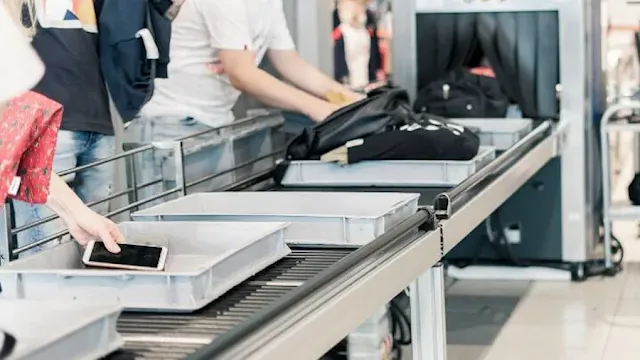
Airport Security in India: 10 Items You Must Remove to Avoid Delays 2026

Updated: April 15, 2026
Airport Security Check
Quick Facts: Airport Security in India 2026
  • Authority: BCAS (Bureau of Civil Aviation Security)
  • Must remove: Laptops, shoes, belts, jackets, liquids bag
  • Liquids rule: 100ml containers in 1-litre transparent bag
  • Cabin bag limit: 1 bag, max 7 kg (domestic — BCAS May 2024)
  • Lighter: 1 allowed in pocket only; not in baggage
  • E-cigarettes: Banned in India — do not carry
  • Arrive early: 3 hours for international, 2 hours for domestic
  • Security lanes: Separate lanes for ladies at most airports

10 Items You Must Remove at Indian Airport Security

Indian airport security is governed by the Bureau of Civil Aviation Security (BCAS). All passengers — domestic and international — must comply with these screening requirements. Failure to remove the required items delays the queue and can result in secondary screening.

  1. Laptop and large tablets — Must be removed from your bag and placed flat in a separate tray. This applies at all Indian airports, both domestic and international.
  2. Shoes — Required to be removed at most Indian airports and placed on the X-ray belt. Wear slip-on shoes for fastest processing.
  3. Belt and metal accessories — Remove belts, watches, heavy jewellery, and any item likely to trigger the metal detector. Place in the tray before walking through.
  4. Outer jacket or coat — Jackets and outer layers must be removed and placed in a tray. Thick hoodies may also be requested for removal.
  5. Liquids bag — Your 1-litre transparent bag of liquids must be removed from your cabin bag and placed separately in a tray.
  6. Mobile phone — Your mobile phone must be placed in the tray for X-ray. Do not keep it in your pocket when walking through the metal detector.
  7. Keys and loose coins — Empty all pockets of keys, coins, and any metal items into the tray before proceeding.
  8. Power banks and spare batteries — Power banks must be in cabin baggage (not checked) and may need to be placed in the tray for X-ray.
  9. Baby food and formula — Baby food, formula, and breast milk may require additional screening. Have them accessible and declare them to the security officer.
  10. Medical devices and insulin pumps — Inform the CISF officer before screening if you have a pacemaker, insulin pump, or other implanted device. You may require a manual pat-down instead of the scanner.
Ladies Security Lane: Most Indian airports have dedicated security lanes for female passengers staffed by female CISF officers. Female passengers are screened in a private cubicle or behind a curtain. Use these lanes for a more comfortable security experience.

The 100ml Liquids Rule at Indian Airports

India follows the international standard for liquids in cabin baggage. All liquids, gels, pastes, and sprays must comply with these rules:

ItemRuleExempt?
Water / drinksMust be empty at security; buy afterNo
Toiletries (shampoo, cream etc.)Max 100ml per container; all in 1L bagNo
Perfume / cologneMax 100ml per containerNo
Duty-free alcohol (sealed bag)Allowed in cabin on international flightsYes — if in STEB
Prescription medicines (liquid)Allowed in reasonable quantities with prescriptionYes
Baby formula / breast milkAllowed in quantity needed for journeyYes
Insulin (vials, pens)Allowed with prescription/medical letterYes
Pro Tip: Use a clear, resealable zip-lock bag — not a frosted or coloured bag. CISF officers can reject opaque bags. Quart-sized (approximately 1 litre) is the correct size.

Items Prohibited in Cabin Baggage on Indian Flights

Never put these in your cabin bag: Sharp objects (scissors with blades over 6cm, knives, box cutters), firearms and ammunition, explosive-like items (realistic toy guns, flares), self-defence items (pepper spray, stun guns, batons), sports equipment (cricket bats, baseball bats, golf clubs), and flammable liquids (petrol, lighter fluid).
CategoryExamplesWhere Allowed?
Sharp objects (blades >6cm)Scissors, knives, razorsChecked baggage only
FirearmsGuns, pistols (licensed)Checked baggage with airline approval
Sports equipmentCricket/baseball bats, golf clubsChecked baggage only
Self-defence itemsPepper spray, stun guns, batonsNot permitted without Arms Act licence
Liquids over 100mlWater bottles, large toiletriesChecked baggage (no 100ml rule for checked)
E-cigarettes/vapesAll ENDS devicesBanned in India entirely

For the full list see our guide: What Is Not Allowed to Bring in India?

Items Restricted in Checked Baggage

Checked Baggage Restrictions: Lithium batteries and power banks must be in cabin baggage — not checked baggage. Alcohol above 70% ABV is prohibited in both cabin and checked baggage. Flammable materials, gases, and corrosives are generally prohibited in all baggage.

See: Hand Baggage Allowance in India for full airline-specific rules.

Tips to Speed Through Indian Airport Security

  1. Pack smart: Put your laptop in an accessible sleeve, liquids bag in the top pocket, and shoes that slip off easily.
  2. Arrive early: 3 hours for international flights, 2 hours for domestic. Security queues at Delhi and Mumbai peak between 5–9 AM.
  3. Use web check-in: Check in online and proceed directly to security — no check-in counter queue needed.
  4. Wear minimal metal: Avoid metal belts, heavy jewellery, and layered clothing. One item of outer clothing is the practical limit.
  5. Keep documents ready: Have your boarding pass (digital or printed) and passport or photo ID ready before reaching the checkpoint.
  6. Do not joke about security: Making jokes or remarks about security threats is taken extremely seriously at Indian airports and can result in detention.

Security at Major Indian Airports

AirportSecurity NotesBusy Hours
Delhi IGI (DEL)Strict; multiple checkpoints; biometric gates at T35–9 AM, 10 PM–1 AM
Mumbai CSIA (BOM)Strict; T2 is busiest; arrive very early6–10 AM, 11 PM–2 AM
Bengaluru (BLR)Generally efficient; automated bag drop6–9 AM
Chennai (MAA)Standard procedures; less crowded than Delhi/Mumbai5–8 AM
Hyderabad (HYD)Modern facility; efficient processing5–8 AM
Kolkata (CCU)Standard BCAS procedures4–8 AM

See: International Airports of India for full airport directory.

Cabin vs Checked Baggage — Security Rules Summary

Cabin Baggage — Allowed
  • Laptop (remove for X-ray)
  • Liquids under 100ml in 1L bag
  • Medicines with prescription
  • Baby food and formula
  • 1 lighter (in pocket only)
  • Power banks and spare batteries
  • Duty-free sealed bags (international)
Cabin Baggage — Not Allowed
  • Sharp objects (blades >6cm)
  • Liquids over 100ml (non-exempt)
  • Sports equipment (bats, clubs)
  • Pepper spray, stun guns
  • E-cigarettes (banned in India)
  • Firearms and ammunition
  • Flammable liquids

Pro Tips: Getting Through Indian Airport Security Fast

  • Use a dedicated laptop sleeve in your bag. A sleeve lets you slide the laptop out instantly at the X-ray checkpoint. Digging through a packed bag in the security queue causes delays for everyone behind you.
  • Pre-pack your liquids bag at home. Don't attempt to assemble your liquids bag at the checkpoint. Have it sealed, in the top pocket, ready to remove in one motion.
  • Wear slip-on shoes when flying out of India. Lace-up boots are the worst choice for Indian airport security — you'll be in the way for 2 minutes tying laces while the queue builds behind you.
  • Don't over-pack your cabin bag. Under the BCAS one-cabin-bag policy (May 2024), domestic passengers get one bag. Over-stuffed bags that won't close properly get flagged at check-in. See: What Happens If Cabin Bag Is 1 Inch Too Big.
  • Declare medical devices proactively. If you have a pacemaker, cochlear implant, or other medical device, tell the CISF officer before going through the scanner. This avoids secondary screening delays and potential discomfort.
  • Never leave bags unattended. Unattended bags at Indian airports trigger immediate security alerts and can result in your bag being removed or destroyed. Stay with your baggage at all times.
  • Carry your boarding pass on your phone — charged. A dead phone at the boarding pass check can cause significant delays. Charge your phone before heading to the airport, or carry a power bank in your cabin bag.
  • Know the CISF's authority. The Central Industrial Security Force (CISF) conducts security screening at Indian airports. They have full authority to conduct pat-downs, secondary screening, and bag searches. Cooperation is mandatory and non-compliance can result in denial of boarding.

Related Articles

Frequently Asked Questions

What items must you remove at airport security in India?

Remove laptops, shoes, belt and metal accessories, outer jacket, liquids bag, mobile phone, keys and coins, power banks, baby food, and declare any medical devices. All go into separate trays on the X-ray conveyor.

Do you have to remove shoes at airport security in India?

Yes, at most Indian airports shoes must be removed and placed on the X-ray belt. Wear slip-on shoes for fastest processing at Indian airport security checkpoints.

Can I keep my laptop in my bag at Indian airport security?

No. BCAS guidelines require laptops to be removed from bags and placed in a separate tray for X-ray screening at all Indian airports.

What liquids are allowed through airport security in India?

Liquids in containers of 100ml or less, all fitting in one 1-litre transparent bag. Duty-free sealed bags, medicines, baby food, and diabetic supplies are exempt.

Can I carry a lighter on a flight in India?

One lighter is allowed in your pocket only — not in cabin or checked baggage. Strike-anywhere matches are prohibited entirely.

What should I wear to speed through Indian airport security?

Wear slip-on shoes, avoid metal belts and heavy jewellery, and pack your laptop and liquids in easily accessible pockets. This can save several minutes at busy airports.

Is talcum powder allowed on flights in India?

Small personal quantities under 350g/ml in sealed original containers are generally permitted. Loose powder over 350ml may be restricted in cabin baggage on Indian flights.

How early should I arrive at Indian airports for security?

Arrive at least 3 hours before international departures and 2 hours before domestic flights. Peak security queues at Delhi IGI and Mumbai CSIA are between 5–9 AM.

©2010–2026 Indiabaggagerules.com — All rights reserved.

What is Baggage Rule in India? Duty-Free, Cabin & Customs Rules Explained 2026

Updated: April 14, 2026
Quick Facts: India Baggage Rules 2026
  • Duty-free allowance: ₹75,000 per adult (updated Feb 2, 2026)
  • Laptop: 1 per adult, duty-free (in addition to ₹75,000)
  • Alcohol: 2 litres duty-free (age 25+)
  • Gold (male): 20g / ₹50,000 duty-free
  • Gold (female): 40g / ₹1,00,000 duty-free
  • Domestic cabin bag: 1 bag, max 7 kg (BCAS policy, May 2024)
  • Liquids rule: 100ml per container, 1-litre bag
  • Authority: CBIC (customs), DGCA (aviation), BCAS (security)

What Are India's Baggage Rules?

India's baggage rules are administered by three key authorities: CBIC for customs duty and duty-free limits, DGCA for airline baggage allowances, and BCAS for airport security rules. Whether you are an NRI, tourist, or business traveler, understanding these rules avoids fines and delays at Indian airports.

Duty-Free Allowance in India (2026 Update)

New Limit: ₹75,000 — Up from ₹50,000 effective February 2, 2026. One personal laptop is additionally allowed duty-free. See: What You Can Bring Into India Without Paying Tax.
Passenger TypeDuty-Free AllowanceLaptop Concession
Adult (abroad 3+ days)₹75,0001 laptop, duty-free
Adult (abroad under 3 days)₹15,0001 laptop, duty-free
Child (10+ years)₹75,0001 laptop, duty-free
Child (under 10)₹75,000No laptop concession
Crew member₹1,500 per tripNo laptop concession

Checked Baggage Allowance for Flights to India

AirlineRouteEconomy AllowanceNotes
Air IndiaInternational25 kgBest for heavy packers
Air India ExpressInternational20 kgBudget international
IndiGoDomestic15 kgExtra kg purchasable online
SpiceJetDomestic15 kgStrict at check-in
Akasa AirDomestic15 kgGrowing network

Note: Vistara merged into Air India in November 2024. See: Domestic Airlines in India.

Cabin Baggage Rules in India

BCAS One-Cabin-Bag Policy (May 2024): All domestic passengers are allowed only one cabin bag not exceeding 7 kg. Oversized or overweight cabin bags will be checked in at the gate.

See: Hand Baggage Allowance in India and What Happens If Cabin Bag Is 1 Inch Too Big.

Liquid Rules on Flights to/from India

  1. 100ml per container — all liquids, gels, and pastes
  2. 1-litre transparent bag — all containers in one clear zip-lock bag
  3. Duty-free sealed bags exempt — on international flights
  4. Medicines exempt — with prescription or medical letter
  5. Baby food exempt — in quantities needed for journey

Customs Declaration — Red vs Green Channel

Green Channel — Use If:
  • Total goods within ₹75,000
  • Gold within duty-free limits
  • Alcohol within 2 litres
  • Currency within USD 5,000 cash
  • No restricted or prohibited items
Red Channel — Use If:
  • Total value exceeds ₹75,000
  • Gold above 20g (male) or 40g (female)
  • Alcohol above 2 litres
  • Currency above USD 5,000 cash
  • Carrying any restricted items

Full guide: What Should Be Declared at Indian Customs?

Gold & Alcohol Rules

ItemDuty-Free LimitRestrictionDuty if Exceeded
Gold (male)20g / ₹50,000Males only~14.07%
Gold (female)40g / ₹1,00,000Females only~14.07%
Alcohol2 litres totalAge 25+ only150% BCD (spirits)

See: How Much Gold Can You Bring to India? and Duty-Free Alcohol Allowance.

Prohibited Items Summary

Never carry into India: Narcotics, counterfeit currency, ivory and wildlife products (CITES), obscene material, counterfeit goods. Penalties include confiscation, fines, and arrest.

See: Prohibited and Restricted Goods — India Customs.

Airline Baggage Comparison 2026

FactorAir IndiaIndiGoSpiceJet
Domestic checked bag15–25 kg15 kg15 kg
Cabin bag limit7–8 kg7 kg7 kg
International allowance25 kgVariesVaries

Pro Tips: India Baggage Rules 2026

  • Calculate baggage value before packing. Add up the current market value of all items. If close to ₹75,000, use the Red Channel proactively.
  • Book excess baggage online. Pre-booked extra baggage is 3–5x cheaper than paying at the airport on IndiGo or SpiceJet.
  • Keep all receipts for valuables. Original invoices help customs officers assess accurately and speed up Red Channel processing.
  • Never put lithium batteries in checked baggage. Spare batteries and power banks must go in cabin baggage on most airlines.
  • Get an export certificate for valuables from India. See: Export Certificate Guide.
  • Pack cabin bags within size limits. Most airlines enforce 55x35x25 cm. See: What If My Carry-On Is Slightly Bigger?
  • Arrive 3 hours early for international flights. Queues at Delhi and Mumbai can be long during peak seasons.
  • Declare proactively if unsure. Red Channel officers treat honest declarants far more favourably than those caught at Green Channel checks.

Related Articles

Frequently Asked Questions

What is the baggage rule in India?

India's baggage rules cover duty-free limits (₹75,000 per adult in 2026), customs declaration, airline allowances, and security rules. One personal laptop is duty-free in addition to ₹75,000.

What is the duty-free baggage allowance in India in 2026?

The duty-free allowance increased to ₹75,000 per adult effective February 2, 2026. One personal laptop is additionally allowed duty-free.

What is the cabin baggage rule in India?

On domestic flights, BCAS enforces one cabin bag not exceeding 7 kg (effective May 2024). International limits are typically 7–8 kg by airline.

What items must be declared at Indian customs?

Declare goods over ₹75,000, foreign cash above USD 5,000, gold above duty-free limits, alcohol above 2 litres, and restricted items.

What is the checked baggage allowance for flights to India?

Air India: 25 kg international. IndiGo/SpiceJet: 15 kg domestic. Air India Express: 20 kg budget international. Always verify with your airline.

Are there baggage rules for gold in India?

Yes. Males: 20g (₹50,000) duty-free. Females: 40g (₹1,00,000) duty-free. NRIs abroad 1+ year: up to 1 kg with customs duty.

What is not allowed in cabin baggage on Indian flights?

Sharp objects, liquids over 100ml (except duty-free sealed bags), firearms, flammable items, stun guns, and pepper spray are not allowed.

What is the liquid rule for flights in India?

Liquids must be in 100ml containers in one 1-litre transparent zip-lock bag. Duty-free sealed bags, medicines, and baby food are exempt.

©2010–2026 Indiabaggagerules.com — All rights reserved.

FAQs on India Baggage Rules 2026: Duty-Free, Gold, Alcohol & Customs Answers

Updated: April 14, 2026
Quick Facts: India Baggage Rules 2026
  • Duty-free allowance: ₹75,000 per adult (updated Feb 2, 2026)
  • Laptop: 1 per adult, duty-free
  • Gold (male): Up to 20g / ₹50,000 duty-free
  • Gold (female): Up to 40g / ₹1,00,000 duty-free
  • Alcohol: Up to 2 litres duty-free (age 25+)
  • Cabin baggage: 7 kg, 1 bag (BCAS policy, May 2024)
  • Currency declaration: Required above USD 5,000 cash
  • Governing authority: CBIC, DGCA, BCAS

Duty-Free Allowance for India in 2026

The most important update for travelers in 2026 is the increase in India's duty-free baggage allowance. Effective February 2, 2026, the limit was raised from ₹50,000 to ₹75,000 per adult traveler. This applies to all bonafide personal baggage including clothing, electronics, gifts, and personal items.

2026 Update: Duty-free allowance is now ₹75,000 per adult (up from ₹50,000). Additionally, one personal laptop is allowed duty-free over and above this limit. Children under 10 years get ₹75,000 but no laptop concession. Verify at Department of Revenue.

For Indian residents returning from trips of fewer than 3 days, a reduced allowance of ₹15,000 applies. Crew members have a separate allowance of ₹1,500 per trip. Foreign tourists enjoy the full ₹75,000 allowance but must re-export goods brought duty-free on departure.

Checked & Cabin Baggage Allowance

Baggage allowances in India vary significantly between airlines and routes. As a general rule, international flights to India offer more generous allowances than domestic sectors.

BCAS One-Cabin-Bag Policy (Effective May 2024): All passengers on domestic flights in India are permitted only one cabin bag not exceeding 7 kg. A small personal item (handbag, laptop bag) may be carried additionally, subject to airline policy. See our guide on Hand Baggage Allowance in India.
AirlineEconomy Check-inCabin BagNotes
Air India (International)25 kg8 kgBest for heavy packers
IndiGo (Domestic)15 kg7 kg (1 bag)Extra kg purchasable
SpiceJet (Domestic)15 kg7 kg (1 bag)Strict enforcement
Akasa Air (Domestic)15 kg7 kg (1 bag)New entrant; strict
Air India Express (Intl)20 kg7 kgBudget international

Gold & Jewellery Rules for India

Gold import rules are among the most searched topics on this site — and for good reason. India has specific limits that differ by gender and passenger type.

Important: Gold limits apply to gold in any form — coins, bars, or jewellery. Wearing jewellery does not exempt it from the limit. Customs officers may assess any gold above the duty-free limit at the Red Channel.
PassengerWeight LimitValue LimitDuty if Exceeded
Male (Indian resident)20 grams₹50,000~10.75% + IGST
Female (Indian resident)40 grams₹1,00,000~10.75% + IGST
NRI (male)20 grams₹50,000~10.75% + IGST
NRI (female)40 grams₹1,00,000~10.75% + IGST
Children (under 15)Not allowedNilFull duty applies

For more detail, see our complete guide: How Much Gold Can You Bring to India?

Alcohol Duty-Free Allowance for India

Travelers aged 25 and above may bring up to 2 litres of alcoholic beverages duty-free to India. This covers wine, beer, spirits, or any combination totaling 2 litres. Alcohol above this limit is subject to customs duty.

Tip: Some Indian states have prohibition laws — notably Gujarat and parts of Bihar, Nagaland, and Mizoram. Even duty-free alcohol cannot be brought into dry states without a permit. See our guide: Can You Bring Alcohol to Gujarat?

Duty-free alcohol purchased at airport shops is subject to the same limits. Keep receipts to show at customs if requested. For full details see: Duty-Free Alcohol Allowance for India.

Electronics & Laptops — India Customs Rules

One personal laptop is allowed duty-free per adult traveler in addition to the ₹75,000 general allowance. Smartphones, cameras, and tablets are covered under the general duty-free limit. High-value electronics should be declared if total baggage exceeds ₹75,000.

Export Certificate: If you own an expensive laptop or camera purchased in India, get an Export Certificate before departing — it proves the item was bought in India and prevents duty charges on return. See: India Travel Export Certificate.

Drones require DGCA import clearance. Satellite phones require DoT permission. Walkie-talkies require WPC Wing licence. Full details: Prohibited and Restricted Goods — India Customs.

Currency & Foreign Exchange Rules

CurrencyWhoLimitDeclaration?
Indian Rupees (INR)Indian residentsUp to ₹25,000No
Indian Rupees (INR)Foreign nationalsNot permittedN/A
Foreign currency (cash)AnyoneUp to USD 5,000No
Foreign currency (total)AnyoneUp to USD 10,000Yes — CDF form
Above USD 10,000AnyoneDeclare; RBI clearanceYes — mandatory

Currency rules are governed by FEMA and the Reserve Bank of India (RBI). Always fill out the Currency Declaration Form if your cash exceeds USD 5,000.

Prohibited & Restricted Items — Quick Reference

Allowed (within limits)
  • Personal electronics (1 laptop duty-free)
  • Gold within gender-based limits
  • 2 litres alcohol (age 25+)
  • Commercially packaged food
  • Medicines with prescription
  • Foreign currency within limits
Prohibited / Restricted
  • Narcotics & psychotropic substances
  • Counterfeit currency or goods
  • Wildlife products (ivory, shahtoosh)
  • Satellite phones without DoT permit
  • Drones without DGCA clearance
  • Firearms without MHA licence

Full list: Prohibited and Restricted Goods — India Customs and What Is Not Allowed to Bring in India?

Customs Declaration — Red Channel vs Green Channel

  1. Green Channel (Nothing to Declare): Use if total baggage value is within ₹75,000, you carry no prohibited items, and your cash is within limits.
  2. Red Channel (Goods to Declare): Use if total value exceeds ₹75,000, you carry gold/alcohol above limits, 2+ laptops, excess currency, or any restricted items.
  3. Fill out the Declaration Form: Available on arrival. See our guide: Indian Customs Declaration Form.
  4. Pay duty if applicable: At the Red Channel counter. Pay via card or cash. Get a receipt. See: How to Pay Customs Duty at Indian Airports.
Never use the Green Channel if in doubt. Customs officers conduct random checks and X-ray scans. Being caught with undeclared dutiable goods results in confiscation and penalties up to 5× the duty value.

Airport Security Rules — India

All Indian airports are governed by BCAS (Bureau of Civil Aviation Security) rules. Key security requirements:

  1. Remove laptops from bags and place in a separate tray for X-ray
  2. Remove shoes, belts, and jackets at security
  3. Liquids must be in containers of 100ml or less in a 1-litre clear zip-lock bag
  4. Sharp objects (scissors, blades) are not allowed in cabin baggage
  5. One cabin bag + one small personal item only (BCAS domestic policy)

See full guide: Airport Security in India: 10 Items You Must Remove.

Airline Baggage Allowance Comparison

Route TypeBest Airline for BaggageWhy
International to India (heavy bags)Air India25 kg included in Economy
Domestic India (budget)IndiGoWidest network, 15 kg standard
International budgetAir India Express20 kg + affordable fares
Domestic (premium)Air India (Vistara merged)Better service, flexible bags

Note: Vistara merged into Air India in November 2024. All Vistara routes now operate under Air India. See: Domestic Airlines in India.

Pro Tips: India Baggage Rules 2026

  • Know your ₹75,000 limit before you pack. Add up the current market value of everything you're bringing to India — not just new items. If the total is close to the limit, go through the Red Channel proactively.
  • Carry receipts for all high-value items. Original purchase invoices help customs officers assess value accurately and prevent overcharging. Store digital copies in your email as backup.
  • Get an export certificate for valuables before you leave India. If you own an expensive laptop, camera, or jewellery purchased in India, get this certificate at departure customs. See: Export Certificate Guide.
  • Never pack prohibited items in checked luggage thinking they won't be found. Indian airports use advanced X-ray and CT scanning. Checked baggage is regularly screened especially on international arrivals.
  • Declare currency proactively. If you're carrying close to the limit in foreign cash, fill out the Currency Declaration Form. It's a simple form and far better than facing penalties for undeclared currency.
  • Book extra baggage online, not at the airport. Airport excess baggage rates are typically 3–5× more expensive than pre-booked online rates on IndiGo, SpiceJet, and Air India Express.
  • One cabin bag strictly enforced domestically. Since May 2024, BCAS enforces the one-cabin-bag policy. If you arrive with two cabin bags, one will be checked in. Pack smart — see: What Happens If Cabin Bag Is 1 Inch Too Big.
  • Check airline-specific rules 24 hours before travel. Policies on liquids, food, sports equipment, and medical devices can vary. Always verify directly with your airline before flying.

Related Articles on India Baggage Rules

Frequently Asked Questions: India Baggage Rules 2026

What is the duty-free baggage allowance for travelers arriving in India in 2026?

As of February 2, 2026, the duty-free allowance is ₹75,000 per adult traveler. One personal laptop is additionally allowed duty-free. Children under 10 get the same monetary allowance but no laptop concession.

How much gold can I bring to India duty-free?

Male passengers can bring up to 20 grams (₹50,000 value) duty-free. Female passengers can bring up to 40 grams (₹1,00,000 value) duty-free. Gold above these limits attracts customs duty.

How much alcohol can I carry duty-free to India?

Travelers aged 25 and above can bring up to 2 litres of alcoholic beverages duty-free to India. Alcohol above this limit is subject to customs duty. Dry state rules apply regardless of duty-free status.

Do I need to declare foreign currency at Indian customs?

Yes, if your cash exceeds USD 5,000 or total currency (including cheques/cards) exceeds USD 10,000, you must fill out the Currency Declaration Form at the Red Channel.

What is the baggage allowance on domestic flights in India?

Cabin baggage is limited to 7 kg (one bag) under the BCAS one-cabin-bag policy effective May 2024. Checked baggage is typically 15 kg on IndiGo and SpiceJet, and 25 kg on Air India Economy (international).

Can I carry food items in my baggage to India?

Commercially packaged sealed food in personal quantities is generally allowed. Fresh fruits, vegetables, meat, dairy, and seeds are restricted and subject to inspection. Always declare food items at customs.

What happens if my baggage exceeds the duty-free limit?

You must go through the Red Channel and pay customs duty on the excess amount. Failure to declare can result in confiscation and penalties up to 5 times the duty value.

Is travel insurance mandatory for travel to India?

Travel insurance is not mandatory for India travel but is strongly recommended. It covers medical emergencies, trip cancellations, lost baggage, and flight delays. Some visa categories may require proof of insurance.

©2010–2026 Indiabaggagerules.com — All rights reserved.

Bumped from a Flight in India? Overbooking Rules, Compensation & Passenger Rights Explained

Updated: April 11, 2026

Denied boarding in India? Learn compensation rules, passenger rights

Getting bumped from a flight in India can feel frustrating—but here’s the surprising part: you may be entitled to compensation up to ₹20,000, along with meals, hotel stays, and alternate flights.

Airlines often overbook flights to manage no-shows, but strict rules ensure passengers are protected. This guide walks you through compensation, rights, and how to handle the situation like a pro.

Table of Contents

  • Can Airlines Bump You?
  • Overbooking in India Explained
  • Compensation Rules
  • Who Gets Bumped?
  • Passenger Rights & Care
  • Step-by-Step What To Do
  • Pros & Cons
  • FAQs

Rules You Must Know

Never Do Always Do Instead
Arrive Late at Airport Check-in Early (up to 48 hrs)
Accept Verbal Promises Get Written Denied Boarding Proof
Ignore Receipts Keep All Documents & Bills
Volunteer Without Negotiation Negotiate Compensation First

Can Airlines Bump You from a Flight?

Yes, airlines in India can legally deny boarding due to overbooking. However, they must first ask for volunteers before forcing anyone off a confirmed seat.

If you checked in on time and still got bumped, you are legally entitled to compensation and assistance.

Does Overbooking Happen in India?

Yes—overbooking is common among airlines to offset no-shows. It’s a global practice, but India ensures passengers are denied boarding at the gate, not removed from the plane.

Airlines typically overbook by 5–15% to maximize seat occupancy.

Compensation Rules (2025–2026)

You can receive up to ₹20,000 compensation depending on your delay and choice.

Situation Your Compensation
Alternate flight within 24 hours 200% of fare (Max ₹10,000)
Alternate flight after 24 hours 400% of fare (Max ₹20,000)
No alternate flight accepted Full refund + 400% (Max ₹20,000)

Mandatory Passenger Care

  • Free meals & refreshments
  • Hotel stay (if next-day flight)
  • Alternative travel arrangements

Who Gets Picked for Bumping?

  • Late check-in passengers
  • Low fare ticket holders
  • No seat assignment travelers

Frequent flyers and premium passengers are least likely to be bumped.

What To Do If You Get Bumped

  1. Ask for written denied boarding proof
  2. Confirm compensation eligibility
  3. Request meals or hotel if delayed
  4. Keep all receipts
  5. File complaint if unpaid

Pros & Cons of Airline Overbooking

Pros

  • Higher flight availability
  • Lower ticket prices overall
  • Chance to earn compensation

Cons

  • Risk of denied boarding
  • Travel delays
  • Stress & inconvenience

Pro Tips to Avoid Getting Bumped

  • Check-in as early as possible
  • Select your seat in advance
  • Join airline loyalty programs
  • Avoid last-minute boarding

FAQs

What happens if a flight is overbooked in India?

You may be denied boarding but are entitled to compensation, alternate flights, and care services.

What are my rights if I get bumped?

You have the right to compensation, refund or alternate flight, and free meals or hotel if required.

How much compensation can I get?

Up to ₹20,000 depending on delay and whether you accept an alternate flight.

What if no one volunteers?

The airline will deny boarding involuntarily and must compensate affected passengers.

Which passengers are least likely to be bumped?

Frequent flyers, business class travelers, and early check-in passengers.

Can I file a complaint if airline refuses to pay?

Yes, you can file a complaint with DGCA or approach consumer court.

How Much Gold Can You Bring to India? Duty-Free Limits, NRI Rules & Customs Guide 2026

How much gold you can bring to India depends on what you are carrying, your passenger eligibility and how long you have stayed abroad. Ever...