Carrying Baby Formula on Flights: Parent's Guide for India 2026

Updated: April 17, 2026
Quick Facts: Baby Formula on Flights in India (2026)
  • Cabin baggage exemption: Yes — exempt from 100ml rule on all Indian flights
  • Quantity limit: No strict limit — reasonable journey amount + buffer
  • Breast milk: Also exempt from 100ml rule in cabin baggage
  • Doctor's letter: Not required
  • Transparent bag: Not needed — baby food exempt from 1L bag rule
  • X-ray: Will be screened — may be swab tested
  • Warming on board: Available on request from cabin crew
  • Authority: BCAS (India); consistent with IATA international standards

Baby Formula Is Exempt from the 100ml Rule

The good news for parents travelling with infants is clear: baby formula, breast milk, and baby food are exempt from the 100ml liquids restriction on all Indian domestic and international flights.

BCAS Exemption: The Bureau of Civil Aviation Security (BCAS) explicitly exempts medically necessary liquids for infants — including formula, breast milk, and baby food — from the standard 1-litre transparent bag and 100ml-per-container rules. This applies on all Indian airlines including IndiGo, Air India, SpiceJet, and Akasa Air.

You do not need to:

  1. Put baby formula in the 1-litre transparent liquids bag
  2. Limit containers to 100ml or less
  3. Carry a doctor's letter or medical certificate
  4. Purchase special travel-size formula containers

Simply inform the CISF security officer when you reach the checkpoint: "I am carrying baby formula and food." They will direct you through the appropriate screening process.

How Much Baby Formula Can You Carry?

There is no specific maximum quantity for baby formula on Indian flights. However, the amount should be reasonably proportionate to your journey duration:

Journey DurationRecommended Formula QuantityBuffer
Under 2 hours (domestic)1–2 feedsPlus 2 extra feeds for delays
2–5 hours (domestic/regional)3—4 feedsPlus 2–3 extra feeds
5–10 hours (long domestic/short intl)5–6 feedsPlus 3—4 extra feeds
10+ hours (long-haul international)Full day’s supplyPlus full day extra for delays
Why carry extra? Flight delays at Indian airports can be 2–6 hours, particularly during monsoon season (June–September). Always carry more formula than you strictly need for the scheduled flight duration. Running out of formula mid-journey is far worse than carrying a little too much.

Carrying Breast Milk on Flights in India

Expressed breast milk has the same exemption as baby formula on Indian flights:

  1. No volume limit — carry as many bottles or bags as needed for the journey
  2. No 100ml rule — 250ml, 500ml, or any size bottle is permitted
  3. No transparent bag required — it does not need to go in the liquids bag
  4. Keep cool — use a dedicated insulated cooler bag with ice packs. Ice packs may need to be frozen solid to pass security; partially melted gel packs may be questioned
  5. Notify security — declare breast milk containers at the checkpoint for separate screening
Ice Pack Tip: Fully frozen ice packs or gel packs are treated as solids and pass through security without issue. If ice packs are partially melted (liquid state), they may be subject to the 100ml rule. Freeze ice packs overnight before travel to ensure they are solid when you reach security.

Types of Baby Food Allowed in Cabin Baggage

Baby Food TypeCabin BaggageNotes
Powdered baby formula✅ Any quantityNo liquid rule applies; any container size
Liquid baby formula (ready-made)✅ Any quantity (exemption)Does not count as liquid for security purposes
Expressed breast milk✅ Any quantity (exemption)Keep cool in insulated bag
Jarred baby food (purees)✅ Any quantity (exemption)Even above 100ml per jar; must be for infant use
Baby food pouches✅ Any quantity (exemption)Same exemption as jarred food
Baby snacks (puffs, biscuits)✅ UnrestrictedSolid food — no liquid rule applies
Water for making formula✅ Special exemptionSmall bottles of water for infant formula are often exempted; declare at security
For Adults: The baby food exemption applies to food for infants. Adults travelling with older children (12+ months who eat regular family food) may find that larger quantities of food are less readily exempted. The clearer it is that food items are specifically for infant feeding, the smoother the security process.

Going Through Security with Baby Formula

  1. Prepare before reaching the checkpoint. Have baby formula containers accessible — not buried at the bottom of your bag. Keep them in a clear bag or accessible pocket for easy removal if the officer requests it.
  2. Inform the CISF officer proactively. Say: "I am travelling with an infant and carrying baby formula and breast milk." This simple declaration triggers the appropriate screening procedure and avoids confusion.
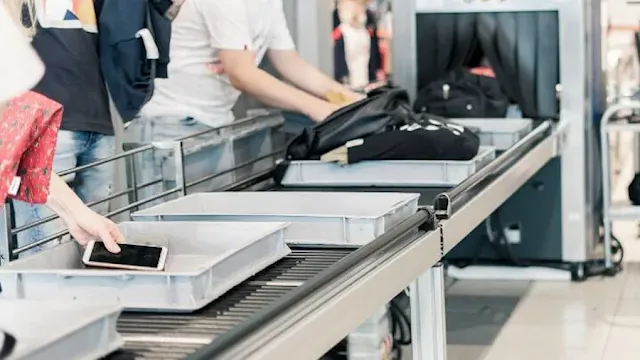
  3. Place formula containers in a separate tray. The officer may ask you to remove formula containers and place them in a separate X-ray tray for screening. This is standard and not a cause for concern.
  4. Be prepared for a swab test. Formula containers — especially bottles of liquid formula — may be swab-tested for explosive residue. This takes 30–60 seconds and is completely routine.
  5. If a container is opened for inspection, ensure it is resealed properly before boarding. If the seal is broken and you have concerns about contamination, ask for a replacement at an airport pharmacy or the airline's catering team.
Ladies Security Lane: Female passengers with infants should use the dedicated ladies security lane at Indian airports. Female CISF officers handle all screening, providing a more comfortable environment for parents with young infants and baby feeding supplies.

Warming Baby Formula on the Plane

Most Indian airline cabin crew can warm a baby's bottle or formula on request:

  1. Inform cabin crew when boarding that you have an infant and may need a bottle warmed during the flight
  2. Ask at least 30 minutes before you need it — crew use warm water from the galley to warm bottles, which takes time
  3. Never ask for microwave warming — aircraft galleys do not have microwaves. Crew warm bottles using hot water, which is safe and even
  4. Test the temperature before feeding — shake the bottle well after warming and test on your wrist to ensure it is not too hot
Best Practice: Carry formula in powder form and ask for hot water from the cabin crew to make a fresh bottle during the flight. This is the most hygienic option and avoids the need for pre-warmed liquid formula. Most cabin crew will readily provide hot water for infant formula.

Baby Formula in Checked Baggage

You can also pack baby formula in checked baggage, though cabin baggage is always preferred for formula you will need during the flight:

Cabin Baggage (Preferred for Flight Use)
  • Immediately accessible during flight
  • Safe from cargo hold temperature extremes
  • Can warm on board
  • Not at risk if checked bag is delayed
  • Exempt from 100ml rule
Checked Baggage (Use for Extra Supply)
  • For large bulk supply at destination
  • Temperature may vary in cargo hold
  • Risk if bag is delayed/lost
  • Not accessible mid-flight
  • Better for powdered formula than liquid
Never check all your formula. Always keep at least one full feed's worth of formula in your cabin bag, regardless of how much you have in checked baggage. Checked bags can be delayed — sometimes for days — leaving you without formula at your destination.

International Flights from India with Baby Formula

Baby formula and breast milk exemptions are consistent across most international airlines and airports. However, some country-specific rules apply when travelling abroad:

CountryFormula RulesNotes
India (BCAS)Fully exempt from 100ml ruleDeclare at checkpoint
USA (TSA)Fully exempt — 3-1-1 rule waivedMay be tested separately
UK (CAA)Exempt if child is travellingFormula must be for infant on the flight
EU (Schengen)Generally exemptRules vary slightly by country
UAE (GCAA)Exempt for travelling infantsDubai and Abu Dhabi airports: declare formula at security
Importing Baby Formula to India: Bringing large commercial quantities of baby formula into India (e.g., many tins for resale) is subject to customs regulations. Personal quantities for infant use on your trip are fully exempt. Large bulk quantities for commercial purposes require import permissions.

Baby Items — Cabin Baggage Complete Summary

ItemCabin Allowed?Quantity
Baby formula (powder)✅ YesJourney + buffer; no strict limit
Baby formula (liquid)✅ Yes (exempt)Journey + buffer; no strict limit
Breast milk✅ Yes (exempt)Journey + buffer; no strict limit
Baby food jars/pouches✅ Yes (exempt)Journey + buffer
Baby snacks / biscuits✅ Yes (solid food)No restriction
Baby water (for formula)✅ Usually yes (declare)Small bottle; declare at security
Insulated bottle bag✅ YesNo restriction
Ice packs (frozen solid)✅ Yes (solid state)Must be fully frozen
Sterilised bottles/dummies✅ YesNo restriction

Pro Tips: Travelling with Baby Formula on Indian Flights

  • Use powder formula when possible. Powdered formula is lighter, takes up less space, stays fresh longer, and has no liquid rule concerns. Make a fresh bottle using hot water from cabin crew. This is the most practical option for most journeys.
  • Carry formula in your cabin bag, never only in checked baggage. Checked bags can be delayed for hours or days. Always have at least 24 hours' supply of formula in your cabin bag regardless of what else is in checked luggage.
  • Inform security before they find it. Don't wait for the X-ray to flag your formula bottles. Declaring proactively ("I have baby formula and breast milk") results in faster, smoother processing and avoids any misunderstanding.
  • Freeze ice packs overnight. Solid frozen ice packs pass security without issue. Melted or slushy gel packs may be subject to the 100ml liquid rule. Pack ice packs from the freezer the night before travel.
  • Tell cabin crew when boarding that you have a baby. Crew who know in advance are more responsive to warming requests, can arrange priority service, and can alert medical crew if needed. It takes 10 seconds and makes the whole flight smoother.
  • Pack more formula than you think you need. Indian airports can have 2–6 hour delays, particularly during monsoon season. A flight that's supposed to be 2 hours can turn into 5 hours of travel time. Pack accordingly.
  • Store formula containers in your personal cabin bag, not the overhead bin. You need formula accessible quickly during the flight — particularly for restless infants. Keep it within arm's reach in the seat pocket or under the seat in front of you.
  • Check if your airline has a special bassinet seat allocation. Air India and some international carriers have bassinet positions on bulkhead rows for infant passengers. Request this when booking. Having a bassinet significantly reduces the stress of long flights with infants. See: Do Minors Need Identification to Travel?

Related Articles

Official External Resources

Frequently Asked Questions

Can I carry baby formula on a flight in India?

Yes. Baby formula, breast milk, and baby food are exempt from the 100ml rule on all Indian flights. Carry a reasonable journey amount. Inform the CISF security officer when going through the checkpoint.

How much baby formula can I carry on a plane?

No strict quantity limit — carry enough for the flight plus a generous buffer for delays. Pack at least 4–8 hours extra beyond the scheduled flight time, especially during monsoon season when delays are common.

Does baby formula need to go in the 100ml liquids bag?

No. Baby formula and breast milk are exempt from the 100ml rule and the 1-litre transparent bag requirement on Indian flights under BCAS guidelines.

Can I carry breast milk on a flight in India?

Yes. Expressed breast milk is exempt from the 100ml rule in any reasonable quantity. Keep in insulated bag with frozen ice packs. Declare at security checkpoint.

Do I need a doctor's letter to carry baby formula on a flight?

No. Baby formula and breast milk are universally recognised exemptions. No letter, prescription, or documentation is required. Simply inform the security officer that you are carrying baby food.

Will security X-ray my baby formula?

Yes — standard X-ray screening applies. Officers may also swab test formula containers. This is routine and takes 30–60 seconds. Declare proactively for the smoothest process.

Can I carry jarred baby food on Indian flights?

Yes. Jarred baby food, pureed pouches, and similar infant food are exempt from the 100ml rule on Indian flights. Even jars above 100ml are permitted for infant use.

Can I warm baby formula on an airplane in India?

Yes. Inform cabin crew when boarding. They warm bottles using hot water from the galley. Request warming at least 30 minutes before you need it. Powder formula made with hot water on board is the most hygienic option.

©2010–2026 Indiabaggagerules.com — All rights reserved.

Airport Security in India: 10 Items You Must Remove to Avoid Delays 2026

Updated: April 15, 2026
Airport Security Check
Quick Facts: Airport Security in India 2026
  • Authority: BCAS (Bureau of Civil Aviation Security)
  • Must remove: Laptops, shoes, belts, jackets, liquids bag
  • Liquids rule: 100ml containers in 1-litre transparent bag
  • Cabin bag limit: 1 bag, max 7 kg (domestic — BCAS May 2024)
  • Lighter: 1 allowed in pocket only; not in baggage
  • E-cigarettes: Banned in India — do not carry
  • Arrive early: 3 hours for international, 2 hours for domestic
  • Security lanes: Separate lanes for ladies at most airports

10 Items You Must Remove at Indian Airport Security

Indian airport security is governed by the Bureau of Civil Aviation Security (BCAS). All passengers — domestic and international — must comply with these screening requirements. Failure to remove the required items delays the queue and can result in secondary screening.

  1. Laptop and large tablets — Must be removed from your bag and placed flat in a separate tray. This applies at all Indian airports, both domestic and international.
  2. Shoes — Required to be removed at most Indian airports and placed on the X-ray belt. Wear slip-on shoes for fastest processing.
  3. Belt and metal accessories — Remove belts, watches, heavy jewellery, and any item likely to trigger the metal detector. Place in the tray before walking through.
  4. Outer jacket or coat — Jackets and outer layers must be removed and placed in a tray. Thick hoodies may also be requested for removal.
  5. Liquids bag — Your 1-litre transparent bag of liquids must be removed from your cabin bag and placed separately in a tray.
  6. Mobile phone — Your mobile phone must be placed in the tray for X-ray. Do not keep it in your pocket when walking through the metal detector.
  7. Keys and loose coins — Empty all pockets of keys, coins, and any metal items into the tray before proceeding.
  8. Power banks and spare batteries — Power banks must be in cabin baggage (not checked) and may need to be placed in the tray for X-ray.
  9. Baby food and formula — Baby food, formula, and breast milk may require additional screening. Have them accessible and declare them to the security officer.
  10. Medical devices and insulin pumps — Inform the CISF officer before screening if you have a pacemaker, insulin pump, or other implanted device. You may require a manual pat-down instead of the scanner.
Ladies Security Lane: Most Indian airports have dedicated security lanes for female passengers staffed by female CISF officers. Female passengers are screened in a private cubicle or behind a curtain. Use these lanes for a more comfortable security experience.

The 100ml Liquids Rule at Indian Airports

India follows the international standard for liquids in cabin baggage. All liquids, gels, pastes, and sprays must comply with these rules:

ItemRuleExempt?
Water / drinksMust be empty at security; buy afterNo
Toiletries (shampoo, cream etc.)Max 100ml per container; all in 1L bagNo
Perfume / cologneMax 100ml per containerNo
Duty-free alcohol (sealed bag)Allowed in cabin on international flightsYes — if in STEB
Prescription medicines (liquid)Allowed in reasonable quantities with prescriptionYes
Baby formula / breast milkAllowed in quantity needed for journeyYes
Insulin (vials, pens)Allowed with prescription/medical letterYes
Pro Tip: Use a clear, resealable zip-lock bag — not a frosted or coloured bag. CISF officers can reject opaque bags. Quart-sized (approximately 1 litre) is the correct size.

Items Prohibited in Cabin Baggage on Indian Flights

Never put these in your cabin bag: Sharp objects (scissors with blades over 6cm, knives, box cutters), firearms and ammunition, explosive-like items (realistic toy guns, flares), self-defence items (pepper spray, stun guns, batons), sports equipment (cricket bats, baseball bats, golf clubs), and flammable liquids (petrol, lighter fluid).
CategoryExamplesWhere Allowed?
Sharp objects (blades >6cm)Scissors, knives, razorsChecked baggage only
FirearmsGuns, pistols (licensed)Checked baggage with airline approval
Sports equipmentCricket/baseball bats, golf clubsChecked baggage only
Self-defence itemsPepper spray, stun guns, batonsNot permitted without Arms Act licence
Liquids over 100mlWater bottles, large toiletriesChecked baggage (no 100ml rule for checked)
E-cigarettes/vapesAll ENDS devicesBanned in India entirely

For the full list see our guide: What Is Not Allowed to Bring in India?

Items Restricted in Checked Baggage

Checked Baggage Restrictions: Lithium batteries and power banks must be in cabin baggage — not checked baggage. Alcohol above 70% ABV is prohibited in both cabin and checked baggage. Flammable materials, gases, and corrosives are generally prohibited in all baggage.

See: Hand Baggage Allowance in India for full airline-specific rules.

Tips to Speed Through Indian Airport Security

  1. Pack smart: Put your laptop in an accessible sleeve, liquids bag in the top pocket, and shoes that slip off easily.
  2. Arrive early: 3 hours for international flights, 2 hours for domestic. Security queues at Delhi and Mumbai peak between 5–9 AM.
  3. Use web check-in: Check in online and proceed directly to security — no check-in counter queue needed.
  4. Wear minimal metal: Avoid metal belts, heavy jewellery, and layered clothing. One item of outer clothing is the practical limit.
  5. Keep documents ready: Have your boarding pass (digital or printed) and passport or photo ID ready before reaching the checkpoint.
  6. Do not joke about security: Making jokes or remarks about security threats is taken extremely seriously at Indian airports and can result in detention.

Security at Major Indian Airports

AirportSecurity NotesBusy Hours
Delhi IGI (DEL)Strict; multiple checkpoints; biometric gates at T35–9 AM, 10 PM–1 AM
Mumbai CSIA (BOM)Strict; T2 is busiest; arrive very early6–10 AM, 11 PM–2 AM
Bengaluru (BLR)Generally efficient; automated bag drop6–9 AM
Chennai (MAA)Standard procedures; less crowded than Delhi/Mumbai5–8 AM
Hyderabad (HYD)Modern facility; efficient processing5–8 AM
Kolkata (CCU)Standard BCAS procedures4–8 AM

See: International Airports of India for full airport directory.

Cabin vs Checked Baggage — Security Rules Summary

Cabin Baggage — Allowed
  • Laptop (remove for X-ray)
  • Liquids under 100ml in 1L bag
  • Medicines with prescription
  • Baby food and formula
  • 1 lighter (in pocket only)
  • Power banks and spare batteries
  • Duty-free sealed bags (international)
Cabin Baggage — Not Allowed
  • Sharp objects (blades >6cm)
  • Liquids over 100ml (non-exempt)
  • Sports equipment (bats, clubs)
  • Pepper spray, stun guns
  • E-cigarettes (banned in India)
  • Firearms and ammunition
  • Flammable liquids

Pro Tips: Getting Through Indian Airport Security Fast

  • Use a dedicated laptop sleeve in your bag. A sleeve lets you slide the laptop out instantly at the X-ray checkpoint. Digging through a packed bag in the security queue causes delays for everyone behind you.
  • Pre-pack your liquids bag at home. Don't attempt to assemble your liquids bag at the checkpoint. Have it sealed, in the top pocket, ready to remove in one motion.
  • Wear slip-on shoes when flying out of India. Lace-up boots are the worst choice for Indian airport security — you'll be in the way for 2 minutes tying laces while the queue builds behind you.
  • Don't over-pack your cabin bag. Under the BCAS one-cabin-bag policy (May 2024), domestic passengers get one bag. Over-stuffed bags that won't close properly get flagged at check-in. See: What Happens If Cabin Bag Is 1 Inch Too Big.
  • Declare medical devices proactively. If you have a pacemaker, cochlear implant, or other medical device, tell the CISF officer before going through the scanner. This avoids secondary screening delays and potential discomfort.
  • Never leave bags unattended. Unattended bags at Indian airports trigger immediate security alerts and can result in your bag being removed or destroyed. Stay with your baggage at all times.
  • Carry your boarding pass on your phone — charged. A dead phone at the boarding pass check can cause significant delays. Charge your phone before heading to the airport, or carry a power bank in your cabin bag.
  • Know the CISF's authority. The Central Industrial Security Force (CISF) conducts security screening at Indian airports. They have full authority to conduct pat-downs, secondary screening, and bag searches. Cooperation is mandatory and non-compliance can result in denial of boarding.

Related Articles

Frequently Asked Questions

What items must you remove at airport security in India?

Remove laptops, shoes, belt and metal accessories, outer jacket, liquids bag, mobile phone, keys and coins, power banks, baby food, and declare any medical devices. All go into separate trays on the X-ray conveyor.

Do you have to remove shoes at airport security in India?

Yes, at most Indian airports shoes must be removed and placed on the X-ray belt. Wear slip-on shoes for fastest processing at Indian airport security checkpoints.

Can I keep my laptop in my bag at Indian airport security?

No. BCAS guidelines require laptops to be removed from bags and placed in a separate tray for X-ray screening at all Indian airports.

What liquids are allowed through airport security in India?

Liquids in containers of 100ml or less, all fitting in one 1-litre transparent bag. Duty-free sealed bags, medicines, baby food, and diabetic supplies are exempt.

Can I carry a lighter on a flight in India?

One lighter is allowed in your pocket only — not in cabin or checked baggage. Strike-anywhere matches are prohibited entirely.

What should I wear to speed through Indian airport security?

Wear slip-on shoes, avoid metal belts and heavy jewellery, and pack your laptop and liquids in easily accessible pockets. This can save several minutes at busy airports.

Is talcum powder allowed on flights in India?

Small personal quantities under 350g/ml in sealed original containers are generally permitted. Loose powder over 350ml may be restricted in cabin baggage on Indian flights.

How early should I arrive at Indian airports for security?

Arrive at least 3 hours before international departures and 2 hours before domestic flights. Peak security queues at Delhi IGI and Mumbai CSIA are between 5–9 AM.

©2010–2026 Indiabaggagerules.com — All rights reserved.

Importing Pets to India: 8 Must-Know Rules, Documents & Costs 2026

Updated: April 15, 2026
Importing Pets to India
Quick Facts: Importing Pets to India (2026)
  • Permitted pets: Dogs and cats (most common); exotic animals highly restricted
  • Key requirement: AQCS import permit + rabies vaccination + health certificate
  • Microchip: ISO 11784/11785 compliant chip required
  • Quarantine: 7–30 days possible depending on country of origin
  • Entry ports: Delhi, Mumbai, Chennai, Kolkata international airports
  • CITES permit: Required for exotic/protected species
  • Authority: Animal Quarantine & Certification Services (AQCS) India
  • Application: Apply for import permit at least 3–4 weeks before travel

Which Animals Can Be Imported to India?

India permits the import of dogs and cats as companion animals, subject to documentation and quarantine requirements. The import of other animals is highly regulated under the Wildlife Protection Act 1972 and India's CITES obligations.

Exotic Animals: Parrots, tortoises, snakes, monkeys, and most wild animals are either completely prohibited or require special permits under CITES. Attempting to import protected species is a criminal offence with serious penalties. Contact the Ministry of Environment, Forest & Climate Change before any exotic animal import.
Animal TypeImport StatusKey Requirement
DogsPermittedAQCS permit + rabies vaccine + health cert
CatsPermittedAQCS permit + rabies vaccine + health cert
Pet birds (non-CITES)RestrictedAQCS + bird health cert + Avian Influenza clearance
Parrots & exotic birdsMostly prohibitedCITES permit required; many species banned
Rabbits, guinea pigsRestrictedAQCS permit + health certificate
Aquarium fishRestrictedAQCS + health cert + origin documentation
ReptilesMostly prohibitedCITES permit; most species banned
Wild/protected animalsProhibitedNot permitted under any circumstances

Required Documents for Importing Pets to India

All documents must be in English or accompanied by a certified translation. Originals must be presented at the AQCS counter on arrival.

  1. AQCS Import Permit — obtained from the Animal Quarantine and Certification Services India before travel
  2. Veterinary Health Certificate — issued by a government-accredited vet in your country within 10 days of travel
  3. Anti-Rabies Vaccination Certificate — valid and up to date; vaccination must be after microchipping
  4. Microchip Certificate — ISO 11784/11785 compliant chip number and date of implantation
  5. Deworming and Ectoparasite Treatment Certificate — within 5 days of departure
  6. CITES Permit — required for any CITES-listed species
  7. Airline Pet Booking Confirmation — showing your pet is booked on the same flight
Health Certificate Timing: The veterinary health certificate must be issued within 10 days of your departure date. Plan your vet appointment accordingly — too early and it will be invalid on arrival.

AQCS Import Permit — How to Apply

The Animal Quarantine and Certification Services (AQCS) India is the primary authority for pet imports. You must apply for and receive the import permit before your pet travels — it cannot be obtained at the airport on arrival.

Apply Early: The AQCS permit process can take 2–4 weeks. Apply at least 4–6 weeks before your planned travel date to allow time for any back-and-forth correspondence or document corrections.
  1. Visit the AQCS India website at aqcsindia.gov.in
  2. Submit your application with all required documents
  3. Pay the applicable permit fee (approximately ₹1,000–₹2,000)
  4. Receive your permit via email — print and carry the original
  5. Present the permit at the AQCS counter on arrival at the Indian airport

AQCS offices are located at Delhi (IGI Airport), Mumbai (CSIA), Chennai, Kolkata, and Bengaluru airports. Pets can only enter India through these designated ports of entry.

Microchipping Requirements

Your pet must be microchipped with an ISO 11784 or ISO 11785 compliant 15-digit chip before importing to India. This is mandatory for dogs and strongly recommended for cats.

Critical Timing: The microchip must be implanted before the rabies vaccination is administered. If the chip was implanted after the vaccination, the vaccination may not be considered valid by Indian customs authorities, and your pet could face extended quarantine.

Vaccination Requirements

VaccineRequirementTiming
Anti-Rabies (dogs & cats)MandatoryAfter microchip; valid at time of travel
Distemper, Parvovirus (dogs)Recommended / some countries requiredWithin validity period
Feline Panleukopenia (cats)RecommendedWithin validity period
Leptospirosis (dogs)Sometimes requiredCheck country-specific rules
Rabies Titer Test: Some countries (particularly UK, Australia, Japan) require a rabies antibody titer test before a pet can travel internationally. Check if your origin country requires this — results can take 4–6 weeks.

Quarantine Rules for Pets Arriving in India

India's quarantine requirements depend on the country of origin and your pet's documentation status. Pets from rabies-free or low-risk countries with complete documentation typically face minimal quarantine. Pets from higher-risk countries may face 7–30 days of quarantine.

Quarantine Costs: Quarantine is at the owner's expense. Government quarantine facilities in India are basic. You will not be able to visit your pet daily in most cases. Budget approximately ₹1,500–₹3,000 per day for government quarantine facilities.

To minimise quarantine risk: ensure all documents are complete and valid, apply for the AQCS permit well in advance, and use a reputable international pet transport specialist.

Airline Pet Policies for Flights to India

AirlineIn-Cabin PetsCargo Hold PetsNotes
Air IndiaYes (small pets, international)YesMax 8 kg including carrier for cabin
IndiGoYes (domestic only)No (on most routes)Check current policy before booking
EmiratesNo (cargo only)YesWell-regarded for pet cargo
LufthansaYes (small pets)YesGood pet policies internationally
British AirwaysNo (cargo only)YesVia dedicated cargo service
Book Early: Airlines limit the number of pets per flight. Book your pet's place at the same time as your own ticket — pet spaces fill up quickly, especially on popular routes to India.

See also: Air India Baggage Guidelines for current pet policies.

Cost of Importing a Pet to India

Cost ItemApproximate CostNotes
AQCS Import Permit₹1,000–₹2,000Government fee
Vet Health Certificate (abroad)USD 50–200Varies by country/vet
Airline pet fee (cabin)USD 100–200Per flight segment
Airline pet fee (cargo)USD 200–500+Depends on size/weight/route
Quarantine (if required)₹1,500–₹3,000/dayOwner's expense
Pet transport specialist₹30,000–₹1,00,000+Optional but recommended
CITES permit (if needed)VariesCountry-dependent

Country-Specific Requirements

USA, Canada, Europe: Generally straightforward with complete documentation. Rabies vaccination, health certificate, and AQCS permit are the main requirements. No quarantine typically if papers are in order.
UK, Australia, New Zealand: Stricter requirements — rabies titer test required, longer advance preparation needed. UK pets may need 6+ months of preparation time due to rabies titer test and waiting period requirements.
Middle East, Southeast Asia: Requirements vary by country. Always verify with the AQCS India and your country's veterinary authority well in advance. Some countries have disease outbreaks that may trigger additional testing requirements.

Pet Import Checklist

TaskTiming Before TravelDone?
Microchip implantationAs early as possible
Rabies vaccination (after chip)After microchip; check validity
Rabies titer test (if required)4–6 weeks (results take time)
Apply for AQCS import permit4–6 weeks before travel
Book pet on airlineSame time as own ticket
Vet health certificateWithin 10 days of departure
Deworming/ectoparasite treatmentWithin 5 days of departure
Carry all originals + copiesDay of travel

Pro Tips: Importing Pets to India

  • Start the process at least 3 months before travel. Between microchipping, vaccinations, titer tests, AQCS permits, and airline bookings, 3 months is the minimum recommended lead time — more if traveling from the UK or Australia.
  • Hire a professional pet relocation specialist. Companies like Pet Movers India or international pet relocation firms handle all paperwork and logistics. The cost is worth it given the complexity and the stakes involved.
  • Never use sedatives for your pet during air travel without veterinary advice. Most airlines and IATA guidelines advise against sedation, as it can affect breathing at altitude.
  • Use an IATA-approved pet carrier. The carrier must meet IATA Live Animals Regulations standards. Your pet must be able to stand, turn around, and lie down naturally inside. Airlines will reject non-compliant carriers.
  • Carry extra copies of all documents. Carry at least 3 sets of all documentation — one for the airline, one for AQCS on arrival, and one as backup. Store digital copies in your email.
  • Fly direct whenever possible. Connecting flights add stress for your pet and increase the risk of documentation issues at transit points. Direct flights to Delhi or Mumbai are preferable.
  • Inform your building/housing society in India in advance. Many Indian residential societies have rules about pets. Check before you arrive to avoid complications upon landing.
  • Find a vet in India before you arrive. Research and contact a reputable veterinarian near your destination in India before travel, so you have someone to call immediately if your pet needs medical attention after arrival.

Related Articles

Frequently Asked Questions: Importing Pets to India

Can I bring my pet to India from abroad?

Yes. Dogs and cats can be imported to India with an AQCS import permit, valid rabies vaccination, government-issued health certificate, and microchip. Apply for the AQCS permit at least 4–6 weeks before travel.

What documents are required to import a pet to India?

Required documents: AQCS import permit, government-accredited veterinary health certificate (within 10 days of travel), valid rabies vaccination certificate, microchip certificate (ISO 11784/11785), deworming/ectoparasite treatment certificate, and CITES permit if applicable.

How long is quarantine for pets arriving in India?

Pets from low-risk countries with complete documentation may face minimal or no quarantine. Pets from higher-risk countries may face 7–30 days at a government-approved quarantine facility at the owner's expense.

Which airlines allow pets in the cabin on flights to India?

Air India allows small pets in-cabin on international routes (max 8 kg including carrier). IndiGo allows pets in-cabin on some domestic routes. Always confirm with your specific airline before booking.

How much does it cost to import a pet to India?

Costs include AQCS permit (₹1,000–₹2,000), vet health certificate (USD 50–200), airline pet fee (USD 100–500+), and quarantine if required (₹1,500–₹3,000/day). Total can range from ₹15,000 to ₹1,00,000+ depending on circumstances.

Which animals are allowed to be imported to India?

Dogs and cats are permitted with proper documentation. Most exotic animals, birds, and wildlife protected under CITES or India's Wildlife Protection Act require special permits or are prohibited.

Do I need to microchip my pet before bringing it to India?

Yes. An ISO 11784/11785 compliant 15-digit microchip is required. The chip must be implanted before the rabies vaccination for the vaccination to be considered valid by Indian authorities.

Can I bring a pet bird to India?

Importing birds is highly restricted. Most parrots and exotic birds are protected under CITES and cannot be imported without a CITES permit. Many species are completely banned. Contact AQCS India well in advance.

©2010–2026 Indiabaggagerules.com — All rights reserved.

Duty-Free Alcohol on Connecting Flights in India: 8 Must-Know Rules 2026

Updated: April 14, 2026
Quick Facts: Alcohol on Connecting Flights in India (2026)
  • International to international transit: Duty-free STEB bags allowed in cabin ✅
  • International to domestic connection: Duty-free alcohol must go to checked bag ❌
  • Domestic flights (cabin): No alcohol permitted ❌
  • Domestic flights (checked bag): Allowed if below 70% ABV, sealed ✅
  • 2-litre duty-free limit: Applies on arrival into India
  • Dry states (Gujarat, Bihar): No alcohol allowed regardless of origin
  • STEB bag rule: Must remain sealed throughout journey
  • Arrivals duty-free: Available at Delhi, Mumbai, Bengaluru airports

Duty-Free Alcohol on International-to-International Connections

If you are transiting through an Indian international airport (Delhi, Mumbai, Chennai, Kolkata) on two international flights — for example flying from London to Mumbai and then from Mumbai to Singapore — your duty-free alcohol purchased in a sealed STEB (Sealed Tamper-Evident Bag) can remain in your cabin baggage throughout the journey.

Key Rule: Duty-free alcohol in intact STEB bags is permitted in cabin baggage on international flights through Indian airports, provided the bag remains sealed and is accompanied by the original purchase receipt showing it was bought after your last security point.

This is consistent with IATA international standards on duty-free liquids in STEBs. However, if the STEB is opened, damaged, or tampered with at any point — even accidentally — it may be confiscated at the next security checkpoint.

What Happens on an International-to-Domestic Connection?

This is where many travelers get caught out. If you arrive in India on an international flight and then board a domestic connecting flight — for example arriving in Mumbai and then flying domestically to Chennai — a completely different set of rules applies.

Critical Rule: On domestic flight sectors within India, alcohol is NOT permitted in cabin baggage under BCAS rules — regardless of whether it is in a sealed STEB bag and regardless of where it was purchased. You must transfer your duty-free alcohol to your checked baggage before boarding the domestic leg.
  1. You arrive in India on an international flight carrying duty-free alcohol in a STEB bag
  2. You clear immigration and customs at the international terminal
  3. Before checking in for your domestic connection, transfer the alcohol to your checked baggage
  4. Ensure the alcohol is below 70% ABV and properly sealed in your checked bag
  5. Board your domestic flight — no alcohol in the cabin

Failing to do this will result in the alcohol being confiscated at the domestic security checkpoint. BCAS officers are specifically trained to identify passengers who attempt to carry duty-free alcohol through domestic security.

Alcohol in Cabin Baggage on Domestic Flights in India

Strictly Prohibited: Alcohol of any kind is not permitted in cabin baggage on domestic flights in India. This includes: duty-free sealed bottles, miniature bottles, wine purchased at restaurants, and personal flasks. BCAS enforces this rule at all domestic airport security checkpoints.
SituationCabin BagChecked Bag
Domestic flight in India (any alcohol)❌ Not permitted✅ Below 70% ABV, sealed
International flight through India✅ STEB bag only✅ Below 70% ABV
International-to-domestic connection in India❌ Must transfer to checked✅ Below 70% ABV, sealed
Dry state destination (Gujarat, Bihar)❌ Prohibited❌ Prohibited

Alcohol in Checked Baggage — IATA Rules

Alcohol can be transported in checked baggage on both domestic and international flights, subject to ABV (alcohol by volume) limits:

ABV StrengthChecked BaggageQuantity Limit
Below 24% ABV (beer, wine)✅ AllowedNo quantity restriction
24%–70% ABV (spirits)✅ AllowedMax 5 litres per passenger (retail packaging)
Above 70% ABV (high-proof spirits)❌ ProhibitedNot permitted in any baggage
Packaging Tip: Wrap alcohol bottles in bubble wrap or clothing inside your checked bag. Airlines are not liable for breakage of improperly packed fragile items. Consider using a purpose-made wine/spirits travel case.

STEB Bag Rules at Indian Airports

A STEB (Sealed Tamper-Evident Bag) is the special bag provided by duty-free shops for liquids purchased after security. For STEB bags to be accepted at Indian airport security:

  1. The bag must be completely sealed and intact — no tears, holes, or broken seals
  2. The original purchase receipt must be inside or attached to the bag
  3. The receipt must show the purchase was made at the last point of departure
  4. The contents must be clearly visible through the bag
  5. The bag must not be opened under any circumstances until you reach your final destination
Pro Tip: If your STEB bag was opened or damaged at any point during transit (even for inspection), request a new STEB bag from the duty-free shop before proceeding. Most airport duty-free shops will re-bag items free of charge with a valid receipt.

Arrivals Duty-Free at Indian Airports

Several major Indian international airports now have arrivals duty-free shops where you can purchase alcohol after clearing immigration but before customs. This is a convenient option as it avoids the need to carry bottles through transit.

AirportArrivals Duty-Free?Notes
Delhi IGI (T3)✅ YesGood selection; counts toward 2L limit
Mumbai CSIA (T2)✅ YesAvailable after immigration
Bengaluru (BLR)✅ YesAvailable after immigration
Chennai (MAA)✅ YesLimited selection
Hyderabad (HYD)✅ YesAvailable after immigration
Remember: Alcohol purchased at arrivals duty-free still counts toward your 2-litre personal duty-free allowance. Keep your receipt in case customs officers ask.

Dry State Connections — Extra Rules

Gujarat & Bihar Warning: If your domestic connecting flight lands in Gujarat or Bihar, you cannot bring any alcohol — even in checked baggage — without a state-issued permit. Alcohol found in baggage at Gujarat airports can be confiscated and result in criminal charges under the Gujarat Prohibition Act. Apply for a liquor permit in advance if you need alcohol in Gujarat. See: Can You Bring Alcohol to Gujarat on an International Flight?

Alcohol on Flights — Complete Scenario Guide

ScenarioAction RequiredPermitted?
International flight → Indian airport (final destination)Declare if above 2L; pay duty on excess✅ Up to 2L duty-free
Connecting intl flight through India (cabin)Keep in sealed STEB with receipt✅ STEB only
International arrival + domestic connection (cabin)Transfer to checked bag before domestic leg❌ Not in cabin
Domestic flight cabin (any alcohol)Pack in checked bag instead❌ Not permitted
Checked bag on domestic flight (<70% ABV)Seal properly; pack securely✅ Permitted
Any flight to Gujarat/Bihar (final)Get state permit or leave behind❌ Without permit
Arrivals duty-free purchaseCount toward 2L; keep receipt✅ Within 2L limit

Pro Tips: Alcohol on Connecting Flights in India

  • Always check if your connection is domestic or international. The rules are completely different. An international-to-domestic connection in India means your cabin duty-free bags must move to checked baggage. Don't assume your bottles are safe just because they're in an intact STEB.
  • Buy alcohol at arrivals duty-free instead of departure. If you're arriving in India as your final destination, buying at the arrivals duty-free shop saves you the hassle of carrying bottles through transit security and avoids STEB-related issues entirely.
  • Keep your duty-free receipt inside the STEB bag. BCAS officers check that the receipt date and departure location match your journey. A receipt-less STEB bag can be rejected even if completely sealed.
  • Pack checked baggage alcohol in bubble wrap, not clothes. Clothes compress under pressure in the cargo hold and don't protect bottles as well as bubble wrap. Use a dedicated wine travel sleeve or purchase a hard-shell bottle protector.
  • Never try to hide alcohol in domestic cabin baggage. X-ray operators at Indian domestic airports are specifically trained to spot alcohol bottles. The penalty is confiscation — and it creates delays for everyone in the security queue.
  • Plan Gujarat trips carefully. If you're visiting Gujarat for business and need alcohol, apply for a liquor permit through the official Gujarat Tourism portal well before your trip. See: Alcohol to Gujarat Guide.
  • Check the 2-litre limit applies to your total — not per bottle. You can bring 2 x 1-litre bottles, or 4 x 500ml bottles — any combination totaling 2 litres. Mixing spirits, wine, and beer all counts toward the same total limit.
  • On very long layovers, consider checking alcohol as baggage. If your layover in India is over 8 hours and you need to exit the airport, re-entering domestic security with cabin duty-free alcohol is problematic. Checking the alcohol through to your final destination from the start is often simpler.

Related Articles

Frequently Asked Questions

Can I carry duty-free alcohol on a connecting flight in India?

Yes, on international-to-international connections through India, duty-free alcohol in sealed STEB bags can remain in cabin baggage. On domestic connections, it must be transferred to checked baggage.

Can I carry alcohol in my cabin bag on domestic flights in India?

No. Alcohol is not permitted in cabin baggage on any domestic flights in India under BCAS rules. It can be packed in checked baggage if below 70% ABV and properly sealed.

What happens to my duty-free alcohol at a domestic transit in India?

It must be transferred to your checked baggage. BCAS rules prohibit alcohol in cabin baggage on domestic sectors regardless of STEB bag status or international origin.

Can I carry duty-free alcohol through Delhi or Mumbai airport on a connecting international flight?

Yes. On international-to-international connections, your duty-free alcohol in sealed STEB bags can stay in cabin baggage throughout the journey.

How much duty-free alcohol can I carry on a connecting flight to India?

The Indian customs duty-free limit is 2 litres for passengers aged 25+. This applies to the final destination. Transit passengers continuing to another country may have different allowances.

Can I collect duty-free alcohol on arrival at an Indian airport?

Yes. Delhi, Mumbai, Bengaluru, and other major Indian airports have arrivals duty-free shops. Purchases still count toward your 2-litre personal allowance — keep your receipt.

Will my duty-free STEB bag be opened at Indian airport security?

On international flights, sealed STEB bags should pass through without being opened. A damaged, unsealed, or receipt-less bag may be confiscated. Keep your STEB sealed and receipt attached.

Can I bring alcohol to dry states via a connecting domestic flight in India?

No. Dry state prohibition laws apply at the point of arrival. Gujarat and Bihar prohibit all alcohol without a state permit — regardless of whether it is duty-free or in a STEB bag.

©2010–2026 Indiabaggagerules.com — All rights reserved.

What is Baggage Rule in India? Duty-Free, Cabin & Customs Rules Explained 2026

Updated: April 14, 2026
Quick Facts: India Baggage Rules 2026
  • Duty-free allowance: ₹75,000 per adult (updated Feb 2, 2026)
  • Laptop: 1 per adult, duty-free (in addition to ₹75,000)
  • Alcohol: 2 litres duty-free (age 25+)
  • Gold (male): 20g / ₹50,000 duty-free
  • Gold (female): 40g / ₹1,00,000 duty-free
  • Domestic cabin bag: 1 bag, max 7 kg (BCAS policy, May 2024)
  • Liquids rule: 100ml per container, 1-litre bag
  • Authority: CBIC (customs), DGCA (aviation), BCAS (security)

What Are India's Baggage Rules?

India's baggage rules are administered by three key authorities: CBIC for customs duty and duty-free limits, DGCA for airline baggage allowances, and BCAS for airport security rules. Whether you are an NRI, tourist, or business traveler, understanding these rules avoids fines and delays at Indian airports.

Duty-Free Allowance in India (2026 Update)

New Limit: ₹75,000 — Up from ₹50,000 effective February 2, 2026. One personal laptop is additionally allowed duty-free. See: What You Can Bring Into India Without Paying Tax.
Passenger TypeDuty-Free AllowanceLaptop Concession
Adult (abroad 3+ days)₹75,0001 laptop, duty-free
Adult (abroad under 3 days)₹15,0001 laptop, duty-free
Child (10+ years)₹75,0001 laptop, duty-free
Child (under 10)₹75,000No laptop concession
Crew member₹1,500 per tripNo laptop concession

Checked Baggage Allowance for Flights to India

AirlineRouteEconomy AllowanceNotes
Air IndiaInternational25 kgBest for heavy packers
Air India ExpressInternational20 kgBudget international
IndiGoDomestic15 kgExtra kg purchasable online
SpiceJetDomestic15 kgStrict at check-in
Akasa AirDomestic15 kgGrowing network

Note: Vistara merged into Air India in November 2024. See: Domestic Airlines in India.

Cabin Baggage Rules in India

BCAS One-Cabin-Bag Policy (May 2024): All domestic passengers are allowed only one cabin bag not exceeding 7 kg. Oversized or overweight cabin bags will be checked in at the gate.

See: Hand Baggage Allowance in India and What Happens If Cabin Bag Is 1 Inch Too Big.

Liquid Rules on Flights to/from India

  1. 100ml per container — all liquids, gels, and pastes
  2. 1-litre transparent bag — all containers in one clear zip-lock bag
  3. Duty-free sealed bags exempt — on international flights
  4. Medicines exempt — with prescription or medical letter
  5. Baby food exempt — in quantities needed for journey

Customs Declaration — Red vs Green Channel

Green Channel — Use If:
  • Total goods within ₹75,000
  • Gold within duty-free limits
  • Alcohol within 2 litres
  • Currency within USD 5,000 cash
  • No restricted or prohibited items
Red Channel — Use If:
  • Total value exceeds ₹75,000
  • Gold above 20g (male) or 40g (female)
  • Alcohol above 2 litres
  • Currency above USD 5,000 cash
  • Carrying any restricted items

Full guide: What Should Be Declared at Indian Customs?

Gold & Alcohol Rules

ItemDuty-Free LimitRestrictionDuty if Exceeded
Gold (male)20g / ₹50,000Males only~14.07%
Gold (female)40g / ₹1,00,000Females only~14.07%
Alcohol2 litres totalAge 25+ only150% BCD (spirits)

See: How Much Gold Can You Bring to India? and Duty-Free Alcohol Allowance.

Prohibited Items Summary

Never carry into India: Narcotics, counterfeit currency, ivory and wildlife products (CITES), obscene material, counterfeit goods. Penalties include confiscation, fines, and arrest.

See: Prohibited and Restricted Goods — India Customs.

Airline Baggage Comparison 2026

FactorAir IndiaIndiGoSpiceJet
Domestic checked bag15–25 kg15 kg15 kg
Cabin bag limit7–8 kg7 kg7 kg
International allowance25 kgVariesVaries

Pro Tips: India Baggage Rules 2026

  • Calculate baggage value before packing. Add up the current market value of all items. If close to ₹75,000, use the Red Channel proactively.
  • Book excess baggage online. Pre-booked extra baggage is 3–5x cheaper than paying at the airport on IndiGo or SpiceJet.
  • Keep all receipts for valuables. Original invoices help customs officers assess accurately and speed up Red Channel processing.
  • Never put lithium batteries in checked baggage. Spare batteries and power banks must go in cabin baggage on most airlines.
  • Get an export certificate for valuables from India. See: Export Certificate Guide.
  • Pack cabin bags within size limits. Most airlines enforce 55x35x25 cm. See: What If My Carry-On Is Slightly Bigger?
  • Arrive 3 hours early for international flights. Queues at Delhi and Mumbai can be long during peak seasons.
  • Declare proactively if unsure. Red Channel officers treat honest declarants far more favourably than those caught at Green Channel checks.

Related Articles

Frequently Asked Questions

What is the baggage rule in India?

India's baggage rules cover duty-free limits (₹75,000 per adult in 2026), customs declaration, airline allowances, and security rules. One personal laptop is duty-free in addition to ₹75,000.

What is the duty-free baggage allowance in India in 2026?

The duty-free allowance increased to ₹75,000 per adult effective February 2, 2026. One personal laptop is additionally allowed duty-free.

What is the cabin baggage rule in India?

On domestic flights, BCAS enforces one cabin bag not exceeding 7 kg (effective May 2024). International limits are typically 7–8 kg by airline.

What items must be declared at Indian customs?

Declare goods over ₹75,000, foreign cash above USD 5,000, gold above duty-free limits, alcohol above 2 litres, and restricted items.

What is the checked baggage allowance for flights to India?

Air India: 25 kg international. IndiGo/SpiceJet: 15 kg domestic. Air India Express: 20 kg budget international. Always verify with your airline.

Are there baggage rules for gold in India?

Yes. Males: 20g (₹50,000) duty-free. Females: 40g (₹1,00,000) duty-free. NRIs abroad 1+ year: up to 1 kg with customs duty.

What is not allowed in cabin baggage on Indian flights?

Sharp objects, liquids over 100ml (except duty-free sealed bags), firearms, flammable items, stun guns, and pepper spray are not allowed.

What is the liquid rule for flights in India?

Liquids must be in 100ml containers in one 1-litre transparent zip-lock bag. Duty-free sealed bags, medicines, and baby food are exempt.

©2010–2026 Indiabaggagerules.com — All rights reserved.

e-OCI Card: India’s Digital OCI Card Explained

e-OCI Card: India’s Digital OCI Card Explained Forgetting an OCI booklet before a flight can cause panic at check-in. India’s new e-OCI...