What Documents Are Required for Travel to India?
Most foreign travelers entering India need a valid passport plus an appropriate Indian visa, e-Visa or OCI card. Foreign nationals and OCI/e-OCI cardholders must also complete India's e-Arrival Card within 72 hours before arrival. Depending on your nationality, visa type and recent travel history, you may also need a return or onward ticket, supporting visa documents or a valid Yellow Fever vaccination certificate.
Indian citizens returning to India normally travel using a valid Indian passport and do not need an Indian visa. The exact requirements differ for tourists, OCI cardholders, business travelers, students, children and passengers arriving from Yellow Fever affected countries.
Table of Contents
- India Travel Documents Checklist
- Passport Requirements
- Do You Need a Visa for India?
- India e-Visa Requirements
- How Long Is an India e-Tourist Visa Valid?
- Documents Required for OCI Cardholders
- India e-Arrival Card
- Return or Onward Ticket
- Hotel Address and Accommodation Proof
- Who Can Get Visa on Arrival?
- Who Cannot Use the e-Visa?
- Different Types of Indian Visas
- Yellow Fever Certificate
- Do You Need Other Vaccination Certificates?
- Documents for U.S. Citizens Traveling to India
- Documents for UK and Canadian Citizens
- Documents for Gulf Residents Traveling to India
- Documents for Children Traveling to India
- What If Your Visa Is in an Old Passport?
- What Airlines Check Before Boarding
- Should You Carry Printed Copies?
- Immigration Documents vs Customs Documents
- Related India Travel Guides
- Official Government Sources
- Bottom Line
- Frequently Asked Questions
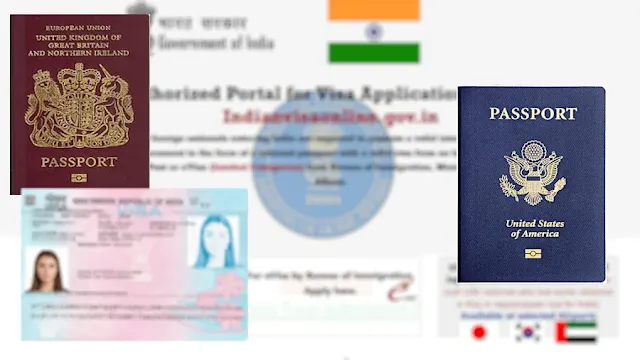
India Travel Documents Checklist
For most international visitors, the basic checklist is:
| Document | Who Usually Needs It? |
|---|---|
| Valid passport | Foreign nationals and Indian citizens traveling internationally |
| Indian visa or e-Visa | Most foreign nationals unless exempt |
| OCI / e-OCI card | Eligible Overseas Citizens of India using OCI instead of a visa |
| e-Arrival Card | Foreign nationals and OCI/e-OCI cardholders |
| Return or onward ticket | Expected for e-Visa travelers and may be requested by airline or immigration |
| Accommodation / India address | Useful and often required for immigration or visa forms |
| Yellow Fever certificate | Travelers arriving from or recently exposed to designated Yellow Fever affected countries |
| Supporting visa documents | Business, student, employment, medical and other special-purpose travelers |
Most tourists need four things at minimum: a valid passport, valid visa/e-Visa or OCI, the required e-Arrival Card if applicable, and their onward or return travel details.
What Passport Do You Need to Travel to India?
Foreign nationals entering India must hold a valid national passport or other travel document accepted under Indian immigration rules.
For India's e-Visa program, the Government of India currently states that:
- Your passport should have at least six months validity when you apply for the e-Visa.
- Your passport should contain at least two blank pages for immigration stamping.
- Each traveler must hold a separate passport.
- An e-Visa is not available to a person merely endorsed on a parent's or spouse's passport.
Do not rely on the old wording that your passport must always be valid for six months beyond your planned departure from India. The current official e-Visa instructions specifically refer to at least six months validity at the time of making the e-Visa application. Other visa categories or airlines may impose additional document checks, so verify your exact case before departure.
Do You Need a Visa to Travel to India?
Most foreign nationals need a visa, e-Visa, OCI card or another valid exemption before entering India.
The Government of India's official visa portal says foreign nationals must normally hold:
- A national passport, plus
- A valid regular Indian visa, or
- An approved e-Visa for an eligible category, or
- A valid OCI/e-OCI card where applicable.
Do not board a flight expecting to obtain a tourist visa after arriving unless you specifically qualify for India's limited Visa-on-Arrival program.
What Documents Are Required for an India e-Visa?
India's e-Visa is available to nationals of many eligible countries for approved purposes including tourism, business, medical treatment and other categories.
For a basic e-Visa application you generally need:
- Valid passport
- Scanned passport biographical page
- Recent front-facing photograph with a white background
- Email address
- Online payment method
- Additional supporting documents required for your specific e-Visa category
The Government of India currently advises most eligible e-Visa applicants to apply at least four days before arrival.
Use only the official Government of India visa portal. India warns that it does not authorize agents to charge special emergency or express e-Visa fees.
Apply through the official Indian e-Visa portal.
How Long Is an India e-Tourist Visa Valid?
The old article's statement that an Indian tourist e-Visa is simply valid for "up to 60 days" is no longer accurate for all tourist e-Visas.
India currently offers several e-Tourist Visa options, including:
| e-Tourist Visa | Published Validity |
|---|---|
| 30-day e-Tourist Visa | 30 days, subject to the validity shown on the ETA/visa |
| 1-year e-Tourist Visa | 1 year from grant of ETA, multiple entry |
| 5-year e-Tourist Visa | 5 years from grant of ETA, multiple entry |
India currently states that the maximum stay during a calendar year under the one-year and five-year e-Tourist Visa is generally 180 days.
Visa validity and permitted stay are not always the same thing. Always check the dates and conditions printed on your approved ETA or visa.
What Documents Do OCI Cardholders Need to Enter India?
A valid OCI card generally allows an eligible Overseas Citizen of India to enter India without obtaining a separate Indian visa.
OCI travelers should carry:
- A valid foreign passport
- Their valid OCI or e-OCI documentation
- The required e-Arrival Card
- Any supporting travel documents required for the itinerary
OCI is not an Indian passport. An OCI traveler still travels internationally using a valid foreign passport together with OCI status.
For digital OCI details, see e-OCI Card: India's Digital OCI Card Explained.
Who Must Complete India's e-Arrival Card?
Foreign nationals and OCI/e-OCI cardholders must complete and submit India's e-Arrival Card.
The Government of India's official visa portal currently states that the form can be completed online within 72 hours before arrival in India.
It can be submitted through:
- The official Indian Visa Online portal
- The Bureau of Immigration portal
- The official Indian Visa Su-Swagatam mobile app
The e-Arrival Card is not a visa. Completing it does not replace your visa, e-Visa, OCI card or passport.
Also note that this requirement is described by the Government of India for foreign nationals and OCI/e-OCI cardholders. It should not be described as an e-Arrival requirement for every Indian citizen returning home.
See Indian Visa Su-Swagatam App: e-Arrival Card Guide.
Do You Need a Return Ticket to Enter India?
India's official e-Visa instructions say international travelers should have a return ticket or onward journey ticket and sufficient funds for their stay.
This does not mean every immigration officer will ask every traveler to physically show a return ticket, but you should be prepared to produce one if requested.
Airlines may also verify onward-travel requirements before allowing you to board.
Do You Need Hotel Booking Proof for India?
Travelers should know where they will stay after arriving in India.
Useful supporting information includes:
- Hotel name
- Hotel address
- Booking confirmation
- Host's address if staying with relatives or friends
- Local phone number if available
Visa and arrival forms commonly request an address in India, and immigration officers can ask questions about the purpose and location of your stay.
Keep the first night's address accessible offline. Do not depend entirely on email or cloud storage when arriving with no mobile connection.
Can You Get a Visa on Arrival in India?
Only a very limited group of travelers qualifies.
India currently provides Visa-on-Arrival to:
- Citizens of Japan
- Citizens of South Korea
- Certain UAE citizens who previously obtained an Indian e-Visa or regular/paper visa
For qualifying UAE citizens, a first-ever trip to India does not qualify under this particular Visa-on-Arrival rule; the government advises those travelers to obtain an e-Visa or regular visa instead.
The Visa-on-Arrival facility is currently available at six designated airports:
- Bengaluru
- Chennai
- Delhi
- Hyderabad
- Kolkata
- Mumbai
The published Visa-on-Arrival can be granted for up to 60 days, subject to eligibility and conditions.
Most travelers cannot simply obtain a visa after landing in India. If you are not specifically eligible for Visa-on-Arrival, obtain your visa or e-Visa before boarding.
Who Is Not Eligible for India's e-Visa?
The e-Visa program has specific eligibility restrictions.
Examples currently listed by the Government of India include:
- Travelers holding passports from countries not included in the e-Visa eligibility list
- Pakistani passport holders
- Certain persons of Pakistani origin
- Diplomatic or official passport holders
- Laissez-passer or certain non-passport international travel document holders
- Persons included on another person's passport rather than holding their own passport
Some activities also require different visa categories or additional approvals.
Do not use an e-Tourist Visa for employment or another purpose not permitted under that visa. Choose the visa matching the actual purpose of your visit.
What Types of Indian Visas Are Available?
India offers visa categories for many different purposes, including:
- Tourist Visa — tourism, sightseeing and qualifying visits
- Business Visa — eligible business activities
- Employment Visa — qualifying employment in India
- Student Visa — education at an eligible Indian institution
- Medical Visa — qualifying medical treatment
- Medical Attendant Visa — accompanying eligible medical travelers
- Conference Visa — eligible conferences and events
- Transit Visa — qualifying transit situations
- Film / Production-related visas — applicable media or production purposes
- Entry / Family categories — applicable family and Indian-origin circumstances
Supporting documents vary significantly by visa type. A student visa may require proof of admission, while an employment visa requires employment documentation.
Do You Need a Yellow Fever Vaccination Certificate for India?
Only certain travelers need one.
India requires travelers arriving from or exposed to designated Yellow Fever endemic countries to carry a valid Yellow Fever vaccination certificate under the applicable health rules.
India's Ministry of Health says:
- The vaccination becomes valid 10 days after vaccination.
- A valid Yellow Fever certificate is generally valid for the life of the vaccinated person.
- The certificate should be issued by an authorized or designated vaccination center.
- A defective or missing certificate in a situation where one is required can lead to quarantine.
A phone photo or ordinary photocopy may not be sufficient. India's health authorities specifically warn that invalid or defective Yellow Fever certificates can create quarantine problems.
India's official e-Visa guidance also warns that travelers arriving from Yellow Fever affected countries must carry the required vaccination card. citeturn210360search4turn524628search5
Do You Need Hepatitis, Typhoid or Other Vaccination Certificates?
Not as a general India immigration document.
Vaccinations such as hepatitis A, hepatitis B, typhoid or tetanus may be recommended for some travelers based on health circumstances, but they should not be presented as routine mandatory India entry documents.
The important border-document requirement discussed by Indian health authorities is Yellow Fever certification for travelers to whom the rule applies.
Health recommendations are different from immigration requirements. Consult your healthcare provider or official public-health guidance for vaccinations recommended for your personal itinerary.
What Documents Do U.S. Citizens Need to Travel to India?
A typical U.S. citizen visiting India for tourism should be prepared with:
- Valid U.S. passport
- Valid Indian visa or approved e-Visa
- Completed e-Arrival Card
- Return or onward ticket
- Address or accommodation details in India
- Yellow Fever certificate only if the travel history makes it applicable
U.S. citizens are currently eligible for India's e-Visa program.
A U.S. passport by itself does not permit ordinary tourist entry into India. The traveler normally needs an Indian visa or other qualifying status such as OCI.
What Documents Do UK and Canadian Citizens Need?
UK and Canadian passport holders are also currently included in India's e-Visa eligibility framework.
A typical tourist should carry:
- Valid passport
- Approved e-Visa or other valid Indian visa
- e-Arrival Card
- Return/onward travel information
- India accommodation details
Always verify the official India Visa Online portal shortly before applying because nationality-specific rules can change.
What Documents Do Gulf Residents Need When Traveling to India?
Your Gulf residence visa or resident card does not by itself determine whether you need an Indian visa. India normally looks at your nationality and immigration status.
For example:
- An Indian citizen living in Dubai normally enters India using an Indian passport.
- An OCI cardholder living in Saudi Arabia normally uses a foreign passport plus OCI/e-OCI.
- A foreign tourist living in Qatar may need an Indian visa or e-Visa according to nationality.
Travelers from the UAE should also note that Visa-on-Arrival is limited to qualifying UAE citizens who satisfy India's prior-visa condition. UAE residency alone does not qualify a traveler.
For Gulf-specific customs and baggage planning, see Gulf to India Travel Guide: Baggage, Customs, Gold & Flights.
What Documents Do Children Need to Travel to India?
Children traveling internationally generally need their own valid passport and appropriate Indian immigration document.
For India's e-Visa:
- A separate e-Visa application is required for each eligible child.
- The child must have an individual passport.
- The passport must meet applicable validity requirements.
Depending on the journey and family circumstances, airlines or border authorities may also ask for:
- Birth certificate
- Parental consent documentation
- Custody documents
- Unaccompanied-minor paperwork
These are itinerary-dependent and should not be confused with India's ordinary visa requirements.
What If Your Indian e-Visa Was Issued on an Old Passport?
India's current e-Visa guidance says a traveler whose ETA was issued on an old passport may be permitted to enter using a new passport, provided the traveler also carries the old passport on which the ETA was issued.
Do not leave the old passport at home if your valid India e-Visa is connected to it. Carry both passports when the official rule for your situation requires it.
What Documents Can the Airline Check Before You Board?
Airlines can deny boarding if your documentation does not appear to meet destination requirements.
At check-in, the airline may review:
- Passport
- Visa or e-Visa approval
- OCI documentation
- Passport expiration date
- Return or onward ticket
- Transit visa if your connection requires one
- Yellow Fever certificate where applicable
- Other destination or transit documents
Immigration approval and airline boarding are separate steps. Even if you believe you qualify to enter India, the airline must still be satisfied that your travel documents meet the applicable rules before transporting you.
For Air India documentation guidance, see the airline's official travel documents page.
Should You Carry Printed Copies of Your India Travel Documents?
Digital documents are increasingly common, but carrying backup copies is sensible for international travel.
Consider keeping:
- Printed e-Visa ETA
- Printed hotel confirmation
- Printed return or onward itinerary
- Photocopy of passport identification page
- Offline copies stored securely on your phone
- Emergency contact details
Keep backups separate from the originals. A photocopy cannot replace a required original passport, but it can make recovery easier if documents are lost.
See Lost Passport Abroad? What to Do Fast.
Travel Documents Are Different From Customs Documents
Passport and visa requirements deal mainly with immigration.
Customs has separate requirements for goods you bring into India.
You may also need documentation for:
- Gold or jewellery
- Large amounts of currency
- Commercial goods
- Pets
- Restricted items
- Temporary imports
Foreign nationals and returning residents carrying declarable goods may need to use India's electronic Customs declaration system and Red Channel procedures.
For NRI travelers, see NRI Travel to India: Phone, eSIM, Customs, ID and Airport Tips.
Related India Travel and ID Guides
- Indian Visa Su-Swagatam App: e-Arrival Card Guide
- e-OCI Card: India's Digital OCI Card Explained
- Travel Documents for India Flights
- NRI Travel to India: Phone, eSIM, Customs, ID and Airport Tips
- Gulf to India Travel Guide: Baggage, Customs, Gold & Flights
- Can I Travel With a Maiden Name Passport After Marriage?
- Lost Passport Abroad? What to Do Fast
- Airline Refuses Your Digital ID: Backup Proof That Works at the Airport
- DigiLocker ID at Indian Airports
- Do Minors Need Identification to Travel on Indian Flights?
- Travelling With a Mobile Boarding Pass in India
- What Type of IDs Are Acceptable for Domestic Travel in India?
Official Government Sources
- Government of India — India Visa Online
- Government of India — e-Visa
- Government of India — Visa on Arrival
- Government of India — Visa Categories and Provisions
- Government of India — OCI Services
- Ministry of Health — Yellow Fever Vaccination Requirements
- Air India — Documents Required for Travel
Bottom Line
For most foreign tourists, the essential documents for entering India are a valid passport, valid visa or e-Visa, and the required e-Arrival Card. OCI cardholders generally travel with their foreign passport plus OCI/e-OCI documentation and must also complete the e-Arrival Card.
Keep your return or onward ticket and India address available, and carry a valid Yellow Fever certificate if your travel history makes that requirement applicable.
The most important correction to older India travel checklists is that the e-Arrival Card applies to foreign nationals and OCI/e-OCI cardholders, not simply "all travelers," and tourist e-Visas are no longer accurately described as one universal 60-day product.
Frequently Asked Questions
What documents are required for travel to India?
Most foreign travelers need a valid passport, valid Indian visa or e-Visa, or a valid OCI/e-OCI card if eligible. Foreign nationals and OCI/e-OCI cardholders must also complete the e-Arrival Card within 72 hours before arrival. A return or onward ticket and India accommodation details should also be available.
What paperwork is needed to travel to India?
Typical paperwork includes your passport, visa/e-Visa or OCI, e-Arrival Card where applicable, return or onward itinerary and address in India. Travelers from Yellow Fever affected countries may also need an original valid Yellow Fever vaccination certificate.
What documents do U.S. citizens need to enter India?
A U.S. tourist normally needs a valid U.S. passport, approved Indian visa or e-Visa, completed e-Arrival Card, return or onward travel information and accommodation details. A Yellow Fever certificate is required only when applicable to the traveler's recent travel history.
Do Americans need a visa to travel to India?
Yes, ordinary U.S. tourists generally need an Indian visa or approved e-Visa unless they have another qualifying status such as a valid OCI card.
Who must fill India's e-Arrival Card?
The Government of India currently states that foreign nationals and OCI/e-OCI cardholders must complete and submit the e-Arrival Card within 72 hours before arrival.
Do Indian citizens have to fill the e-Arrival Card?
The current Government of India visa portal describes the e-Arrival Card requirement for foreign nationals and OCI/e-OCI cardholders. It should not be described as a general requirement for Indian citizens returning on Indian passports.
When should I fill out India's e-Arrival Card?
The Government of India says it can be completed online within 72 hours before arrival in India through the official visa portal, Bureau of Immigration portal or Indian Visa Su-Swagatam app.
Is India's e-Arrival Card the same as an e-Visa?
No. The e-Arrival Card records arrival information. It does not grant permission to enter India and does not replace your passport, visa, e-Visa or OCI documentation.
How many months validity does my passport need for India?
For India's e-Visa program, the official rules state that the passport should have at least six months validity when the e-Visa application is made and should have at least two blank pages. Check any additional rule that applies to your visa category or nationality.
Does my passport need two blank pages for India?
India's e-Visa instructions state that the passport should contain at least two blank pages for stamping by the Immigration Officer.
Do I need a return ticket to enter India?
India's e-Visa guidance says international travelers should have a return or onward journey ticket and sufficient money for their stay. Airlines or immigration may ask to see onward-travel proof.
Do I need hotel booking proof to enter India?
It is wise to have your hotel booking or the address where you will stay. India visa and arrival procedures commonly request an address in India, and immigration may ask about your accommodation.
Can I get an Indian visa after landing at the airport?
Most travelers cannot. India's Visa-on-Arrival program is currently limited to citizens of Japan, South Korea and certain UAE citizens who previously held an Indian e-Visa or regular visa, subject to other conditions.
Can UAE residents get Visa on Arrival in India?
UAE residence alone does not qualify someone. India's special Visa-on-Arrival provision applies to qualifying UAE citizens who previously obtained an Indian e-Visa or regular/paper visa, along with citizens of Japan and South Korea.
How long is an Indian tourist e-Visa valid?
India currently offers different e-Tourist Visa products, including 30-day, one-year and five-year options for eligible travelers. The exact permitted validity and stay depend on the visa issued.
Do OCI cardholders need an Indian visa?
Generally no. A valid OCI card provides qualifying OCI cardholders with visa-free entry privileges, but they must travel with a valid foreign passport and comply with current arrival-document requirements including the e-Arrival Card.
Do OCI cardholders have to fill the e-Arrival Card?
Yes. India's official visa portal currently says OCI and e-OCI cardholders must complete and submit the e-Arrival Card within 72 hours before arrival.
Do I need vaccination records to enter India?
There is no general requirement to carry routine vaccination certificates such as hepatitis or typhoid records. A valid Yellow Fever vaccination certificate is required for travelers to whom India's Yellow Fever rules apply.
Who needs a Yellow Fever certificate for India?
Travelers arriving from or exposed to designated Yellow Fever endemic countries may be required to carry a valid Yellow Fever vaccination certificate. The certificate generally becomes valid 10 days after vaccination and remains valid for life.
Can I show a photo of my Yellow Fever certificate?
Do not rely on a phone photo or ordinary photocopy where an original valid Yellow Fever certificate is required. Indian health authorities warn that defective or invalid certification can lead to quarantine.
What if my India e-Visa is linked to my old passport?
India's e-Visa guidance says entry can be allowed using a new passport when the ETA was issued on an old passport, but the traveler must also carry the old passport on which the ETA was issued.
What documents should I keep in my cabin bag?
Keep your passport, visa/e-Visa or OCI documents, boarding pass, arrival information, onward itinerary, essential medication and important supporting documents with you rather than placing them in checked baggage.


No comments:
Post a Comment