Can You Carry Silver Utensils on India Flights? Cabin and Checked Bag Rules
Silver spoons, bowls, plates, cups, and pooja items can usually be easier to carry than sharp silver knives or large heavy serving sets. The real issue is not the silver itself, but whether the item has a blade, sharp point, unusual weight, high value, or customs implications.
For domestic flights, airport security and cabin-bag limits matter most. For international travel, valuable silverware, jewellery, silver bars, gifts, and multiple similar items can also raise declaration and duty questions.
Table of Contents
- Quick Answer: Can You Carry Silver Utensils on a Flight?
- Cabin Bag vs Checked Bag for Silver Items
- Silver Spoons, Bowls, Cups and Plates
- Silver Knives, Forks and Sharp Items
- Silver Pooja Items and Religious Articles
- Large Silver Sets, Trays and Teapots
- Silver Jewellery and Valuable Silverware
- Silver Bars, Coins and Bullion
- Domestic vs International Flight Rules
- Customs Declaration and Duty Questions
- How to Pack Silver Items Safely
- Mistakes to Avoid
- Official Links to Check
- Related India Customs and Baggage Guides
- Bottom Line
- Frequently Asked Questions
Quick Answer: Can You Carry Silver Utensils on a Flight?
Non-sharp silver utensils such as spoons, small bowls, cups, plates, and decorative items may be accepted in cabin baggage if they fit airline size and weight limits and clear security screening. Silver knives, sharp serving tools, heavy trays, large sets, and silver bars need more caution.
| Silver Item | Cabin Baggage | Checked Baggage | Main Concern |
|---|---|---|---|
| Silver spoon | Often easier | Usually possible | Security inspection and safe packing |
| Small silver bowl, cup or plate | May be possible | Usually possible | Weight, size and fragility |
| Silver fork | May depend on shape and security discretion | Usually possible | Pointed tines or sharp edges |
| Silver knife or carving set | Do not pack | May be possible if securely packed | Sharp-object rules |
| Silver pooja idol | May be possible | May be possible | Value, fragility and customs proof |
| Silver bar or bullion | Do not assume acceptance | Do not assume acceptance | Customs declaration, value and import rules |
Cabin Bag vs Checked Bag for Silver Items
Cabin baggage can be safer for a small valuable silver item because you keep it with you, but security has the final decision. Checked baggage can be better for sharp, oversized, or heavy items, but it carries a higher risk of loss, damage, and rough handling.
| Best Choice | When It Makes Sense | Risk to Watch |
|---|---|---|
| Cabin baggage | Small non-sharp silver utensils, jewellery, fragile idols, sentimental items | Security refusal, weight and cabin-space limits |
| Checked baggage | Sharp silverware only where the airline accepts it, plus larger trays and heavy sets, items unsuitable for the cabin | Loss, damage, scratches and weak airline liability limits |
| Neither without advance checking | Silver bars, coins, bullion, commercial quantities, antiques | Customs, declaration, duty and legal restrictions |

Important: a valuable item is not automatically best in cabin baggage. A sharp silver knife may be valuable, but security rules can still require it to travel in checked baggage or prevent carriage altogether.
Silver Spoons, Bowls, Cups and Plates
Small non-sharp silver spoons, bowls, cups, plates, and similar household items are generally less complicated than sharp silverware. They may still be inspected because metal objects can look dense on an X-ray scan.
Keep the items together in a padded pouch or rigid box. Do not scatter loose spoons, bowls, and small utensils through different pockets of a bag. A neat package makes inspection easier and reduces the chance of scratching or loss.
Items that may be easier to carry
- Small silver spoons
- Baby-feeding silver bowls and cups
- Small pooja plates or thalis
- Silver tumblers and katoris
- Decorative non-sharp silver items
- Compact silver gift sets
Large, unusually heavy, pointed, or ornate items can receive closer scrutiny. The security officer at the checkpoint makes the final decision.
Silver Knives, Forks and Sharp Items
Material does not matter as much as shape. A silver knife is still a knife, and a sharp serving tool can still be treated as a prohibited cabin item.
IndiGo lists knives, scissors, Swiss Army knives, and other sharp instruments as prohibited in cabin baggage. Air India also advises passengers not to carry prohibited sharp items such as pocketknives and pointed scissors in cabin bags.
Do not pack silver knives, carving sets, sharp forks, or pointed serving tools in hand luggage. Put them in checked baggage only after checking the airline’s current policy and wrapping the item so it cannot injure a baggage handler or cut through the bag.
Items that need extra caution
- Silver table knives
- Carving knives
- Sharp cheese knives
- Pointed skewers or serving picks
- Decorative daggers or ceremonial blades
- Large forks with sharp tines
- Sharp-edged silver tools or cutters
Silver Pooja Items and Religious Articles
Silver idols, diyas, pooja thalis, bells, bowls, and other religious articles may be easier to carry when they are small, non-sharp, and securely packed. Security may inspect them because of their metal density, especially if an item is solid or unusually shaped.
For a fragile silver idol or diya, cabin baggage may be safer than checked baggage where permitted. Wrap each item separately and keep it accessible for inspection. Do not carry oil, ghee, camphor, dry coconut, or sharp ceremonial items without checking the separate rules for those materials.
See Pooja Items on India Flights: What’s Allowed and How to Pack and Can You Carry Murti on Flights? Hindu Idol Cabin Bag vs Checked Bag Rules.
Large Silver Sets, Trays and Teapots
Large silver trays, tea sets, serving bowls, wedding gifts, and decorative pieces can be difficult to carry in the cabin even if they are not sharp. Their size, weight, shape, and ability to fit under a seat or in an overhead bin all matter.
Airlines can require a bulky item to be checked, and a heavy silver set can push your bag over the cabin-baggage limit. Before travel, measure the packed box and compare it with your airline’s current baggage allowance.
Check these points before carrying a large silver item
- Cabin-baggage weight limit.
- Cabin-baggage dimensions.
- Whether the item has sharp, protruding, or detachable parts.
- Whether the package can fit safely under the seat or overhead bin.
- Whether the item is too valuable or fragile for checked baggage.
- Whether the airline recommends special baggage handling.
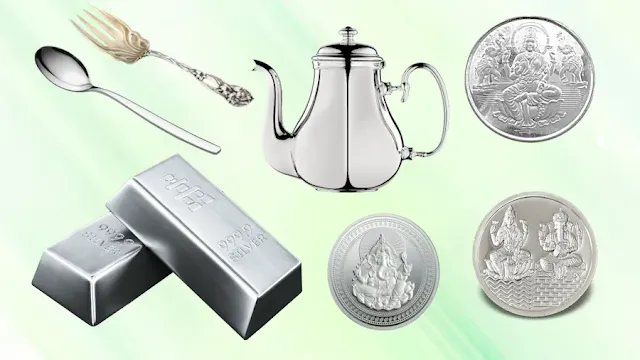
Wedding gift tip: for a large silver set, consider carrying only the most valuable or fragile piece in cabin baggage where permitted and shipping or checking the rest in insured protective packaging.
Silver Jewellery and Valuable Silverware
Silver jewellery, heirloom utensils, antique silverware, engraved gifts, and collectible pieces need more care than ordinary household silver. Their value can matter to Customs, while their sentimental value can make checked-baggage loss especially painful.
Where security rules allow, small jewellery and non-sharp valuables are often safer in cabin baggage. Keep receipts, valuation documents, photographs, and prior customs paperwork separate from the item itself.
For valuable goods taken out of India and brought back later, an export certificate may help establish prior ownership. Read India Customs Export Certificates: Traveler Guide for Valuables.
Silver Bars, Coins and Bullion
Silver bars, coins, bullion, ingots, and investment-grade silver are different from ordinary utensils. They can raise customs, declaration, duty, value, and import questions even when packed safely.
India’s Baggage Rules exclude gold or silver in any form other than ornaments from the general free allowance. That does not mean every silver item is prohibited, but it means silver bars and bullion should not be treated like ordinary personal household goods.
Do not travel internationally with silver bars or bullion without checking current customs rules first. Carry invoices, purity details, weight information, valuation proof, and any required declaration documents. Use the Red Channel or ask Customs when you are unsure.
For related guidance, see How Much Gold Can You Bring to India? Duty-Free Limits, NRI Rules and Customs Guide and Can I Take Gold Biscuit to India? Customs Rules, Duty and Limits.
Domestic vs International Flight Rules
| Route Type | Main Question | What Matters Most |
|---|---|---|
| Domestic India flight | Can the item pass security and meet baggage limits? | Sharp edges, weight, size, packing, airline rules |
| International departure from India | Can the item leave India and travel safely? | Security, airline acceptance, export and documentation issues |
| International arrival in India | Must the silver be declared or assessed for duty? | Value, quantity, form, purpose, ownership and current Customs rules |
| Transit airport | Will another country inspect the item? | Transit screening and local customs rules if baggage is collected |
Domestic flights mainly involve security screening and airline baggage rules. International flights add Customs questions. A silver bowl that is simple on a Delhi-to-Mumbai flight may require invoices or declaration review when brought from abroad.
Customs Declaration and Duty Questions
There is no universal rule that every silver spoon, bowl, plate, or idol must be declared. Customs treatment depends on the item’s value, quantity, form, route, purpose, and whether it appears to be a personal effect, gift, commercial good, or precious-metal import.
A single used household silver item may be easier to explain than a boxed set of new matching pieces or several silver bars. The safest move for any high-value or uncertain item is to carry documents and ask Customs rather than trying to guess.
Bring these documents where relevant
- Original purchase invoice.
- Jeweller or valuer certificate.
- Photos showing prior ownership.
- Insurance documents for high-value pieces.
- Customs Export Certificate for items previously taken out of India.
- Duty receipt for previously declared imported items.
- Gift documentation where the item is a wedding or family gift.
See India Customs Red Channel vs Green Channel, What Should Be Declared at Indian Customs?, and Indian Customs Declaration Form.
How to Pack Silver Items Safely
- Wrap every utensil separately in soft cloth, anti-tarnish fabric, or bubble wrap.
- Use a rigid box for bowls, cups, idols, trays, or delicate serving pieces.
- Keep sharp items sheathed or fully covered before placing them in checked baggage.
- Do not place heavy silver pieces against suitcase edges, zips, or thin fabric.
- Use cabin baggage for small permitted fragile valuables where practical.
- Use checked baggage only for items unsuitable for cabin carriage.
- Take photographs before travel, especially for antiques, engraved gifts, and heirlooms.
- Keep invoices and valuation papers in a separate document pouch.
- Do not rely on a “fragile” sticker alone to protect a checked bag.
- Check airline liability limits before placing expensive silverware in checked baggage.
Mistakes to Avoid
- Packing silver knives or sharp serving tools in cabin baggage.
- Assuming a silver item is accepted because it is a religious gift or family heirloom.
- Putting a large silver tray in a cabin bag without checking dimensions and weight.
- Travelling internationally with silver bars, coins, or bullion without paperwork.
- Using the Green Channel when you are unsure whether a high-value item is dutiable.
- Leaving invoices and valuation papers inside checked baggage.
- Packing silver utensils loose where they can scratch, dent, or disappear.
- Assuming one airport’s security decision will apply at every airport.
- Carrying multiple boxed silver sets without considering commercial-import questions.
- Putting valuable silverware in checked baggage without considering loss and liability limits.
Official Links to Check
- Air India Restricted Items in Cabin and Checked Baggage
- Air India Cabin Baggage Rules
- IndiGo Dangerous Goods and Restricted Items Policy
- IndiGo Cabin Baggage Allowance
- CBIC Baggage Rules
- CBIC Passenger Customs Clearance Guide
- Central Board of Indirect Taxes and Customs
Related India Customs and Baggage Guides
- Can You Wear a Gold Chain Through Indian Customs?
- How Much Gold Can You Bring to India? Duty-Free Limits, NRI Rules and Customs Guide
- India Duty-Free Allowance Guide: Liquor, Gold and More
- Returning NRI Checklist: Baggage Rules, Gold, TR Concession and Customs Guide
- How Much Worth of Gifts Can I Bring to India? Duty-Free Limits
- How to Pay Customs Duty at Indian Airports: Step-by-Step Guide
- India Airport Customs Red Flags: What Gets Travelers Stopped
- India Customs Documentation: A Complete Guide for Travelers
- India Customs Export Certificates: Traveler Guide for Valuables
- India Customs Red Channel vs Green Channel
- What Should Be Declared at Indian Customs?
- Pooja Items on India Flights: What’s Allowed and How to Pack
Bottom Line
Small non-sharp silver utensils may be easier to carry in cabin baggage, while silver knives, pointed tools, oversized items, and heavy sets are better handled as checked baggage only when the airline accepts them.
For international travel, treat high-value silverware, jewellery, bars, coins, and multiple new items as a Customs question as well as a baggage question. Carry proof of ownership, ask when unsure, and do not rely on old advice about precious-metal allowances.
Frequently Asked Questions
Can I carry silver spoons in hand baggage?
Small silver spoons may be accepted in hand baggage if they clear security screening and fit within cabin-baggage rules. Pack them together in a protective pouch for easier inspection.
Can I carry silver forks in cabin baggage?
It depends on the fork shape and security officer’s decision. A fork with sharp or aggressive tines may receive more scrutiny, so checked baggage can be safer for unusual serving forks.
Are silver knives allowed in hand luggage?
No. A silver knife is still a sharp object and should not be packed in cabin baggage. Check your airline’s rules before placing it in checked baggage.
Can I carry a silver pooja idol on a flight?
A small non-sharp silver idol may be possible in cabin or checked baggage, but it can be inspected at security. Valuable items should be packed carefully and supported by proof of ownership where relevant.
Can I carry silver utensils on an international flight?
Often yes, but international travel adds Customs and declaration questions. Valuable silverware, multiple new sets, silver bars, and items bought abroad may need documentation or declaration.
Do I need to declare silver utensils at Indian Customs?
Not every utensil requires declaration, but value, quantity, purpose, and the form of silver matter. Ask Customs or use the Red Channel when you are unsure about a high-value or dutiable item.
Can I carry silver bars in cabin baggage?
Do not assume silver bars can be carried like ordinary utensils. They can trigger Customs, declaration, and duty questions, so check current official rules and carry full documentation before travel.
Is cabin baggage safer for valuable silverware?
For a small non-sharp valuable item that security allows, cabin baggage can reduce the risk of checked-baggage loss or damage. Sharp, oversized, or heavy pieces may still need checked baggage or another transport option.
No comments:
Post a Comment